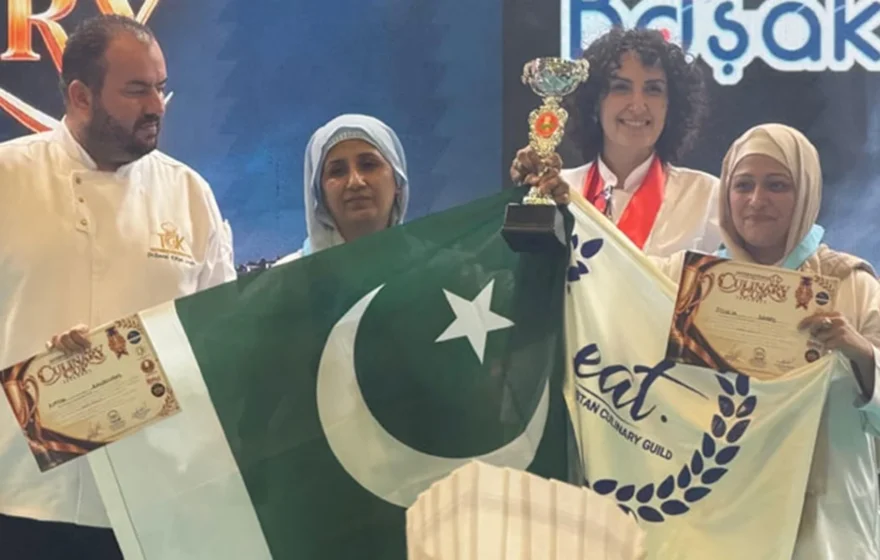
Pakistan’s chefs have returned from Turkey with a haul of medals and a trophy, after a strong showing at one of the world’s respected international cooking competitions. A three-member team from Pakistan won gold, silver and bronze medals, along with an overall silver trophy, at the Istanbul International Culinary Cup 2026, a result that puts the country’s food and its cooks firmly in the international spotlight.
The competition, the sixth Gastronomy Istanbul Culinary Cup, was held from November 10 to 14 and brought together chefs from nineteen countries. Over five days in Istanbul, a city that has long stood at the meeting point of European and Asian food cultures, cooks from around the world tested one another on presentation, taste, technique and teamwork.
Pakistan was represented by a three-member team competing under the banner of Eat Guild, a name that will now be associated with one of the country’s better results at an overseas culinary event. The team was led by Chef Faiza Bilal Khan, who also served as an international jury member at the competition, a dual role that speaks to the regard in which she is held by the organisers and by her fellow professionals. Chef Nadia Khurshid and Chef Fauzia Saeed completed the team, and the three worked together across the categories in which Pakistan entered.
The team’s first success came in the Display Category, where it won a gold medal. In this part of the competition, the emphasis falls on how food is presented and on the story it tells, and the Pakistani team used the opportunity to highlight the country’s culture and traditional heritage. A display in such a contest is not simply a plate of food; it is judged on craftsmanship, imagination and the way it carries the identity of the place it comes from. Winning gold there meant the judges felt Pakistan’s presentation stood above every other entry in the category.
The silver medal came in the Team Category, where the focus shifts from a single showpiece to the way a group works together under pressure. Here the chefs were judged on their culinary skill, their professionalism and their teamwork, the qualities that decide whether a kitchen runs smoothly when time is short and the standard is high. The silver recognised not only what the three chefs could cook, but how well they cooked together.
The third medal, a bronze, was won in the Asian Cuisine Category, where the team impressed the international judges with the distinctive flavours of its dishes and the care with which they were prepared. Pakistani cuisine is known for dishes such as biryani, kebabs and slow-cooked curries, food built on layered spices, long cooking times and recipes passed down through families and regions. Presenting that tradition to judges who may know it well, or may be meeting it for the first time, is a challenge of balance: the flavours must stay true to their roots while meeting the polish and precision that competition cooking demands.
Alongside the three medals, the delegation also took home the overall silver trophy, an award that reflects a team’s performance across the competition as a whole rather than in a single category. It is the kind of recognition that confirms a strong all-round showing. To medal in three separate categories and then finish with an overall trophy is a rare return from a single event.
There is a wider significance to the result too. The team was led by women, and an all-women delegation carrying Pakistan’s colours at an international competition is a notable moment for the country’s food industry, where women have long shaped home cooking but have had fewer chances to lead on the professional stage. Their success in Istanbul shows what happens when that talent is given the platform and the backing to compete abroad, and it may encourage more young women in Pakistan to see professional cooking as a career worth pursuing.
Culinary competitions matter for reasons that go beyond medals. They are places where chefs learn from one another, where techniques travel between countries, and where a national cuisine is introduced to audiences who might never otherwise encounter it. For Pakistan, whose food is loved at home and in diaspora communities around the world, events like the Istanbul cup are a way of building recognition that reaches further than any single restaurant can.
The team now returns home with four pieces of silverware between them and a result that will be hard to match. What they achieved in Istanbul was not the work of a single afternoon but the product of preparation, practice and the ability to perform when it counted. For Pakistan’s chefs, and for everyone who follows the country’s food, it is a result worth celebrating, and a reminder that the country’s kitchens can hold their own against the best in the world.
