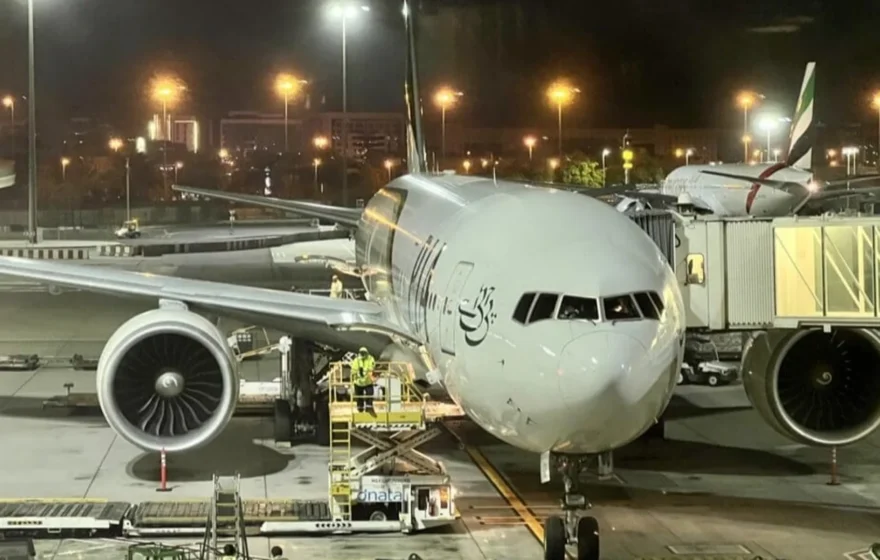
Pakistan International Airlines has dismissed reports suggesting that trouble with an aircraft leased from Norway’s Norse Atlantic Airways could disrupt its flights to the United Kingdom and Europe, insisting that its international operations are running as planned.
Sources within the airline told ProPakistani that the reports were speculation and that operations would not be affected. The swift denial came after claims circulated that a Norse Atlantic aircraft leased by PIA had not been available for a scheduled service, forcing the airline to make last-minute changes to its flying programme.
According to the reports, the leased aircraft was unavailable for an Islamabad to Manchester flight on Monday, and PIA operated the service instead with one of its own Boeing 777 aircraft. The reports also suggested that the situation could lead to changes in PIA’s UK and Europe schedules, and that if the leased aircraft stayed unavailable, the airline might have to run its UK, Europe and Canada flights on its own Boeing 777 fleet.
PIA has not confirmed any of those claims. Its message, as conveyed to ProPakistani, was straightforward: the reports are speculation, and passengers should not expect disruption. For now, the position from the national carrier is that its long-haul network is intact.
The episode, however brief, underlines how closely PIA’s newest fleet arrangement is being watched. On October 9, the airline signed an agreement with Norse Atlantic Airways to wet lease two Boeing 787-9 Dreamliner aircraft, putting the most modern wide-body jet ever flown by a Pakistani airline onto PIA flight numbers. The first arrived in Islamabad from London on November 1, operating as flight PK786 from London Heathrow, and was welcomed at Islamabad International Airport by PIA’s chief executive, Air Vice Marshal Aamir Hayat, and his team.
Under the arrangement, known in the industry as an ACMI deal, Norse Atlantic supplies the aircraft with its own crew and remains responsible for maintenance and insurance, while PIA sells the tickets and operates the services under its own flight numbers. The aircraft keeps its Norse Atlantic livery, with the name Redwood on its nose, and it is Norse crews who fly it. The structure gives PIA extra long-haul capacity quickly, without the cost and delay of buying aircraft or training crews for a new type.
Those routes matter a great deal. PIA returned to London in March 2026 after a gap of six years, restoring a link missing since the airline was barred from European skies. The UK-Pakistan corridor is one of the most important in PIA’s network, serving business travellers, tourists and the large Pakistani community in Britain. Schedule filings tracked in late October showed the leased Dreamliners taking over from PIA’s Boeing 777-200ER aircraft on four UK services, with Islamabad to London Heathrow five times a week, Lahore to Heathrow twice a week, and Manchester served from both cities. The first Dreamliner is around eight years old and is reported to carry 358 passengers.
That is why a single unavailable aircraft can generate so much talk. When flagship routes depend on just two leased jets, and only one has arrived so far, any question mark over that aircraft invites speculation about the whole schedule. PIA’s fleet is thin and its long-haul network is being rebuilt almost from scratch, with the Dreamliner deal as the most visible sign of that rebuild. A substituted aircraft, routine at a larger airline with dozens of wide-body jets to spare, becomes a story when the fleet is this small.
The lease is the first visible fleet move since the airline passed out of state ownership into the hands of a consortium led by Arif Habib Corporation, ending decades of government control. The Norse Atlantic agreement was presented as the start of a wider expansion, and reports have suggested the initial lease term is around six months, although neither airline has confirmed the length of the contract or its financial terms.
For Norse Atlantic, the deal also solves a problem of its own. The Norwegian carrier operates twelve Boeing 787-9 aircraft and has been redeploying capacity after IndiGo said in July it would hand back the six Dreamliners it had been flying for it. Its chief executive, Eivind Roald, has described the agreement as the start of a strategic partnership, noting that it would give the large Pakistani community in the UK more travel options.
What happens next will be decided less by statements than by schedules. Passengers will watch whether the second Dreamliner arrives as planned, whether the Manchester and Heathrow services keep running on the 787, and whether Monday’s use of a Boeing 777 was a one-off substitution or the start of a pattern. PIA’s position is that there is no pattern to worry about. If the airline is right, the episode will pass quickly, remembered only as a reminder of how sensitive its recovery remains. Confidence on the UK routes is built flight by flight, on aircraft arriving on time and schedules holding week after week, and the Dreamliner deal was meant to show that PIA could once again offer a modern long-haul product.
