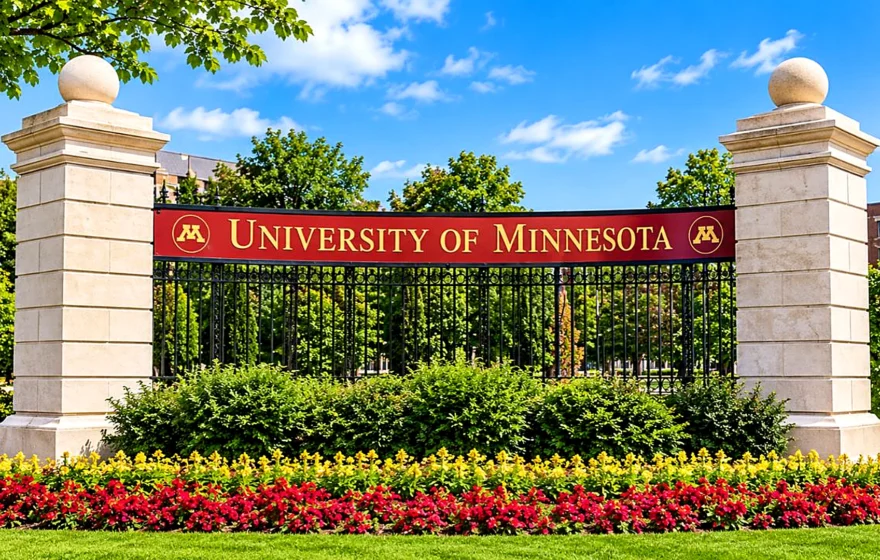
The University of Minnesota Twin Cities has opened a funded master’s research place in conservation sciences, offering an annual salary starting at 30,000 dollars for a student to work on a project with Indigenous communities in northern Minnesota. The place is based in St Paul and is linked to the Conservation Sciences Graduate Program and the Umana Laboratory, where researchers Christopher Shaffer and Marissa Milstein are leading the work.
The project is concerned with hunting, fishing and trapping, activities that carry cultural, livelihood and food security significance for Indigenous communities. Participation in these activities has been declining, and the research aims to understand why, while also supporting education, traditional knowledge exchange and natural resource management through community-based mapping.
Master’s Research Program Details
The project is titled Revitalizing Hunting, Fishing and Trapping in White Earth Using Participatory GIS. It was published on the Texas A&M Natural Resources Job Board on 19 October 2026, and it combines community engagement with participatory mapping and both qualitative and quantitative research methods. Students will work with tribal partners, which requires respect for Indigenous sovereignty and a commitment to building collaborative relationships rather than simply collecting data.
Salary and Financial Benefits
The position offers an annual salary starting at 30,000 dollars for at least 40 hours a week, and previous professional experience is not mandatory. The Conservation Sciences Graduate Program also provides financial support through research assistantships, teaching assistantships and fellowships, and general guidelines for eligible graduate assistants may include tuition benefits and health insurance depending on the appointment. The specific advertisement does not confirm a tuition waiver, health insurance or additional support for this position, so applicants should contact the university to confirm the complete package before accepting an offer.
Eligibility
Applicants need a bachelor’s degree in wildlife, ecology, anthropology or a related field, together with basic knowledge of geographic information systems and an interest in improving those skills. They should also be interested in mixed-methods research, combining qualitative and quantitative approaches, and have strong written and verbal communication skills and attention to detail. The role requires the ability to conduct research independently while working closely with tribal partners, and to respect the knowledge, priorities and governance of Indigenous communities.
English Requirements
Applicants must meet the University of Minnesota’s admission standards for English, with recognised tests including the International English Language Testing System, the Test of English as a Foreign Language, the Pearson Test of English Academic, Duolingo and Cambridge C1 Advanced. The minimum International English Language Testing System score is an overall 6.5, with at least 6.5 in writing and reading. For admission in autumn 2027, the university also lists a minimum Duolingo overall score of 120, with at least 120 in writing and reading, although applicants should check current official requirements because individual graduate programmes may set higher standards.
Documents Required
Applicants should prepare a personal statement explaining their academic background, research interests and career goals, and why they wish to pursue graduate study in this area. They also need a diversity statement describing how they would contribute their experiences and perspectives to the academic community, together with a curriculum vitae, three recommendation letters and academic records required by the Graduate School system. Prospective candidates are encouraged to contact potential research supervisors before applying, to discuss research interests and available funding.
How to Apply
Applicants should first review the specific research opportunity and the Conservation Sciences programme admission requirements, then prepare their academic documents, personal statement, diversity statement, curriculum vitae and recommendation letters before submitting an application. The deadline is 30 November 2026. The university encourages candidates to contact the researchers leading the project to discuss expectations, funding and eligibility, which can help applicants judge whether the role matches their skills and interests. For students interested in conservation, community research and Indigenous knowledge, the place offers a rare combination of paid research, fieldwork and work that is directly connected to community priorities.
The wider significance of the project lies in its approach to research itself. Participatory mapping allows community members to shape how their land, waters and traditions are represented, rather than having those places described only by outside researchers. That approach can produce more accurate and more useful knowledge, because it draws on lived experience alongside formal scientific methods. It can also help ensure that research findings support local decision-making, whether about access to traditional foods, the management of natural resources or the passing of knowledge between generations. For a graduate student, learning to work in this way is a valuable skill, and one that is increasingly expected in conservation, environmental science and community-based research.
