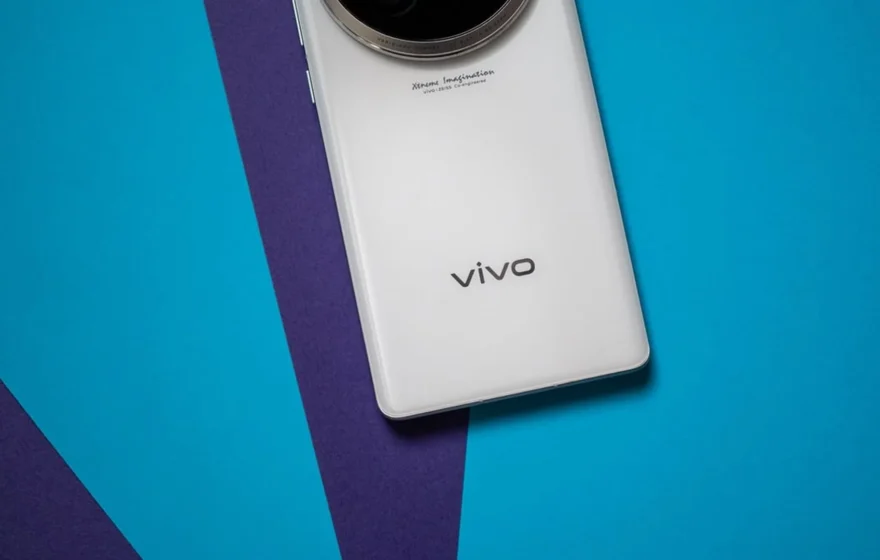
Vivo is reportedly mass-producing a smartphone battery with a rated capacity of 11,970mAh, a figure that would have sounded absurd only a few years ago and now puts the company within touching distance of a 12,000mAh phone. If the battery reaches a handset, it would be one of the largest ever fitted to a mainstream smartphone, and it would underline just how quickly battery capacity has become the new battleground for Chinese phone makers.
The report comes from the well-known Weibo tipster Digital Chat Station, who says the battery is already in mass production, although the phone that will use it has not been named. The tipster referred to a “blue” manufacturer, widely understood to mean Vivo, and claimed the company is planning an even bigger battery for a future phone with a larger display.
What Vivo Is Planning
The latest leak follows an earlier report from the same tipster in February, which said Vivo was testing a smartphone with a single-cell silicon battery offering a typical capacity of between 11,000mAh and 12,000mAh. At the time, the device was still in testing, and there was no guarantee it would ever reach the shops. The new information suggests the battery has moved past that stage and into mass production, which is usually one of the last steps before a phone is launched.
What remains unknown is which Vivo phone will carry the battery and when it might appear. The tipster named no model or date, and Vivo has not officially confirmed the battery, so a component in mass production does not always mean a phone is around the corner.
Even so, the direction of travel is clear. The reason is a change in chemistry: silicon-carbon batteries replace graphite anodes, and silicon can hold roughly ten times more lithium per gram than graphite. By mixing silicon into a carbon structure that absorbs the swelling as the battery charges, makers can fit far more capacity into the same space without making the phone thicker.
The results are already on shop shelves. The OnePlus 15 ships with a 7,300mAh battery, the realme GT 8 Pro reaches 7,000mAh, and the vivo X300 Ultra combines a 6,600mAh cell with 100W charging. Even foldables, which have the least room to spare, are joining in: Honor’s Magic V6 fits 6,660mAh into a body less than 9mm thick. Against that background, a 12,000mAh battery looks less like a stunt and more like the next step in a race that is already well under way.
The contrast with the two biggest names is sharp. Samsung’s Galaxy S26 Ultra still ships with a 5,000mAh battery, and Apple does not publish a milliamp-hour figure for the iPhone 17 Pro Max, preferring to talk about up to 37 hours of video playback. Whether a 12,000mAh battery actually lasts longer in daily use will depend on the screen, the processor and the software, but the number itself sends a message.
A New Foldable on the Way
Digital Chat Station also shared information about Vivo’s next foldable phone, which is expected to arrive in 2027. When asked whether the device would use a flagship 2nm processor, the tipster suggested the chipset would not be a problem, which hints that Vivo expects to have access to the latest silicon when the phone is ready. The design, however, is still undecided: Vivo is reportedly weighing up either a large foldable or a wider form factor, and has not yet settled on one.
That uncertainty is normal for a phone more than a year away. Earlier reports also suggested Vivo could introduce a wide-screen candybar flagship in 2027, a different answer to the same question: how to give people more screen without making the phone awkward to carry.
iQOO Could Follow With Its Own Big Battery
The tipster was also asked about a flagship phone with a mid-sized display, apparently referring to an upcoming device from iQOO, Vivo’s performance-focused sub-brand. His brief reply did not confirm any particular model or launch plan, so that remains speculation for now. Separately, reports suggest iQOO is developing a 7-inch mid-range phone with a battery of more than 10,000mAh, possibly launching in China around the middle of 2027.
If that happens, it would show the big-battery trend spreading beyond flagships and into the mid-range, where battery life matters even more to buyers who keep their phones for years. A 10,000mAh battery in a mid-range phone would have been unthinkable not long ago, and it would put pressure on every other maker in that price band to follow.
For now, though, the story rests on a leak: Vivo has confirmed neither the battery, its foldable design nor the rumoured iQOO device, and none has a confirmed date. What is certain is that the battery race is accelerating. If a phone with a battery close to 12,000mAh reaches the market, it will reset expectations for what a phone can do between charges, and rivals will have to answer with something bigger of their own.
