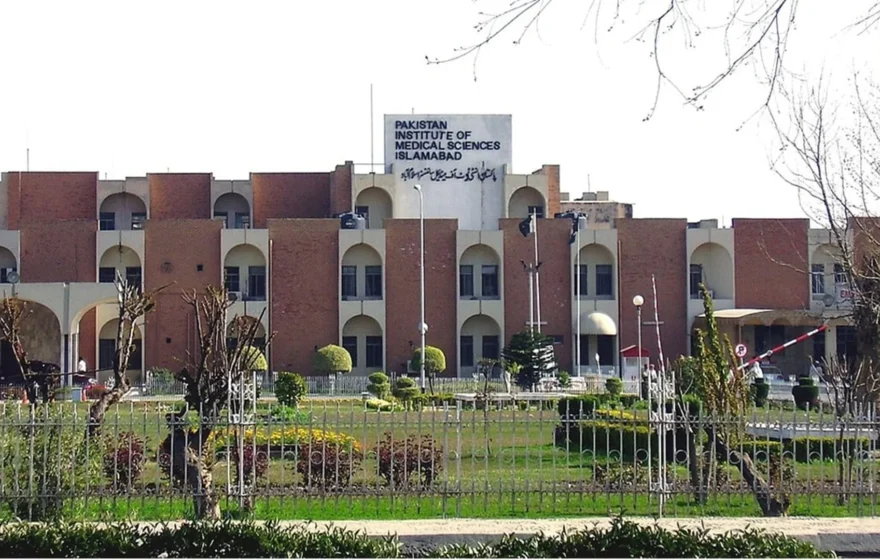
Islamabad’s largest public hospital has taken its biggest step yet into digital healthcare, with the Pakistan Institute of Medical Sciences rolling out a single electronic identity for every patient across all five of its hospitals at a cost of more than Rs1.25 billion. The system, called One Patient, One ID, links registration and diagnostic services on one shared platform, so a patient at any PIMS facility is recognised by the same record and doctors can pull up that person’s history on a computer instead of hunting through paper files.
The project has been developed jointly by the Ministry of National Health Services and the Ministry of Information Technology, with the National Information Technology Board building the software behind it. All five hospitals operating under PIMS are now connected: the Cardiac Centre, the Children’s Hospital, the Burn Centre, the Maternal and Child Health Centre, and the main hospital for adult patients. Twenty-four departments and services are on the same network, including laboratories, X-ray units, reception counters, wards, emergency departments, transport services and outpatient departments.
For patients, the change is meant to be felt in the small frustrations that have long defined a visit to a busy government hospital. Registration and test results will no longer sit in separate places, and a doctor in one department will be able to see what another department has already recorded, rather than asking the patient to repeat their history or carry reports from counter to counter.
The government has already set out the next phase of the work. A paperless system and barcode technology are to be introduced at PIMS, with the Cardiac Centre scheduled to become paperless by October 31. Barcodes would let staff track a case through the hospital without relying on handwritten slips, and a paperless ward would cut down on lost or misfiled documents that slow down treatment, although the real test will come when the system is handling peak outpatient hours across all five sites at once.
The digital overhaul does not arrive in isolation. It is part of a wider reform drive at PIMS that followed the fire on August 26 in the neonatal nursery of the Mother and Child Hospital, in which 14 newborns died. Prime Minister Shehbaz Sharif formed a five-member inquiry committee, and its report, released in September, found systemic and institutional failures, with the hospital and its senior management bearing primary responsibility for failing to address known safety risks.
On September 16, the prime minister ordered that the short-term measures proposed in the inquiry report, including improvements to the fire safety system, be completed within three months. A performance audit of PIMS by the health ministry, reviewed at the same meeting, had recorded only 39.7 per cent compliance across the indicators assessed, against an acceptable target of 90 per cent. He also directed an audit of the Polyclinic Hospital and called for a long-term plan to bring PIMS up to international standards.
A special reform committee set up by the prime minister has since been working on the governance side of that plan. Its October meetings reviewed proposals for PIMS to operate under a board of governors, with a chief executive officer appointed from the market and board members serving three-year terms, backed by a draft law. The hospital’s new executive director, Professor Tanveer Khaliq, appointed in early October, also announced measures to modernise infrastructure, keep medicines flowing, replace ageing equipment in phases and expand specialist surgical training.
The One Patient, One ID idea itself is not brand new at PIMS, which is one reason officials are confident it can scale. An earlier phase was already running in 2025, when the information technology board reported that 813,361 patients had been registered at PIMS counters between July and November of that year. In the same five months, laboratories carried out more than 1.5 million tests and nearly 30,000 patients were admitted to inpatient wards, while more than 2,000 staff members received training and the average waiting time for medical reports came down to three to four hours.
Under the system, a citizen’s national identity card number functions as a permanent medical record number, so test results, diagnoses, treatments and prescriptions can be retrieved at any participating facility rather than starting from scratch at each visit. The same digital push has since extended to the hospital’s blood bank, where a digital system now connects blood inventory, donor records and usage data across PIMS hospitals, giving staff a live view of blood available in an emergency.
What will matter now is whether the Rs1.25 billion investment changes the experience of an ordinary patient. A single identity and shared records should mean fewer repeated tests, shorter waits for reports and less time lost between departments, and paperless working at the Cardiac Centre at the end of October will be an early indicator of how smoothly the hospital can run without paper. But technology alone cannot fix staffing gaps, equipment shortages or safety lapses, and the reforms launched after the August fire will ultimately be judged on whether PIMS becomes a hospital where records are reliable and wards are safe.
