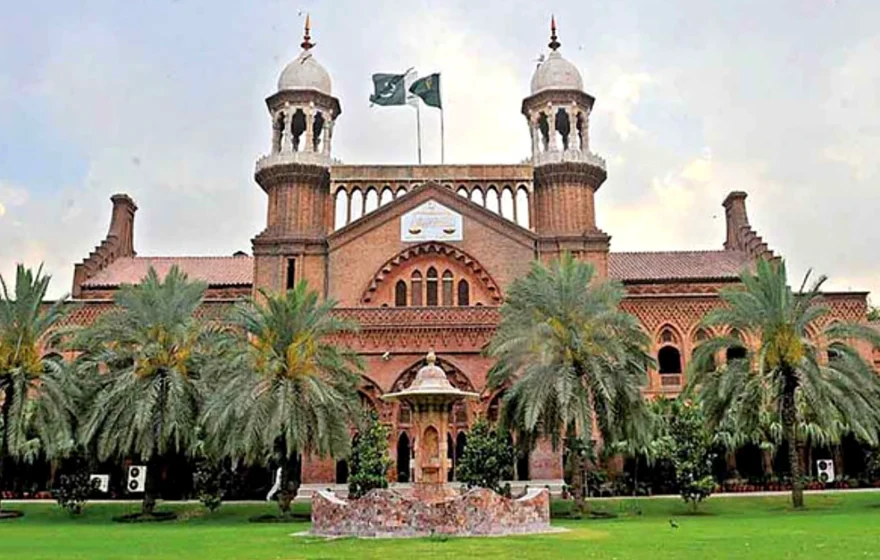
The Lahore High Court has suspended an order issued by the Higher Education Commission, observing that the commission does not have legal authority over employment and service matters of faculty and staff at chartered universities in Pakistan. The interim order, issued by Justice Jawad Hassan, is an early but significant step in a case that could clarify the boundary between the country’s higher education regulator and the universities it oversees.
The case was brought by a private university challenging what it described as interference by the commission in its internal affairs. At the hearing, the university’s lawyer, Advocate Muhammad Ali Siddiqui, argued that the institution was established under its own legislation, the Times University Multan Act of 2020, and that its employment matters are governed by its Employees Service Regulations of 2022. In other words, the university says it already has a legal framework for hiring, service conditions and staff discipline, and that framework does not give the commission a role in day-to-day employment decisions.
The argument turns on what the law actually gives the Higher Education Commission power to do. Section 10 of the Higher Education Commission Ordinance of 2002, the lawyer explained, authorises the commission to evaluate, improve and promote higher education and research through policies and guidelines. That is a broad and important mandate, covering standards, quality, funding guidance and the overall direction of the sector. What it does not do, on the university’s reading, is authorise the commission to intervene in the internal administration of a chartered university or to decide matters relating to its employees.
That distinction between setting standards and running an institution lies at the heart of the dispute. Regulators in many countries face the same tension: they are expected to protect quality and the public interest, but universities also need autonomy to manage their own staff, design their own structures and respond to their own circumstances. When a regulator crosses from guidance into direct management, universities argue, it undermines the very independence that allows them to function as academic institutions. The court, at this interim stage, appears to have found that argument persuasive enough to pause the commission’s order while the case is heard in full.
The lawyer also told the court that the commission had issued the disputed order following directions given in an earlier writ petition. His point was that directions in one case cannot expand the commission’s legal powers beyond what Parliament, or in this case the ordinance, actually granted. A court direction can require a body to act within its powers, but it cannot give that body powers it does not possess. Justice Hassan, after hearing the arguments, suspended the order and noted that the university’s claim that the commission had exceeded its authority appeared to carry significant weight.
The court has now admitted the petition for regular hearing and issued notices to the respondents for 10 December. It has also directed the law officer to obtain instructions and ensure that the respondents file a report and paragraph-wise comments within four weeks. A senior official of the commission who is familiar with the case has been ordered to appear at the next hearing to explain the commission’s position. Those directions mean the case will not drift: the commission must set out its defence in detail, and a senior officer must answer for it in person.
For the university sector, the interim order will be watched closely, because its reasoning could affect other chartered institutions in similar positions. Pakistan has a large number of private universities, many established under their own provincial acts, each with its own statutes and service regulations. If the courts ultimately hold that the commission cannot intervene in their employment matters, those universities will have clearer protection for their internal governance. If, on the other hand, the commission succeeds in showing that its order fell within a broader power to ensure standards, the balance will tilt the other way.
It is important to remember what an interim order is and is not. It is not a final judgment. It is a temporary measure, granted because the court considers that the petitioner has a serious case and that allowing the order to operate in the meantime could cause harm that a later judgment could not undo. The full hearing, with the commission’s detailed response and the senior officer’s appearance, will test the arguments properly. Until then, the commission’s order stands suspended, and the university’s existing service regulations remain the governing framework for its staff matters.
For staff and faculty at the university concerned, the immediate effect is a measure of stability: an external order affecting their service matters has been paused while the courts examine whether it should ever have been made. For the commission, the case is a reminder to ground its interventions clearly in its statutory powers. And for the sector as a whole, the hearing on 10 December will be a date to watch, because the final outcome may help define, for years to come, where the commission’s legitimate oversight ends and a chartered university’s right to manage its own affairs begins.
