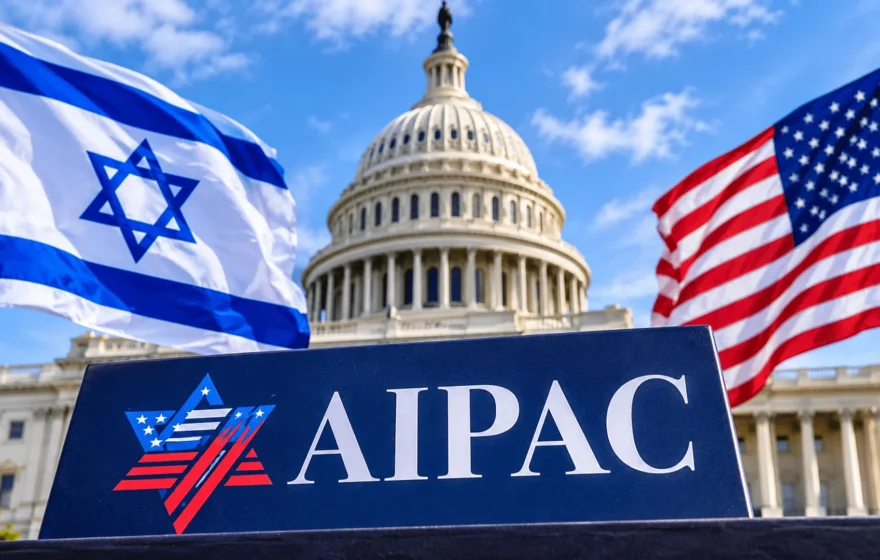
The most powerful pro-Israel lobby in the United States has suffered one of the worst electoral defeats in its history, after tens of millions of dollars it poured into the 2026 midterm elections went to candidates who lost. An analysis by the Quincy Institute for Responsible Statecraft found that about 55.3 million dollars, nearly two thirds of the total spent by groups linked to the American Israel Public Affairs Committee (AIPAC), went to campaigns that ended in defeat. The groups spent around 84.1 million dollars in all, through AIPAC, its affiliated super PAC the United Democracy Project, and several other committees.
The scale of the failure is striking when set against the lobby’s recent record. Only about a third of its spending this time went to candidates who won. In 2022, 69 per cent of the super PAC’s spending went to races where it got the result it wanted, and in 2024 that figure rose to 87 per cent. The 2026 result is therefore not a small dip but a sharp reversal, raising questions about whether the lobby’s money still carries the influence it once did.
Nowhere was the damage greater than in Michigan, where the lobby staked more money on a single contest than ever before. The United Democracy Project spent 31.47 million dollars in a failed effort to stop Abdul El-Sayed, a progressive former public health official, from winning a seat in the United States Senate. In the Democratic primary it backed Congresswoman Haley Stevens with close to 30 million dollars, yet El-Sayed won the nomination narrowly. The lobby then put about 9 million dollars behind Republican Mike Rogers in the general election, and El-Sayed beat him too.
Michigan was not an isolated failure. The group’s two biggest losing races together consumed 37.78 million dollars. The second was in Illinois, where it tried to prevent Daniel Biss from winning the Democratic primary in the ninth congressional district. In the seventh district it spent 5.03 million dollars, most of it backing Melissa Conyears-Ervin’s unsuccessful primary campaign. There were also defeats for candidates it backed in California and New York. The pattern was the same everywhere: large sums of money, spent loudly, with little to show for it.
Yet the picture is not one of total collapse. AIPAC said more than 234 candidates it supported across both political parties won their contests. One tracker recorded 356 wins out of 394 backed candidates, although most were safe incumbents. Pro-Israel groups backed candidates in at least 32 of the 35 Senate races, spending more than 100,000 dollars in 26 of them and winning 21 on November 3. The largest successful investment came in Maryland’s fifth district, where 5.73 million dollars helped Adrian Boafo win a crowded Democratic primary. Money still bought victories in some places, but the expensive races were the ones it lost.
To understand why the result matters, it helps to remember how recently AIPAC became a direct player in elections at all. Founded in the 1950s, it spent decades building influence through policy expertise and relationships in Congress rather than by funding campaigns. That changed in late 2021, when it formed its own political action committee and created the United Democracy Project. The new approach brought quick successes: in 2024 the super PAC spent about 14.5 million dollars to defeat Representative Jamaal Bowman in New York and 8.6 million dollars to defeat Representative Cori Bush in Missouri, both critics of Israel’s actions in Gaza.
The 2026 midterms arrived in a very different climate. Democrats won control of both chambers of Congress on November 3, riding anger over the rising cost of living that many voters linked to the war in Iran. AIPAC had been one of the first groups to praise President Donald Trump’s decision to launch the war in February, and it spent heavily on advertisements attacking candidates who called for cutting off American aid to Israel. After the results, Vice President JD Vance publicly blamed supporters of the war for the Republican Party’s losses. The Quincy Institute’s executive vice president, Trita Parsi, said candidates now see the lobby’s donations as a liability and are turning them down.
The lobby has already begun to change course. On October 22, shortly before the election, AIPAC told members it would stop endorsing candidates and stop making direct contributions through its political action committee once the 2026 cycle ended. The United Democracy Project will keep operating, and the group insists its mission remains unchanged. But the announcement amounts to an admission that the old model has become a burden, and the losses will make it harder to raise money for 2028.
The midterms were the most expensive elections, costing close to 12 billion dollars, and the lobby’s 84 million was only a small part of that flood of money. What makes its story stand out is the result: never before had so much of its spending gone to losing causes. For years candidates feared that opposing the lobby would bring a wave of attack advertisements they could not survive. The 2026 results suggest that fear may no longer be justified.
