Pakistan remain rooted to the bottom of the ICC World Test Championship standings after the opening Test against Sri Lanka ended in a draw at the Rawalpindi Cricket Stadium on Friday. The draw gave Pakistan four points, but with only two Tests left and a points percentage of just 7.50, their hopes of reaching the final are long gone, and the rest of the campaign is now about pride and rebuilding.
The Updated Points Table
The latest standings make grim reading for Pakistan supporters. New Zealand lead the table with 52 points and a percentage of 72.22 from six matches. Defending champions South Africa are second with 60 points and 71.43 per cent after five wins in seven matches, while Australia sit third on 69.23 after nine wins from thirteen matches. India are fourth on 51.52, followed by Bangladesh on 45.83 and England on 38.54. Sri Lanka sit seventh with 28 points and 33.33 per cent, West Indies are eighth on 27.38, and Pakistan are ninth and last.
Pakistan’s figures tell the story of the whole cycle: ten Tests, two wins, seven defeats and one draw, and just nine points. Two wins are worth 24 points and the Rawalpindi draw added four more, but nineteen points have been lost to slow over-rate penalties, a self-inflicted wound that has cost them dearly. Teams are ranked by points percentage, the share of available points they have won, rather than by total points, which is why Australia’s 108 points still leave them behind New Zealand and South Africa. For Pakistan, 7.50 per cent is the lowest in the competition by a wide margin.
The race for the final is tight at the top. The top two teams will meet in the final at The Oval in London from 9 to 13 June 2027, and with New Zealand, South Africa and Australia separated by less than three percentage points, every remaining series matters. India, on 51.52 with seven Tests still to play, remain in the hunt. Sri Lanka’s draw kept them seventh, but with four draws in seven matches they have become the hardest team in the competition to beat, even if turning draws into wins has proved beyond them.
How the Rawalpindi Test Ended in a Draw
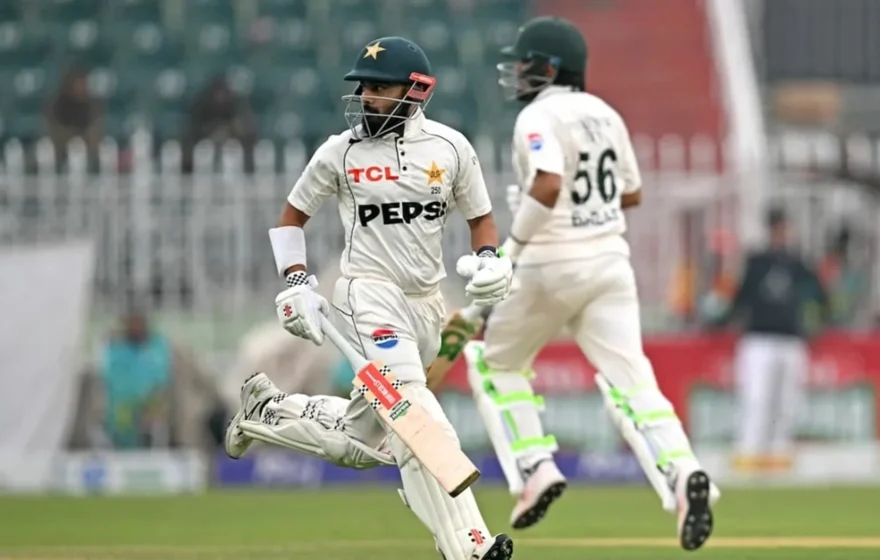
The match followed a familiar pattern: moments of real promise, followed by a failure to press home the advantage. Pakistan batted first and posted 434 for nine declared, with five batters reaching half-centuries, including three debutants. Saud Shakeel top-scored with 93, Tayyab Arif made 57 from just 51 deliveries, Arafat Minhas contributed 52 and Mohammad Taha scored 51, while captain Babar Azam added 50.
Sri Lanka replied with 446, taking a narrow twelve-run lead after recovering from 65 for three. Kamindu Mendis scored 58 in a ninety-run stand with Dhananjaya de Silva, before de Silva and captain Kusal Mendis put on 249 together, both reaching centuries. Pakistan fought back on the fourth morning through debutant Saqib Khan, who claimed seven wickets, but the first-innings lead had slipped away.
Pakistan’s second innings was built around Shakeel once more. The left-hander fell three runs short of his fifth Test century, scoring 97 from 210 balls before Lahiru Kumara bowled him. Babar declared at 284 for eight on the final day, setting Sri Lanka 273 to win, but with limited time left and a flat pitch offering little, both teams agreed to a draw. It was a fair result, but one that helped neither side very much.
What the Draw Means for Pakistan
For Pakistan, the mathematics are now brutally simple. Their only remaining fixtures are two home Tests against New Zealand in March 2027, and even winning both would lift them only to around 23 per cent, far below final contention. The campaign was lost long before Rawalpindi: seven defeats in ten matches, and nineteen points surrendered to slow over-rates, left Pakistan with no realistic route to the top two.
That does not mean the remaining matches are without value. The Rawalpindi Test showed that Pakistan have young players ready to contribute at the highest level, from Shakeel’s twin half-centuries to the debutants who scored runs and Saqib Khan’s seven wickets on debut. The second Test against Sri Lanka, and then the series against New Zealand, offer the chance to build a settled side. The lesson of this cycle is that draws are not enough when the table is decided on percentages.
The wider lesson is about discipline as much as ability. Nineteen points lost to slow over-rates is the equivalent of more than a win and a half, and the difference between a poor campaign and a disastrous one. If Pakistan are to compete in the next cycle, they must fix the basics first: bowl their overs on time, turn strong first innings into wins, and stop giving points away. The final at The Oval next June will be played without them, and the work of making sure that does not happen again starts now.
