Transsion Looks Beyond Phone Assembly
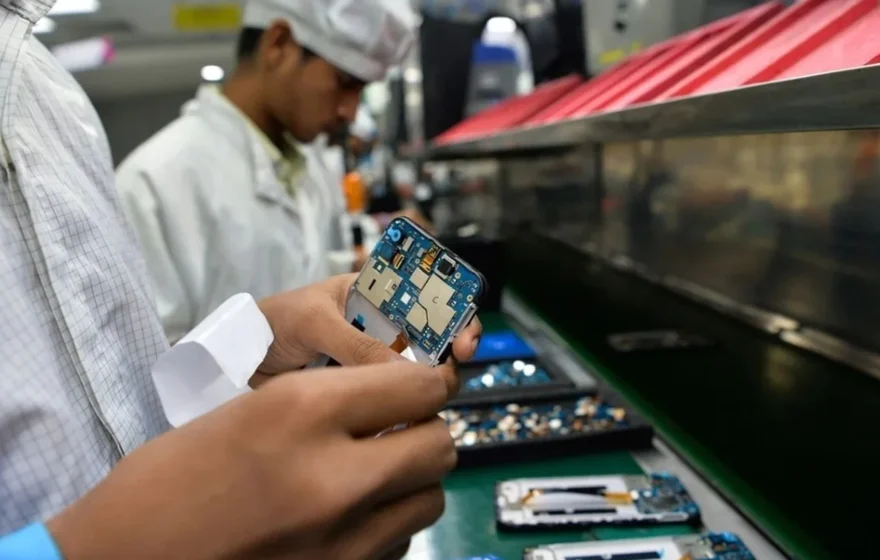
Transsion Holdings, the Chinese company behind Tecno and Infinix, two of the most popular phone brands in Pakistan, has told the government it wants to move beyond simply assembling handsets in the country and start making phone parts here as well. The company’s chairman and founder, George Zhu, raised the idea in a meeting with Finance Minister Muhammad Aurangzeb in Islamabad on Thursday, 13 November, to discuss deeper localisation and building a domestic supply chain for the phone industry.
The talks focused on increasing local manufacturing, developing domestic supply chains and setting up the supporting industries a real phone-making business needs. Transsion pointed to the chance to move past assembly towards greater value addition and local component production, which could open up work for Pakistani suppliers that currently sit outside the industry. The company did not, however, announce an investment figure, name a facility or set out a timetable, so this remains a statement of intent rather than a firm commitment.
Transsion already has a substantial footprint in Pakistan. Its brands assemble smartphones here, and the company has also moved into electric bikes and energy storage products. Zhu was joined by Pakistan head Joe Hu, board member Arif Chowdhry, head of manufacturing Zakkary Zhou and manufacturing centre general manager Eason Zhou, while Tecno chief executive Aamir Allawala attended with directors Asif Allawala and Abdullah Allawala.
The reason this matters is that Pakistan’s phone industry, for all its size, still does very little actual manufacturing. Under the Mobile Device Manufacturing Policy introduced in 2020, more than 35 manufacturers set up assembly plants, including Samsung and Xiaomi, employing around 40,000 people, according to the Pakistan Telecommunication Authority. Local plants produced 21.94 million handsets in 2022, against only 1.53 million finished phones imported, and in the first nine months of 2026 they turned out 20.08 million handsets while commercial imports stood at just 2.85 million. What has not followed is the making of the parts themselves.
Domestic value addition in the phones assembled in Pakistan is still only around 10 to 15 per cent, according to a recent Policy Research Institute of Market Economy brief, and the original policy target of 49 per cent localisation by June 2023 was missed by a wide margin. The brief blames an upside-down tariff structure: parts imported as completely knocked-down kits for assembly enter duty-free, while the raw materials and inputs needed to make those same parts in Pakistan attract duties of 20 to 30 per cent, making imported components cheaper than locally made ones. Customs figures show Pakistan spent around Rs520 billion on mobile phone imports this fiscal year, including Rs420 billion on assembly kits.
Transsion knows the risks of that dependence from experience. Its Tecno production facility was forced to stop work in early 2023, when import curbs and difficulties in opening letters of credit choked off the supply of raw materials and components. At the time the plant was producing around 300,000 smartphones a month and employed 12 Chinese managers, 400 Pakistani engineers and 2,500 other workers.
Pakistan Seeks More Manufacturing and Exports
For the government, the attraction of Transsion’s interest is not only jobs in assembly halls but the chance to turn Pakistan into a place where phones are made for export as well as for the home market. Aurangzeb encouraged Transsion to expand its investment and stressed export-oriented manufacturing, local value addition and integration into international supply chains. The talks also covered using Pakistan as a manufacturing and export base, with Transsion pointing to the size of the domestic market and the country’s location as factors in its favour.
That pitch fits with a policy shift already under way in Islamabad. The Ministry of Industries and Production has finalised a draft Mobile and Electronic Devices Manufacturing Policy for 2026 to 2033, which would move the emphasis from assembly to component production, technology transfer and exports, with penalties for companies that miss localisation targets. The draft aims to raise domestic value addition gradually to 50 per cent by 2033, backed by a proposed Rs104 billion Technology Investment Fund, financed in part by levies of one to five per cent on imported phones and kits.
The production figures also show why Transsion’s brands are worth courting. In the first nine months of 2026, Infinix was the second-largest producer in the country with 1.96 million handsets, Itel made 1.59 million and Tecno produced 1.16 million, putting all three Transsion brands among the leading names in local assembly. The company first set up manufacturing in Pakistan in 2019, and says its Pakistani operations now employ around 5,000 workers.
Both sides ended the meeting by expressing interest in closer cooperation and further investment in Pakistan. The test now is whether that interest turns into something concrete. Pakistan has heard similar ambitions before, including a 49 per cent localisation target that was never met. The next step that would show this time is different is a named facility, an investment figure and a date, plus a tariff structure that makes a Pakistani-made charger, battery or circuit board cheaper than an imported one. Until those appear, Transsion’s visit is best read as a serious opening.
