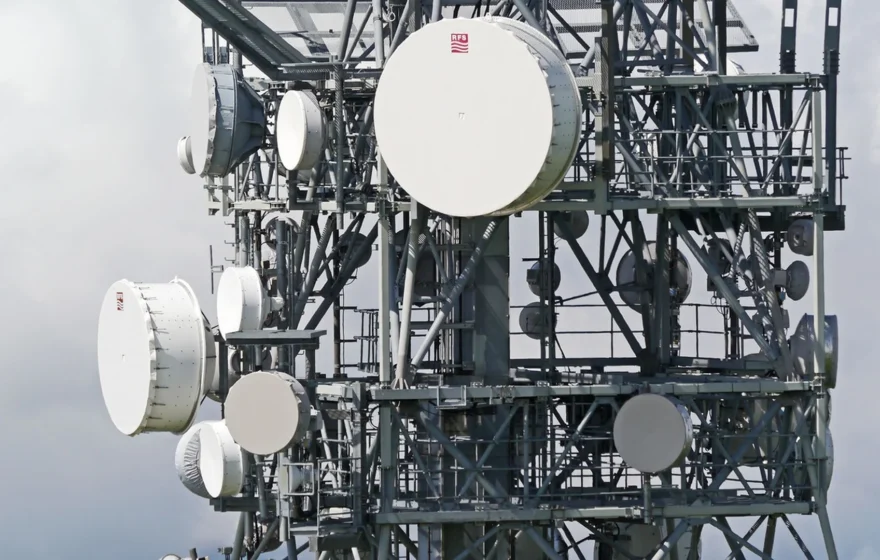
A Bangladesh-focused private equity firm has agreed to buy the entire Pakistan business of Malaysian telecommunications infrastructure company EDOTCO, in a deal covering around 3,000 telecom towers across the country. The Osiris Group announced the agreement on November 23, saying the proposed acquisition includes EDOTCO Towers Pakistan, the local company that owns and operates the tower network.
The deal is not yet complete: closing remains subject to the usual conditions, including regulatory approvals in Pakistan. But the agreement is significant. It would put one of Pakistan’s largest independent tower networks into new hands, as part of a much larger reshaping of the region’s telecom infrastructure.
For Pakistan’s mobile industry, the change matters because towers are the quiet backbone of every call and data session. Operators rent space on them rather than building their own, which saves money and speeds up coverage. Whoever owns the towers shapes how quickly networks expand and how much it costs to carry the country’s growing appetite for mobile data.
Axiata Reshapes Its Tower Business
The Pakistan transaction is part of a wider restructuring involving EDOTCO’s operations in several Asian markets, including the Philippines, Indonesia, Bangladesh, Pakistan and Cambodia. Through these transactions, Axiata aims to realise value from its international portfolio and strengthen its financial position, cutting debt and freeing up money for its core mobile businesses.
Axiata values EDOTCO at 11.8 billion ringgit and expects the disposals to generate about 2.2 billion ringgit in gross proceeds. A consortium led by Australia’s Macquarie Asset Management has agreed to acquire the tower businesses in the Philippines, Indonesia and Cambodia at a combined enterprise value of about 1.2 billion US dollars. Osiris is buying a seventy percent stake in EDOTCO Bangladesh, which operates roughly 17,000 towers, as well as the whole of the Pakistan business.
Axiata will also sell an approximately 15.645 percent stake in EDOTCO Malaysia to Khazanah, Malaysia’s sovereign wealth fund, for about 659.4 million ringgit, reducing its interest from 63 percent to about 47.4 percent and leaving Khazanah as an equal shareholder. Axiata says the arrangement will preserve Malaysian ownership of its domestic tower business.
A Major Step in Axiata’s Restructuring
Axiata Chairman Tan Sri Shahril Ridza Ridzuan described the proposed transactions as a major milestone in the group’s transformation strategy, known as Axiata28: Advancing Asia. He said EDOTCO had developed into a strong regional telecommunications infrastructure platform, and that the restructuring would allow Axiata to realise part of the value created over more than a decade while retaining a significant interest in EDOTCO Malaysia.
Axiata expects the deals to cut its gearing, a measure of debt against equity, to 0.50 times from 0.71 times, and to produce a net gain of roughly 2.1 billion ringgit. The transactions still need approval from Axiata’s shareholders and from regulators in the countries involved, and are expected to be completed in 2027.
Osiris has its own plans for what it is buying. It will combine EDOTCO Bangladesh’s tower and fibre network with its data centre business, which is building hyperscale and artificial intelligence-ready sites. The combined platform would link towers, fibre and data centres to serve demand for fifth-generation services, cloud computing and artificial intelligence. For Pakistan, the firm has spoken of growing tenancies, extending the fibre network and improving energy efficiency.
How EDOTCO Built Its Business in Pakistan
EDOTCO entered Pakistan’s telecom infrastructure market in 2015 and expanded through acquisitions and tower-sharing agreements with mobile operators. Its business is straightforward in concept but demanding in practice: it owns, builds and maintains telecom towers that mobile operators can rent and share, allowing them to reduce infrastructure costs and avoid duplicating steel and concrete across the same hillside.
In 2017, it partnered with Dawood Hercules to acquire Jazz’s 13,000 towers in a proposed 940 million dollar deal, which would have transformed the market overnight. The deal was called off in 2018 after regulatory approvals were not secured, and EDOTCO grew more gradually instead, becoming one of Pakistan’s major independent tower operators.
The sale comes at a time when Pakistan’s tower market is itself changing. Engro Connect completed a reported 560 million dollar purchase of Jazz’s tower business in 2025, showing that large investors see value in owning the physical infrastructure behind mobile networks. As operators prepare for more data-hungry services and eventually for fifth-generation networks, the demand for tower space, fibre connections and reliable power at each site will only grow.
Whether Osiris can make the most of the Pakistan business will depend on regulatory approval, the price of the deal and the quality of the network it inherits. It will need to keep the towers running, win new tenants and invest in fibre and power, while the operators it serves push for lower costs. If it succeeds, the deal could mean better coverage and faster networks for Pakistani users. For now, the agreement shows how far the region’s telecom infrastructure has come, from a cost operators carried alone to an asset global investors are willing to buy, sell and build upon.
