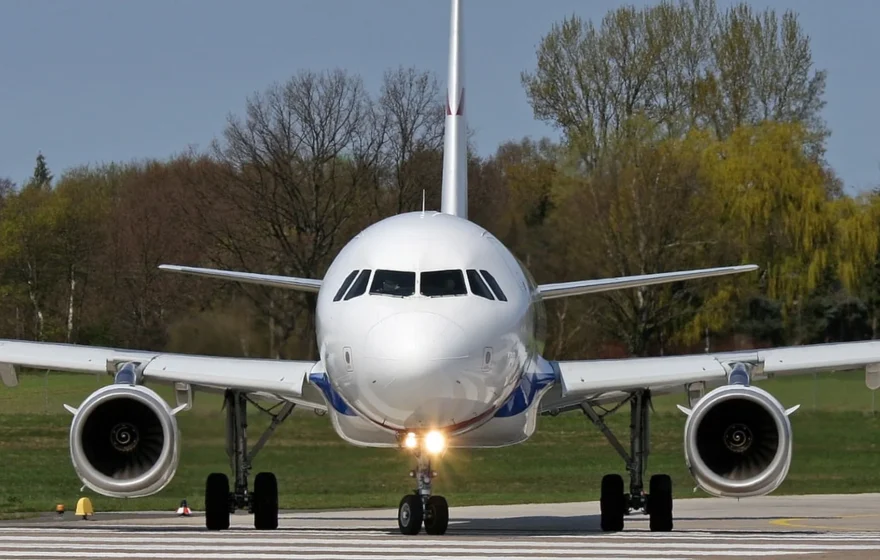
At least 25 domestic and international flights were delayed at Lahore’s Allama Iqbal International Airport, throwing travel plans into disarray and leaving passengers waiting for hours in departure lounges. The disruption affected both arriving and departing travellers, and several airlines also cancelled flights as the delays piled up through the day.
Airport sources said the delays ranged from one to five hours, a spread wide enough to wreck onward connections and ruin schedules for families, business travellers and pilgrims alike. After delays to flights bound for Riyadh, departures for Jeddah were also pushed back by five to seven hours, among the longest waits of the day. Flights from Lahore to Karachi faced delays of around three hours, which airport sources linked to aircraft issues and bad weather.
The picture at the airport was one of crowded halls, uncertain departure boards and passengers trying to rebook or simply waiting for news. For those flying abroad, a delay of five hours or more can mean a missed connection in a Gulf hub or a lost hotel night. For domestic travellers, even a three-hour delay on the busy Lahore to Karachi route can turn a short hop into most of a day spent at the airport.
Why Flights Were Held Up
The immediate reasons given were a mix of aircraft issues and bad weather, a combination that often hits Lahore hardest at this time of year. Aircraft problems can ground a plane while engineers work on it, and when one aircraft is late, the knock-on effect spreads quickly, because the same plane is often scheduled for several flights in a day. Bad weather adds a second layer of trouble, slowing arrivals and departures and forcing airlines to wait for conditions to improve.
Lahore’s winter weather is a familiar problem for aviation. The smog season runs roughly from November through January, when a mix of fog and air pollution cuts visibility across the Punjab plains, especially in the early morning. On November 2 this year, Lahore topped the global air pollution rankings with an air quality reading of 447, a hazardous level that showed how bad the air had become. Low visibility from smog and fog delays, diverts and occasionally cancels flights at Lahore, Sialkot and Islamabad airports, and the same conditions close motorways and slow road travel.
This is not the first disruption of the season. On November 20, five flights were cancelled and nine delayed at Lahore airport for reasons including fog and technical and operational problems, with flights to and from Abu Dhabi, Dubai, Bahrain, Jeddah and Karachi among those affected. That episode, only four days before this latest disruption, shows how quickly the pattern is repeating as winter sets in.
A Familiar Pattern Every Winter
Anyone who flies through Lahore in winter knows the routine. Flights scheduled for the early morning are the most vulnerable, because visibility is at its worst between dawn and mid-morning. By late morning conditions often improve, and the clearest window for flying tends to fall around midday and the early afternoon, before the air thickens again in the evening. Airlines and airport staff plan around this, but when aircraft problems strike on top of poor weather, even the best planning can unravel.
The airport is one of Pakistan’s busiest, handling domestic routes alongside international services to the Gulf, Europe and beyond. That volume means a bad day at Lahore ripples outwards: a delayed departure becomes a late arrival in Dubai or Jeddah, and a late arrival can mean a missed connection. Airlines try to recover by turning planes around faster, but there is only so much slack in a tightly packed timetable.
Passengers caught in the disruption were left with the usual frustrations: long queues at airline counters, little information about new departure times, and the cost of meals and rearranged plans. For families travelling with children or elderly relatives, hours in a crowded terminal are more than an inconvenience, and for workers flying to jobs abroad, a missed connection can have real financial consequences.
What Travellers Should Do Now
For now, the advice for anyone flying through Lahore is straightforward: check the flight status with the airline before leaving for the airport, and keep checking it, because departure times can change more than once in a day. Travellers should allow extra time, keep bookings flexible where possible, and prefer late-morning flights while the smog season lasts.
The disruption is also a reminder of how much of Pakistan’s air travel depends on the weather over one city. Lahore’s airport will keep handling the same volume of flights through the winter, and the smog and fog will keep returning. Better forecasting, quicker turnarounds and clearer communication with passengers would all help, but they cannot remove the weather itself.
Until conditions improve, passengers should expect the possibility of delays on any given day, and plan accordingly. The airport will clear the backlog as aircraft become available and the weather allows, but for the travellers who spent today waiting in Lahore, the lesson is already clear: in this season, a ticket is a plan, not a promise.
