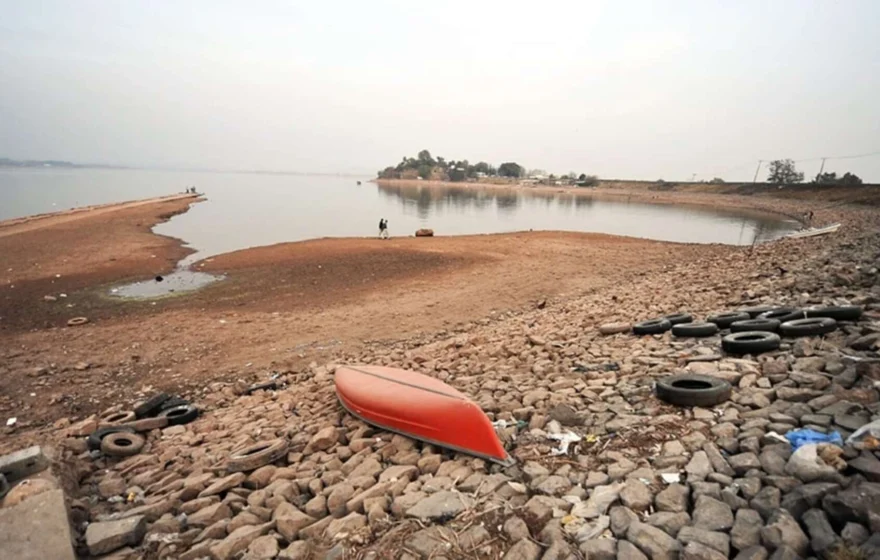
The Pakistan Meteorological Department has warned that drought conditions could take hold across Sindh, Balochistan and southern Punjab and persist into the early months of 2027, after five straight months in which rainfall stayed well below normal in all three regions. The warning, carried in the department’s latest Drought Watch advisory, raises the prospect of deepening water shortages, struggling winter crops and growing hardship for families who depend on rain-fed farming and livestock.
According to the Met Office, the dry spell began in July and has not let up since. The assessment covers the period from July 1 to November 20, and in every one of those months the three regions received less rain than they normally would. The shortfall is worrying because it continued through the monsoon season, when southern Pakistan normally receives a large share of its yearly rainfall and when rivers, reservoirs and underground reserves are replenished. When the monsoon itself fails to deliver, the effects are felt for months afterwards.
Sindh has been hit hardest. The province recorded 61 per cent less rainfall than normal in July, 22 per cent less in August and 90 per cent less in September. The situation then grew worse rather than better. October brought no rain at all against the seasonal average, a shortfall of 100 per cent, and during the first twenty days of November rainfall stayed 99 per cent below normal. Month after month of almost no rain has left the province’s soil parched and its water sources under strain.
Balochistan has followed a similar pattern, though the scale of the deficit has varied from month to month. Rainfall there came in 41 per cent below normal in July, 12 per cent below normal in August, 68 per cent below normal in September and 80 per cent below normal in October. During the first twenty days of November the province remained 79 per cent below its normal rainfall. The department noted that both provinces have now recorded below-normal rainfall in all five assessment periods, which points to a persistent dry pattern rather than a single bad month.
The Met Office has also drawn attention to the growing number of consecutive dry days across southern Pakistan. Long unbroken stretches without rain dry out the soil, speed up evaporation and steadily reduce the water available for farming and household use. The department warned that if the dry weather continues, soil moisture will fall further, winter crops will suffer and pressure will grow on both surface water and groundwater. Reports citing the National Disaster Management Authority’s emergency operations centre have identified districts including Umerkot, Tharparkar, Mirpur Khas and Sujawal in Sindh and Chagai and Washuk in Balochistan among the areas most exposed.
The timing makes the warning more serious. The Rabi season, when farmers sow wheat and other winter crops, is under way, and wheat needs moisture in the soil at sowing time and steady water through the cold months. A dry start to the season can cut germination and yields, with the effects felt in food supplies and farm incomes well into next year. Livestock-keeping families face a parallel threat, since fodder and drinking water for animals become harder to find as the dry spell drags on. In the desert district of Tharparkar, where drought is a recurring hardship, even a moderate shortfall can quickly turn into a crisis for the poorest households.
Looking ahead, the outlook offers little comfort. The Met Office expects rainfall between December 2026 and February 2027 to be normal to below normal in Sindh, Balochistan and southern Punjab, which means the prevailing dry conditions are likely to continue rather than ease. The department has said it will issue its next assessment on December 5 through its monthly Drought Bulletin, giving authorities and farmers a fresh picture of how the situation is developing.
The department has been careful to stress what the warning is and what it is not. The Drought Watch is a precautionary advisory, not a declaration of a drought emergency. Its purpose is to give governments and communities time to prepare before conditions worsen. The advisory has been circulated to federal ministries, the National Disaster Management Authority, provincial chief secretaries, irrigation and agriculture departments and provincial disaster management authorities. The department’s drought monitoring centre has advised the authorities to strengthen monitoring through district coordination committees, activate early warning systems and improve the sharing of information with communities at risk.
For now, the picture is one of a slow-moving threat rather than an immediate disaster. The rains have failed for five months, the winter outlook is poor, and the most vulnerable districts are already feeling the strain. Whether the situation deepens into a full drought will depend on what the winter brings and on how quickly provincial governments act on the warning. What is clear is that the time to prepare is now, while the warning is still precautionary, because once wells run dry and crops fail, the cost of responding rises sharply and the people who pay it are those least able to bear it.
