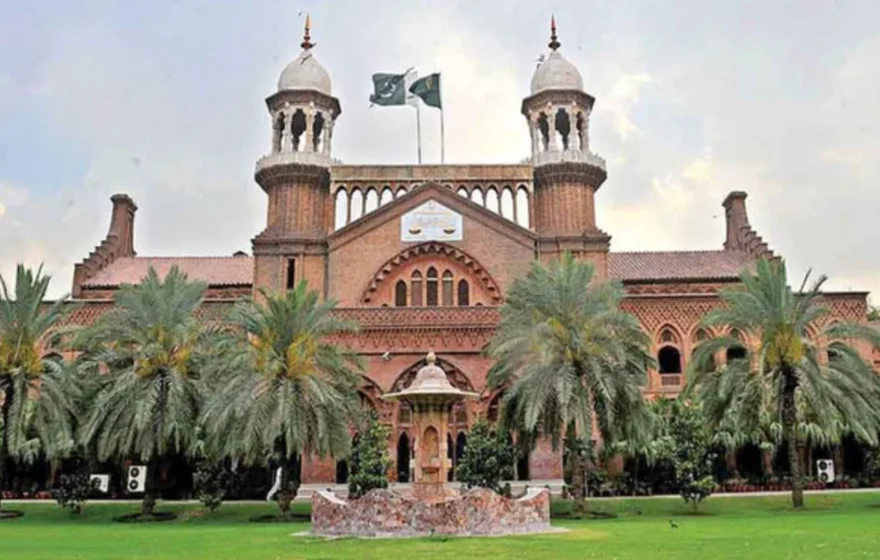
The Lahore High Court has ruled that marriage to a Pakistani citizen does not automatically entitle a foreign national to a Pakistan Origin Card, dismissing a petition by an American citizen of Indian origin. Justice Muhammad Ajmal Zahid held that marriage creates only an initial claim, while the final decision remains with the National Database and Registration Authority, which can refuse a card on national security or public interest grounds. The ruling is likely to matter beyond this one case, because it sets out how the rules should be read for foreign spouses applying for the card each year.
The petitioner was Dr Talha Muadh Ghulam Jilani, formerly known as Dr Jaysinha Shamrao Shinde. He renounced his Indian nationality before becoming an American citizen in 2007, and later married a Pakistani citizen. In May 2021 he applied to NADRA for a Pakistan Origin Card, a document for foreign nationals of Pakistani origin, former citizens and foreign spouses of Pakistanis. His application was sent for verification, and in 2022 he was told it had gone for ground verification. NADRA rejected his request in January 2023, and he challenged that rejection and the refusal of his request for relaxation of the rules.
His lawyers argued that the NADRA (Pakistan Origin Card) Rules of 2002 cover the foreign spouse of a Pakistani citizen, and that his Indian origin alone should not stand in the way. They said a 2013 Interior Ministry policy could not add new conditions to the rules, and cited Article 35 of the Constitution, which protects marriage and the family. The government’s lawyer said the power to relax the requirements was discretionary, and that the 2013 policy provided uniform extra scrutiny of applicants from certain countries, including India and Afghanistan, for national security reasons.
Justice Zahid began by explaining what a Pakistan Origin Card is. It is not citizenship, he said, but a facilitation document, giving people with a recognised connection to Pakistan formal identity and practical rights, such as living, working and holding property in the country. That distinction mattered, because such a document can be refused under conditions that would not apply to citizenship. The judge therefore held that marriage under Rule 4(5) gives threshold eligibility, meaning the person may apply, but not an entitlement, because final issuance depends on verification and on NADRA’s authority to refuse a card on national security or public interest grounds.
The judge also dealt carefully with the petitioner’s background. He drew a distinction between Indian origin and Indian nationality, noting the two are not the same in law. Eligibility must be decided on a person’s legal status as the rules describe it, he said, not merely by reference to ethnic origin or an unproved assertion about nationality. Here, the petitioner’s certificate showing he had renounced his Indian nationality had not been independently verified, and that gap counted against him. It was not his origin that disqualified him, the court suggested, but that his documents had not been proved to the authority’s satisfaction.
On the 2013 Interior Ministry policy, the judgment struck a careful balance. Justice Zahid held that the policy was an executive instruction which could not override the statutory rules or create a fresh disqualification the rules do not contain. At the same time, he accepted it could be used for enhanced security checks. The court also considered the plea for relaxation, holding that the government may relax the bar in special and extraordinary circumstances, but that this cannot be claimed as a right. Finding no evidence that NADRA had acted unlawfully or in bad faith, the court dismissed the petition.
The card was created under the 2002 Rules for people connected to Pakistan by origin who are not citizens, and has long been a main route by which foreign spouses, former citizens and the children of emigrants keep a formal link with the country. Issuance to foreign nationals married to Pakistanis was halted for a period under a former interior minister, and when it resumed, first-time applicants had to show they had been married for at least five years. In December 2023, the Peshawar High Court decided petitions by Afghan nationals married to Pakistanis, holding that a valid passport and visa could not be a mandatory condition for marriages that had lasted decades.
The Lahore judgment brings the two sides of that debate together in one framework. It accepts the rules as the starting point, and that no policy can rewrite them, protecting applicants from arbitrary new conditions. But it also accepts that the state may check applicants carefully and refuse a card where security or public interest points the other way. For applicants, the message is plain. Marriage to a Pakistani opens the door to a Pakistan Origin Card, but it does not walk the applicant through it. The documents must be in order, the claim of renunciation must be verifiable, and the security checks must be passed. The one opening left is the power of relaxation in special and extraordinary circumstances, yet the court was clear this is a favour, not a right.
