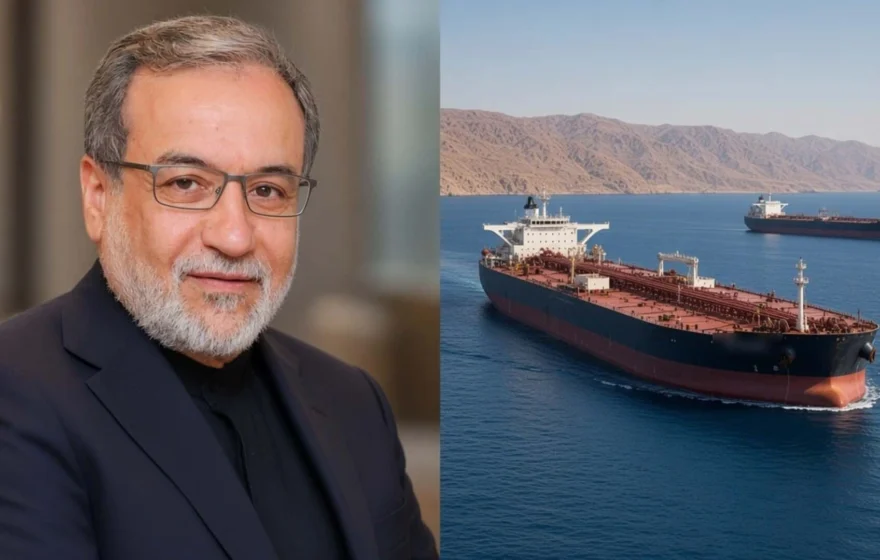
Iran says the Strait of Hormuz could be reopened within two days under a new plan worked out with Qatari mediators, but only if the United States accepts conditions set by Tehran. The claim, made by Foreign Minister Abbas Araghchi, has raised fresh hopes of relief for an energy route whose closure has kept global oil and gas prices high for months, yet it remains a proposal, and Washington has not publicly responded.
Araghchi told Al Jazeera that the talks have cut the time needed to put Iran’s proposal into practice. “The Qatari side proposed shortening the implementation period of the Iranian proposal to five days. We have reached a proposal at this stage that reduces the implementation period to two days,” he said. The two-day figure is therefore a timetable for action once an agreement exists, not a promise that ships will move freely within two days from now.
The strait itself explains why the statement has drawn so much attention. It is a narrow waterway between Iran and Oman, linking the Persian Gulf with the Gulf of Oman and the Arabian Sea, and the main outlet for oil and gas exports from Gulf producers such as Saudi Arabia, Qatar and the United Arab Emirates. The United States Energy Information Administration estimated that about 20 million barrels of oil and petroleum products moved through it each day in 2024, roughly a fifth of global petroleum liquids consumption, and the International Energy Agency put the 2025 average at a similar level, around a quarter of seaborne oil trade. About four-fifths of that oil is destined for Asia, and roughly a fifth of global liquefied natural gas trade passes through it as well. At its narrowest the strait is only about 21 nautical miles wide, which is why it is called the world’s most important energy chokepoint.
Iran’s Conditions for Reopening Hormuz
The two-day timeline is not a done deal: Araghchi made clear the strait will reopen only in line with Iran’s demands, including lifting the sanctions imposed after the Islamabad memorandum, reducing United States forces in the region, restoring the waivers that once allowed Iran to sell oil, releasing all frozen Iranian funds, including money held in Qatar, and recognising the shipping routes Iran has discussed with Oman while closing all other routes.
“Reopening the Strait of Hormuz in accordance with our conditions paves the way for the resumption of negotiations with Washington regarding outstanding issues,” Araghchi said. The last condition matters most: even after a reopening, ships would only use the routes agreed between Iran and Oman, not the strait as a whole. Proposals on Iran’s nuclear programme are expected to be dealt with separately, after the strait reopens and talks resume.
Signs of a Shift Between Washington and Tehran
The proposal comes as both sides appear to be softening their tone. Araghchi described an American offer of dialogue as a positive step, an Iranian delegation is in Doha for further talks, and Iran’s security chief Mohsen Rezaei said he had reviewed a letter from United States Vice President JD Vance in which Washington’s tone had changed completely, calling it a very positive sign.
There has been no public response from the United States to the two-day plan so far, and that silence is the biggest gap in the story. Iran had earlier put forward a longer, seven-day plan, so the new version concedes on timing even if the conditions have not softened. Nor is this the first time hopes have been raised: in August, Iran rejected claims that it was reopening Hormuz after an announcement by United States President Donald Trump.
What This Means for You
For Pakistan, the stakes are direct. The country imports most of its oil and gas through the Gulf, so disruption quickly shows up in fuel prices at home. Right now petrol costs Rs. 377.91 per litre and high-speed diesel Rs. 402.96 per litre, according to the latest government notification. A motorist using 40 litres of petrol a month spends about Rs. 15,116 on fuel, and every Rs. 10 per litre change adds or cuts about Rs. 400 from that bill.
Since the government now revises fuel prices much more often, a confirmed reopening and a fall in global oil prices could reach Pakistani pumps faster than before. But until Washington responds, the plan remains only a proposal, and relief at the pump is not guaranteed. Pakistan has already struggled to offer petrol discounts during the crisis.
What Happens Next
The next step belongs to Washington. If it accepts Iran’s conditions, Tehran says the strait would reopen within two days, opening the door to wider negotiations. If it rejects them, or answers with demands of its own, the talks in Doha will continue, the strait will stay effectively closed, and Pakistani motorists will keep paying near current levels.
The coming days will show whether the softer language is a genuine opening or another round of statements outpacing events. Success will be measured not by the announcement, but by the first tankers on the agreed routes and the first fall in prices at Pakistani pumps.
