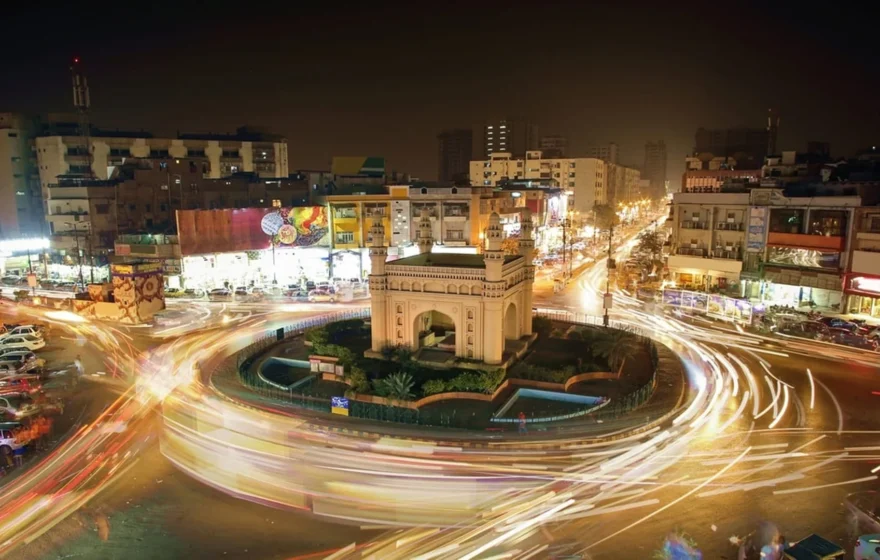
Karachi may soon test a new way of running itself. Sindh Chief Minister Murad Ali Shah has proposed introducing a Chinese-style city management system in one district of the city as a pilot project, in an effort to improve public services and tackle the urban problems that have weighed on Pakistan’s largest city for years. The idea was set out at a seminar organised by the Karachi Council on Foreign Relations, and it draws directly on the experience of Wuhan, the Chinese city where an integrated operations centre now coordinates much of municipal life.
The proposed system would be based on Wuhan’s City Operation and Management Centre, which connects government departments through a single integrated platform. Instead of each department working from its own files and its own complaints desk, the centre brings them together so that problems can be monitored as they arise, risks can be identified early, and public complaints can be answered by the department responsible. The pilot would initially focus on the everyday problems that frustrate Karachi’s residents most, such as waterlogging and flooded roads, with clear responsibilities for receiving complaints and ensuring timely action.
That focus is deliberate. Karachi’s troubles are rarely a mystery: when heavy rain falls, roads flood, traffic stops and low-lying neighbourhoods take in water, and the argument afterwards is usually about which body was supposed to act. Responsibility for the city is split between many different authorities, and a complaint can travel from one office to another without anyone taking ownership. A system that gives every complaint a named owner would address the most common grievance of all, which is not that problems exist, but that nobody seems to be in charge of fixing them.
The chief minister said Chinese municipal experts, Pakistani officials, engineers and universities could jointly develop the system and train local teams. The project’s success would be assessed through improvements in response times and service delivery before any decision is taken to expand it to other areas. A pilot judged on whether streets drain faster and complaints are answered sooner is one that can be honestly evaluated.
The model being borrowed is an ambitious one. Wuhan, the capital of Hubei province, administers sixteen districts across about 8,569 square kilometres and has a permanent population of about 13.81 million, making it comparable in scale to Karachi. Working with Huawei and other technology companies, the city has built a unified management platform that uses digital twin technology, artificial intelligence and big data to present the city’s operations on a single screen. It is built on a three-dimensional digital model covering 1,200 square kilometres, tracking more than 900 real-time indicators across twelve types of city incidents, and its systems monitor nearly 1,000 bridges and gas pipelines every day. At the Mobile World Congress in Barcelona in March 2025, Wuhan and Huawei presented it as a global demonstration site for the digital transformation of a city.
Shah’s interest in the model follows his recent visits to Hubei and Shanghai, where he said China offered valuable lessons in long-term planning, coordination between government departments and improving public services. The chief minister also pointed to wider opportunities for cooperation in education and agriculture, including teacher training with Central China Normal University and research partnerships involving hybrid rice, seed production and modern farming. A proposed Joint Cooperation Council between Sindh and Hubei could serve as a platform for these initiatives.
The chief minister also used the seminar to make a point about the China-Pakistan Economic Corridor. He said development projects under the corridor, particularly in Thar, should directly benefit local communities through employment opportunities, support for local businesses and improved access to drinking water and public services. That is a reminder that the partnership with China is judged in Sindh not only by the scale of the projects, but by whether the people living nearest to them see a difference in their daily lives. The Acting Chinese Consul General, Dr Feng Deheng, responded by expressing China’s willingness to share its development experience and calling for stronger cooperation under what is now described as the second phase of the corridor, CPEC 2.0.
Whether a system built for Wuhan can work in Karachi is an open question, and the pilot is the right way to answer it. The two cities share real similarities: both are huge, both have grown faster than their infrastructure, and both face flooding when the rains come. But Karachi’s governance is far more fragmented than Wuhan’s, and a technology platform cannot by itself resolve arguments over who owns a road, a drain or a pumping station. The system would also need reliable data, trained staff and departments willing to be measured on their response times. What the pilot can do is show whether a single coordination platform makes a practical difference in one district. If flooded roads are cleared faster and residents can see their complaints being acted on, the case for expanding it will make itself. For a city that has heard many promises about its management, that modest test may be exactly the right place to start.
