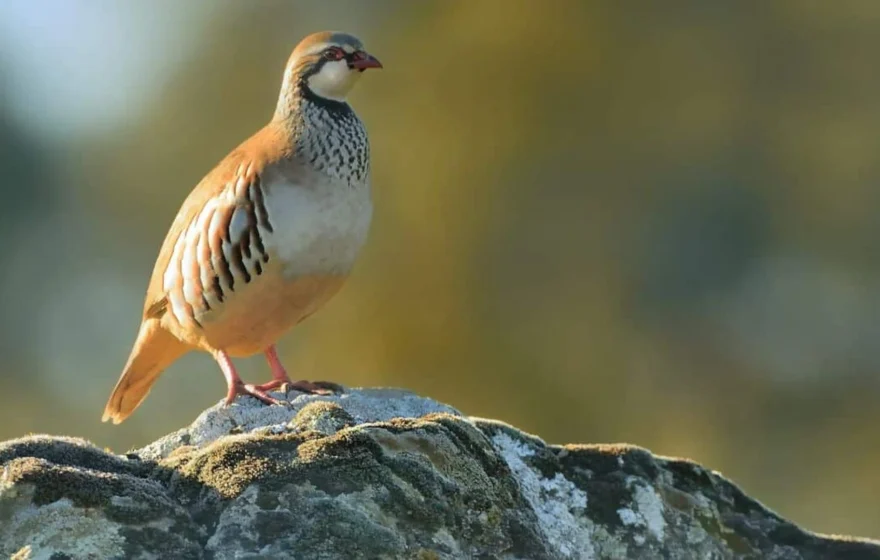
The Khyber Pakhtunkhwa Wildlife Department has opened the partridge hunting season across the province, allowing hunters into designated game reserves from November 15, 2026, until January 11, 2027, under a tightly controlled system of licences, special permits and bag limits. The season is now under way, but it comes with conditions that leave little room for anyone hoping to hunt without the proper paperwork.
The department announced the opening in an official notification, making it clear that hunting will be permitted only in game reserves that the provincial government has formally opened for the season. That distinction matters, because much of the province’s wildlife habitat is not open to hunting at all. National parks, wildlife sanctuaries and the core conservation zones managed by the state remain closed, and anyone caught hunting outside the notified reserves will be treated as hunting illegally.
Four Partridge Species Included
According to the notification, four species of partridge may be hunted during the permitted period. They are the Chukar partridge, the Black partridge, the Grey partridge and the See-See partridge. Of the four, the Chukar holds a special place in Pakistan. It is the country’s national bird, a sturdy upland game bird known in Urdu as the chakor, with a black band running across its face and down its neck, barred flanks and bright red legs. It lives on dry, rocky hillsides across the north and west of the country, and the International Union for Conservation of Nature lists it as a species of least concern.
The department has also set out how much the hunting will cost, and the fees are not small. Permits have been divided into three categories. A Category A permit costs Rs20,000 and allows a hunter to take up to eight birds. A Category B permit costs Rs12,000 and allows up to six birds, while a Category C permit costs Rs7,000 and allows up to four birds. The fees are non-refundable. Nine-tenths of the revenue raised from the permits is to go to local communities, a share that is meant to give the people who live around the game reserves a direct stake in keeping the system working. Only two hunting parties will be allowed in each game reserve on any single day, with no more than four guns in a party.
Shooting Licence Mandatory
No one will be allowed to hunt without two documents in hand. The first is a valid shooting licence, and the second is a special hunting permit issued by the Wildlife Department itself. Only a hunter who already holds a shooting licence can apply for the special permit, and anyone who turns up in a game reserve without both will not be allowed to hunt.
The conditions do not end there. Hunting in a community game reserve will also require the permission of the relevant Village Conservation Committee, the local body that looks after the reserve on behalf of the people who live there. Hunting in a private game reserve will require the prior approval of its owner. These extra permissions reflect the way the province’s game reserves are actually managed, with many of them lying on community or private land rather than on ground owned outright by the government. A permit from the department, on its own, is not enough to open every gate.
The Wildlife Department has said it will keep a close eye on the birds themselves while the season runs. Its staff will regularly monitor partridge numbers in the game reserves, and if the counts show a decline, or raise other concerns about the population, the department may suspend the issuing of special permits altogether. The birds are to be counted as the shooting goes on, and the season will last only as long as the numbers allow.
The same set of regulations also covers greyhound and pointer dog races. An additional fee of Rs5,000 will be charged for races held in game reserves or conservancies, subject to prior approval from the conservator of wildlife, and race permits will remain valid for 28 days and cannot be transferred to someone else.
KP Previously Lifted Ban on Quail Hunting
The partridge season is not the first time this year that the province has loosened its hunting rules. Earlier, the Khyber Pakhtunkhwa government also lifted its ban on quail hunting, allowing hunters to take both the common quail and the rain quail under a revised set of conditions. The Chief Conservator of Wildlife introduced the change through official order number 58. Under the revised rules, a hunter may take up to eight quails a day, and only licensed hunters may hunt them, within the areas and limits set by the authorities. The Chief Conservator has directed wildlife officials to enforce the hunting rules and regulations strictly.
Whether the balance holds this season will depend largely on enforcement. The rules are strict on paper, but they only work if wildlife staff are present in the reserves, permits are actually checked, and hunters who break the limits face consequences.
