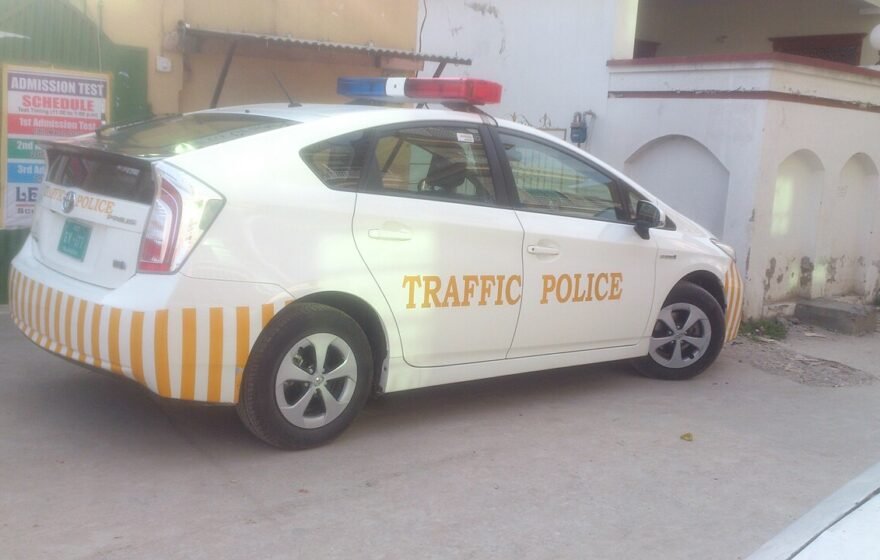
Lahore’s traffic police are set to take a much harder line with speeding drivers, with first information reports to be registered against those caught driving over the limit as part of a fresh push on road safety in the city. The move is aimed at cutting down accidents and getting drivers to take the speed limits seriously, rather than treating a speeding offence as a routine matter that ends with a challan.
The measures are being brought in under Punjab Chief Minister Maryam Nawaz Sharif’s “Safe Punjab, Safe Roads” vision, and they came out of a meeting between Lahore’s Chief Traffic Officer and transporters at which road safety and smog were both on the table. The message from that meeting was that enforcement on its own is not enough, and that the people behind the wheel, and the companies that employ them, will both have to answer for how vehicles are driven on the city’s roads.
Alongside the tougher action on speeding, drivers themselves will now have to prove they are fit to drive, with fitness certificates required in much the same way as vehicles already have to pass fitness checks. To make that possible, mobile medical camps will be set up to carry out medical and psychological examinations of drivers, covering eyesight, colour blindness, general medical fitness and psychological health. The idea is that a driver whose eyesight is failing, or whose health makes him unsafe behind the wheel, should be identified before an accident happens rather than after one.

Transporters have also been told to hand over complete records of their drivers, so that the police know exactly who is driving which vehicle and can hold both the driver and the operator to account. Officials say the combined package, tougher penalties for speeding, health checks for drivers and proper records from transporters, is meant to bring down the number of crashes by making sure that only drivers who meet the required medical and psychological standards are on the road. The discussion also took in smog-related concerns, a reminder that road safety in Lahore is now tied up with the city’s wider struggle against winter pollution, and that the months ahead will test whether the new approach actually changes behaviour on streets where speeding has long been one of the most common violations.
For Lahore’s drivers the warning is plain enough. Speeding will no longer be treated as a minor slip, fitness to drive will be checked rather than assumed, and transporters will be expected to know their drivers properly. If the measures are followed through, they could make the city’s roads noticeably safer, but as with any crackdown, the real test will be whether enforcement stays consistent once the announcement fades and whether drivers and transport companies change their habits for good rather than for a few weeks.
