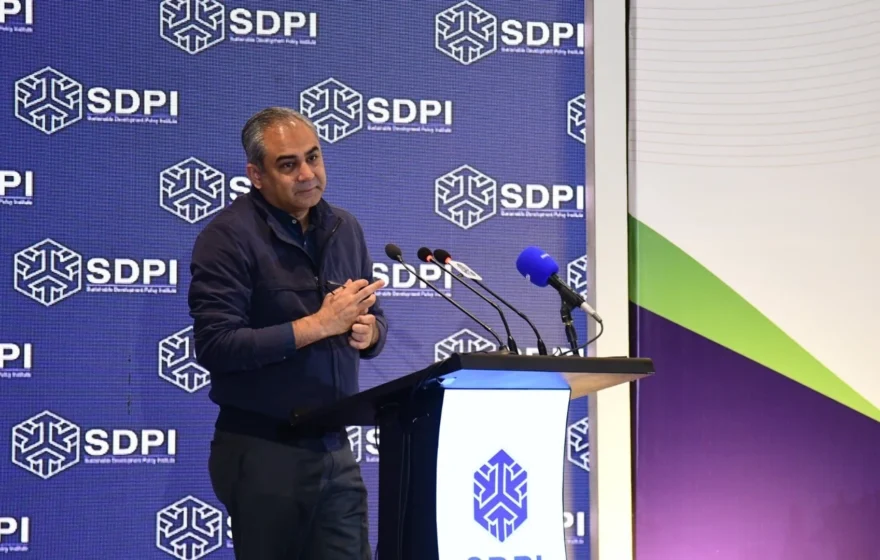
Interior Minister Mohsin Naqvi has set out four clear limits for what can be said and shared online in Pakistan, telling an audience in Islamabad that terrorism, hate speech, incitement to violence and the sexual exploitation of children will not be tolerated on any platform. At the same time, he insisted that the government has no intention of silencing legitimate debate, and that criticism of those in power remains part of free expression.
Naqvi was giving the closing address at an international seminar on social media platforms and the post-truth era, organised by the Sustainable Development Policy Institute (SDPI) in Islamabad on Tuesday. Earlier in the day, other federal ministers at the same seminar had told social media companies that they could not escape responsibility for fake news.
The minister’s remarks come as Pakistan puts in place a new system for regulating online spaces. Parliament passed amendments to the Prevention of Electronic Crimes Act in January 2025, creating a dedicated Social Media Protection and Regulatory Authority, known as SMPRA, with its headquarters in Islamabad and offices in the provincial capitals. The same law created the National Cyber Crime Investigation Agency to replace the Federal Investigation Agency’s cybercrime wing, and added a fake news offence carrying up to three years in prison and a fine of up to two million rupees. The government appointed Barrister Syed Azfar Ali Nasir as the authority’s chairman for a five-year term on 30 October 2026.
Free Speech Is No Shield for Crossing the Red Lines
“There will be no compromise on these four points,” Naqvi told the seminar, drawing the clearest line yet between speech the state will protect and content it intends to act against. He said journalists must be free to report, citizens must be able to question those in authority, and dissent must be heard, including dissent aimed at the government itself. But that freedom, he argued, cannot be used as cover by anyone who crosses the four lines he had named.
The minister spoke about the human cost of terrorism, saying he had attended the funerals of martyrs and that the hatred behind such killings often begins on a mobile phone. He said social media companies act on only 47 per cent of the requests sent by the Counter Terrorism Department, and that banned groups, including the Balochistan Liberation Army, continue to use the platforms to recruit followers, raise money and spread their message.
Naqvi also described a town hall meeting where he met five girls who had been on the verge of taking their own lives because someone was about to publish sensitive material about them online. For the minister, the episode showed how quickly a private threat can become a public crisis. Platforms, he said, have a duty to act immediately when such cases reach them, rather than letting complaints sit while the damage spreads.
Registration Is Not a Licence to Silence
The centrepiece of the government’s plan is the new regulator, SMPRA, which Naqvi said will deal with online crime and make sure platforms respond quickly when victims complain. Under the system he described, social media platforms, over-the-top streaming services and major content creators will first have to register with the authority. Registration, he stressed, is “not a licence to silence anyone”, but a way of knowing who is accountable when something goes wrong.
Major platforms will also be expected to appoint country representatives with real authority, people who can actually decide on complaints instead of merely passing them up the chain. The demand reflects frustration in Islamabad that complaints sent to global companies often disappear into slow review systems while harmful posts stay live.
Blocking a Platform Will Be the Last Resort
Naqvi said the authority will work through a sequence of engagement, formal notice and then penalties, with the blocking of an entire platform kept as a last resort. Any such request, he said, will be clear, lawful and public. The promise matters because Pakistan has blocked platforms before, and each shutdown has drawn criticism for punishing millions for the actions of a few.
The minister was frank about the state’s own limits. He said the National Cyber Crime Investigation Agency has only 61 personnel in Punjab, including drivers and clerks, for a population of around 140 million. The government plans to strengthen the agency through recruitment, modern forensic facilities and AI-based tools, and complaints to the agency will move to the PakID app.
The speech leaves the government walking a fine line. On one side is a genuine set of harms, from terrorist recruitment to the harassment of young women, that few would argue should be left unchecked. On the other is the fear, voiced by journalists and rights advocates, that broad powers to police online speech can be stretched beyond their stated purpose. Naqvi ended by offering the platforms “an open hand” and inviting them to work with the government so that Pakistani users never feel unheard. Whether that promise holds will be judged by how the new authority uses its powers in the months ahead.
