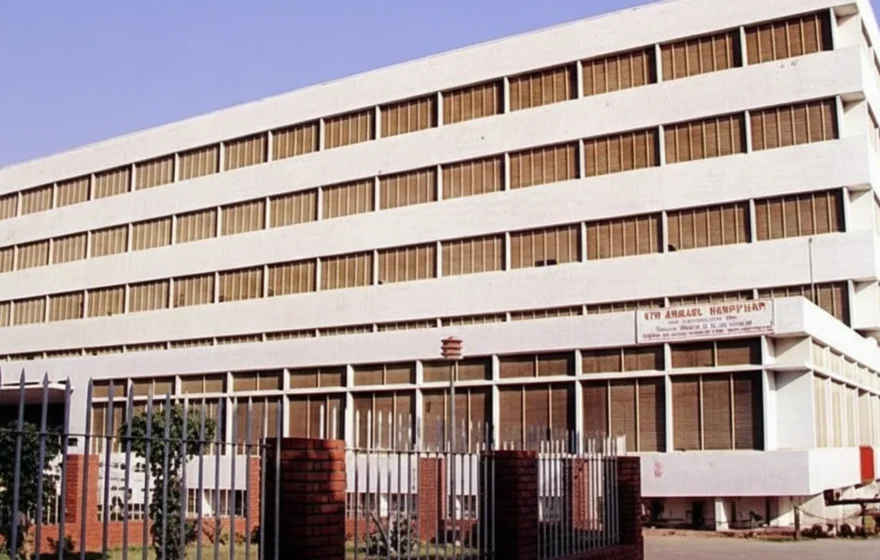
Karachi’s Abbasi Shaheed Hospital has opened a new outpatient block, giving one of the city’s busiest public hospitals more room to treat the patients who arrive at its doors every day. Mayor Murtaza Wahab inaugurated the newly built Quaid-i-Awam Outpatient Department Block on Friday, and outpatient services began working in the new block straight after the ceremony. For a hospital that serves District Central and draws patients from across Karachi and from towns in interior Sindh, extra outpatient space is not a luxury. It is the difference between patients being seen in reasonable time and patients waiting for hours in crowded corridors.
Speaking at the inauguration, the mayor said the new block would improve healthcare services for patients as part of a wider effort to modernise the hospital. He also announced a plan that reaches beyond bricks and mortar. A board called Friends of Karachi will be set up to oversee the hospital’s affairs and improve its management, with representatives from both the public and private sectors. The board will also keep an eye on other civic matters, and the mayor said its purpose was to build a system that keeps working no matter who holds office. Public hospitals in Karachi have often risen and fallen with changes of leadership, with new projects started and old ones left half finished, so a body designed to outlast any single mayor is a deliberate answer to that pattern.
The mayor laid out a plan in two phases. The first phase concentrates on medical services, making sure patients get the treatment they need, while the second turns to the administration behind that treatment, including how medicines are bought, stored and handed out. That second phase matters because a hospital can have doctors and beds and still fail its patients if the medicines do not reach them. The mayor said he had decided to suspend medicine purchases until an effective distribution system was in place, and that the administration would close the gaps between procurement and delivery so that medicines reach patients through a transparent process. It was a frank admission that buying medicines is not the same as delivering them, and that the chain between the two has been breaking down.
He also stressed something that rarely gets mentioned at hospital openings: cleanliness and the upkeep of the building itself. A government hospital can have new equipment and still feel neglected if its floors are dirty, its lifts do not work and its wards are falling apart, and patients notice that as soon as they walk in. The mayor said improving cleanliness and building maintenance was just as important as providing medical treatment.
The opening comes only days after the completion of another major addition to the same hospital. Earlier in the week, reports said construction of a new medical block at Abbasi Shaheed Hospital had been finished after 52 years, through a joint effort by the Sindh government and the Karachi Metropolitan Corporation. The ground-plus-three-storey building covers 200,000 square feet, will hold between 150 and 200 beds, and is meant to offer modern diagnosis and treatment for stomach, heart, lung and skin conditions, along with outpatient services across several specialities. That block was expected to be formally inaugurated soon, and its completion after more than five decades of waiting says a great deal about how slowly public health projects have moved in the city.
The hospital has seen other improvements in the past year as well. In September 2025, the mayor opened Pakistan’s first haemophilia ward dedicated to women at Abbasi Shaheed Hospital, a six-bed unit staffed entirely by female medical workers, offering free treatment and free diagnostic tests. A ward for men had opened four months earlier, and the project was run as a public-private partnership with the Pakistan Hemophilia Society. The mayor said at the time that patients were arriving not only from District Central but from across Karachi and from Hyderabad and Larkana, and that a new gynaecology ward was planned, with similar facilities to be extended to other hospitals run by the corporation.
Taken together, the new outpatient block, the long-awaited medical block and the specialist wards point to a hospital that is being rebuilt piece by piece rather than all at once. That is how public hospitals in a city the size of Karachi usually change, through a series of openings and upgrades that slowly add up. The test, as the mayor himself acknowledged, is whether the management behind the buildings keeps pace. A new block with working outpatient services is a real gain for patients today. A board that watches over the hospital, a medicine system that delivers what it buys, and clean, maintained wards are what will decide whether that gain lasts. The mayor also used the day to launch a road project worth Rs 101.7 million, covering a 4,100-running-foot stretch. For now, the people who will feel the change first are the outpatients walking into the new block, and the doctors and nurses who no longer have to squeeze them into the old one.
