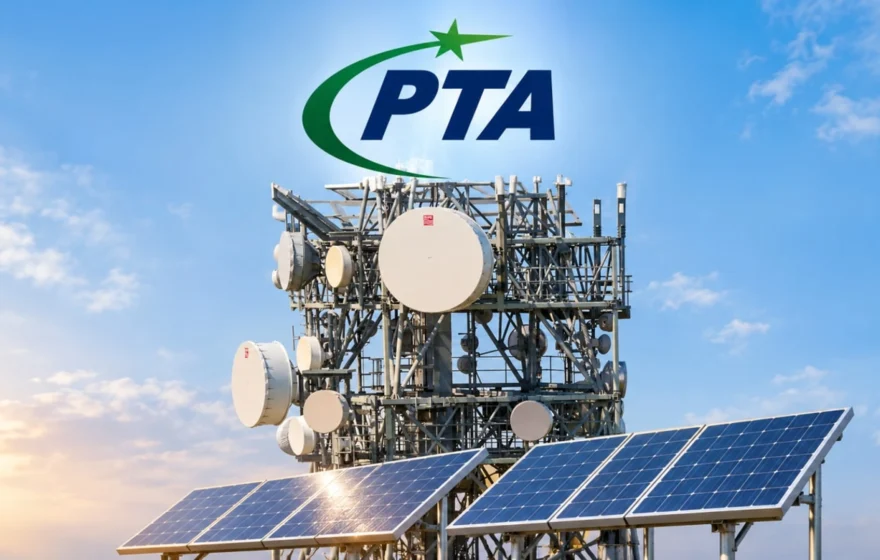
The Pakistan Telecommunication Authority is considering making solar power systems compulsory at mobile tower sites with frequent electricity outages. Under the proposal, telecom firms would install solar panels and battery storage at the worst-affected sites so calls and mobile internet keep working through blackouts and snowfall.
The regulator has opened an industry-wide consultation, asking operators, tower companies and vendors for proposals on shifting mobile towers to solar and other renewable energy. Stakeholders have until 4:30 pm on December 7, 2026 to submit responses and site-level data, after which the authority will decide the next steps.
The proposal targets a problem that has grown for years. Pakistan has between 55,000 and 60,000 mobile towers, and keeping them powered is a major headache. When the electricity fails, a tower switches to backup batteries lasting only one or two hours before a diesel generator must take over. Diesel is expensive, and fuel is frequently stolen from remote sites. Earlier this year the regulator told a Senate committee that more than 9,200 diesel thefts from telecom towers had been recorded in eleven months, and that thirty to forty percent of the towers, roughly 20,000 sites, faced severe disruption or shutdown from diesel shortages, leaving some sixty million users with poor signals and dead internet.
Nothing is being imposed yet: no targets announced, no site ordered to install solar panels. Instead, operators are being asked for practical, time-bound plans, so a sector-wide roadmap can be drawn up under Clause 7.9.1 of the Telecom Policy 2015, shaped by the industry’s input.
PTA Seeks Tower-Level Power Data
The first thing the regulator wants is proper data. Operators will have to report the accumulated power outages at each tower over the preceding thirty days, plus the site’s location, grid or off-grid status, and existing backup arrangements. The data will be compiled from union council up to national level, so the worst areas can be pinpointed rather than guessed.
Companies must also identify alternative energy solutions for individual sites, with deployment timelines of one, two or three years, and pick out the ten percent of their sites with the highest diesel consumption, proposing plans to cut their reliance on diesel generators. The regulator wants numbers first, so any future mandate rests on evidence about where power fails most and where solar can help most.
Solar Power Could Become Mandatory at High-Outage Sites
The heart of the proposal is a threshold. Under one option, sites with power outages of five percent or more in a month within a union council could be required to install solar systems with enough battery storage to keep services running without interruption, including at night, in cloudy weather and during snowfall, so properly sized batteries would be as essential as the panels.
The regulator is also examining incentives such as tax relief, easier imports of solar equipment, support for local manufacturing and carbon credits. It wants proposals for extending renewable energy to remote locations and to sites supported by the Universal Service Fund, which funds coverage where commercial operators would not otherwise build. For far-flung districts, where the grid is weakest and diesel delivery hardest, solar could matter most.
Shared Solar Systems Also Under Consideration
The authority proposes a technology-neutral, phased approach, recognising that towers face very different power conditions: some have reliable grid connections, others face frequent outages or run entirely off-grid. The consultation also considers shared solar systems, battery storage and energy management for towers used by several operators, cutting costs by letting them share one power system instead of each running its own generator.
The regulator wants coordination with power regulators and distribution companies to cut load-shedding at tower sites over the next five years, plus standardised annual reporting to monitor progress. Operators must still meet quality-of-service requirements and maintain adequate backup power. Responses go to renewable_energy@pta.gov.pk, and after reviewing them the authority will decide whether extra targets or requirements are needed.
It matters because it could break the cycle behind millions of Pakistanis’ unreliable mobile service. Diesel was never a good answer: costly, polluting, and in many districts stolen faster than it can be delivered. Solar suits Pakistan’s climate, with ample sunshine, and panel and battery costs have fallen sharply over the past decade. A solar-hybrid tower can pay for itself within a few years through fuel and electricity savings. The question is whether the regulator should wait for the market to move or set a firm deadline for the worst sites.
There are obstacles too. Panels and batteries at remote towers can themselves be stolen, and the industry must show how it will protect them. Converting thousands of sites will cost a great deal upfront, and operators will want the promised incentives to be real before they commit. The five percent threshold will need careful measurement, since a rule is only as good as the data behind it. The consultation lets the industry raise these concerns before anything becomes binding, and the December 7 deadline means the debate will be settled quickly. If it follows through, the towers that go dark every evening could soon run on the sun instead.
