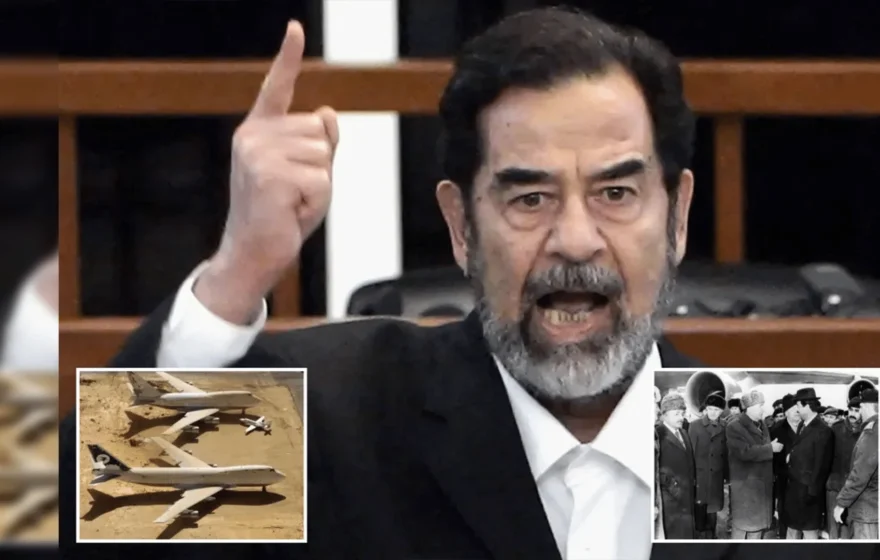
A Boeing 747 that once carried Saddam Hussein across the world is up for sale, priced at just $900,000, after spending 35 years parked on a runway in the Tunisian desert. The aircraft, a shortened long-range 747SP registered YI-ALM, was built as a VIP government jet for the Iraqi leader, and it has not flown since it was spirited out of Iraq on the eve of the Gulf War. Now, for the third time, Iraq is trying to find it a buyer.
State-owned Iraqi Airways published the sale notice on November 18, offering the 747SP alongside a second jumbo jet, a Boeing 747-200 registered YI-AGP. Both aircraft were built in 1982 and have been parked at Tozeur-Nefta International Airport in south-western Tunisia since 1991, when Iraq flew them out to protect them from coalition air strikes. The pair are valued at $900,000 each, or $1.8 million together, and buyers may bid for one aircraft or for both.
The jets have a remarkable history. YI-ALM was ordered by Iraqi Airways in 1981 and delivered in August 1982, built from the start as a VIP aircraft, with a private stateroom, a conference room and a lounge fitted with sleeper seats. It flew for Iraq for about eight years before its final flight, a ferry trip to Tozeur on 1 January 1991, just weeks before the coalition bombing campaign of Operation Desert Storm began. The 747-200 made the same journey, the plan being to shelter the fleet’s most valuable aircraft, wait out the bombing, and bring them home.
The bombing stopped in February 1991. The aircraft never came home. What kept them on the apron at Tozeur was not damage or mechanical failure but a tangle of legal and financial problems. Iraq was under international embargo, unpaid parking charges were mounting, and Kuwait Airways had sued the Republic of Iraq and Iraqi Airways in the English courts over ten airliners that Iraqi crews had flown out of Kuwait after the August 1990 invasion, seeking around $1.8 billion. While the dispute dragged on, the two jumbos sat in the desert sun, repainted white and stripped of their Iraqi Airways markings.
Time did its work. The aircraft have now been parked for more than four times as long as YI-ALM ever flew, their tyres flat and their paint bleached by decades of Saharan sun. In 2020 Iraq settled about $5.4 million in parking fees with the Tunisian authorities, but the jets still did not move. Iraq has tried to sell them several times since 2010, and a 2023 auction at $494,000 each found no buyer.
Price Jumps 82% Since 2023
The new asking price is a surprise in itself. At $900,000 each, the jets are valued 82 per cent higher than in 2023, when the same two aircraft failed to attract a buyer at $494,000 apiece. The 747SP is a rare aircraft in its own right, a shorter, longer-range version of the jumbo, and only 45 were ever built, so a VIP-configured example with this history is, for a certain kind of buyer, unlike anything else on the market.
What Buyers Must Pay
The terms of the sale make it clear that this is not a straightforward purchase. According to the Iraqi Airways sale notice, the planes will be sold exactly as they stand, without any technical warranties, and the airline says nothing about whether either jet is airworthy. Serious bidders must put down a 20 per cent deposit, $180,000 per jet, pay a 2 per cent service fee on top of the price, and clear the full amount within five days of their offer being accepted. The buyer will also have to cover ownership transfer, customs clearance, transport, taxes and the parking charges that continue to accumulate after handover.
How the Sale Will Work
Applications are open for 30 days, by email or WhatsApp. A sales committee will sit at the Iraqi Embassy in Tunis from 21 December 2026 to 5 January 2027 to receive offers and finalise the sale, and any deal needs the transport minister’s final approval. The notice is a direct sale rather than an open auction, authorised by the prime minister’s office on 27 February 2025, and it drops the scrapping and political-use clauses of the 2023 attempt, leaving the buyer free to decide what happens to the aircraft next.
The story has a familiar echo closer to home: Pakistan International Airlines has previously auctioned six Airbus A320s and sold an ATR at ten times its expected price. But few disposals carry this much history. Two jumbo jets, flown to a quiet Saharan airport to escape a war and left there so long they became part of the landscape, now offered for less than a luxury apartment in many cities. Whether anyone takes them this time will be decided in Tunis in early January. If the sale goes through, the long exile of Saddam Hussein’s jumbo jet will end, 36 years after it left Baghdad.
