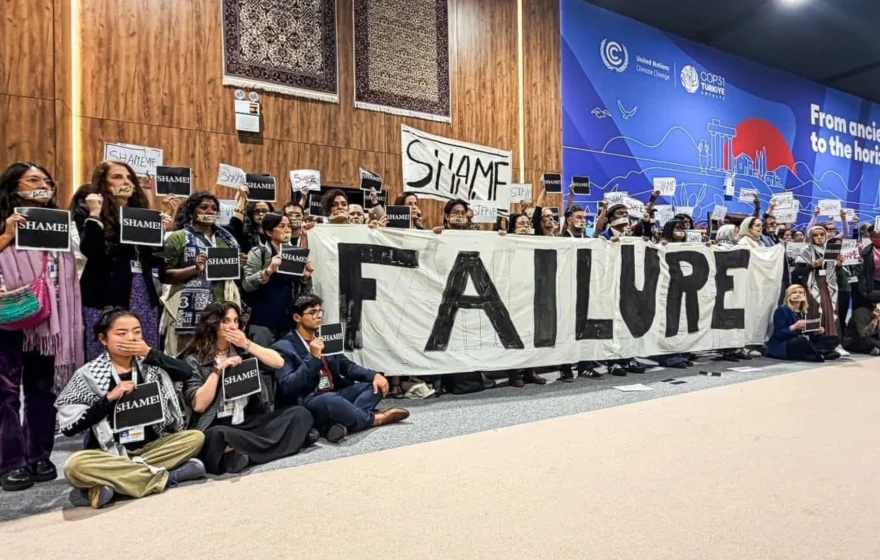
After two weeks of talks that ran a record 44 hours over schedule, the COP31 climate summit in Antalya, Turkey, collapsed on Sunday without the overarching agreement it had been convened to produce. Delegates from nearly 200 countries left with no plan for cutting emissions, no new money for the worst-hit countries, and no statement on the fossil fuels driving the crisis. It was the longest UN climate summit in history, and the first to collapse so completely since Copenhagen in 2009.
Expectations had been modest when the summit opened. The summit carried no headline decision on its agenda, and many delegations expected a quiet year after the Belem gathering, marking ten years since the Paris Agreement. Turkey, hosting the talks, and Australia, which led the negotiations, had other ideas. Together they pushed for a framework agreement, the Antalya Pact, to send a strong signal on energy and finance.
Fossil Fuels Become the Biggest Roadblock
The argument that destroyed the deal was about two words: fossil fuels. The first draft of the cover decision, published early in the second week, called for an immediate transition away from fossil fuels. In every draft that followed, all direct mention of coal, oil and gas was stripped out, despite pressure from more than 100 countries to keep it. The final text offered only an indirect nod to the 2023 Dubai agreement, when governments first committed to moving away from fossil fuels, without naming them at all.
The European Union refused to accept it. Ireland’s climate minister, Darragh O’Brien, speaking for the bloc, said Europe would not endorse a cover decision that ignored fossil fuels, the key driver of climate change. The draft, he said, did not meet the moment. Vanuatu and the Marshall Islands, two Pacific island nations already losing land to rising seas, objected on the same grounds, warning that weak commitments would leave vulnerable communities to pay the price.
On the other side stood the oil and gas producers. Russia argued that cutting oil and gas supplies faster than demand falls would trigger shortages and higher prices. Saudi Arabia insisted no potential climate solution should be ruled out, keeping the door open to capturing and storing carbon underground. The final draft leaned that way, setting a goal of capturing and storing one billion metric tons of carbon, a technology championed by the fossil fuel industry but criticised as costly and unproven. Neither side would give ground.
With no agreement in sight, COP31 President Murat Kurum told the closing plenary there would be no new draft. He acknowledged several parties opposed the text and there was no consensus, so its decisions had not been adopted. Negotiations, he said, would move forward on decisions already agreed, but the process could not carry on without producing results.
Developing Countries Demand Climate Finance
The failure on fossil fuels was not the only wound. Developing countries arrived in Antalya demanding stronger financial support for a crisis they did little to cause, and left feeling brushed aside. The Philippines told the summit that climate finance was essential for cutting emissions, adapting to impacts, transferring clean technology and addressing losses and damage already suffered. Targets, its delegation warned, were meaningless without the money to achieve them.
Kenya criticised the proposed outcome for failing to recognise Africa’s specific needs, arguing that the biggest emitters must lead in providing financial support. The least developed countries said the talks had failed the nations most exposed to climate risks. Their frustration was sharpened by last year’s summit in Baku, where wealthy nations promised 300 billion dollars a year in climate finance by 2035, already considered far too little by developing countries. In Antalya, even how much should go to adaptation, helping countries cope with floods and droughts, remained unresolved.
For Pakistan, the stakes are immediate and personal. The country is among the most climate vulnerable in the world despite its small share of global emissions, and the floods of 2022, which swamped a third of the country and affected more than 30 million people, are still fresh. When finance talks stall, countries like Pakistan must rebuild with limited resources while the next disaster gathers.
Global Leaders Express Disappointment
The mood at the close was open disappointment. UN Secretary General Antonio Guterres said he was deeply disappointed that governments had failed to reach consensus, adding that the scientific evidence left no room for doubt. China shared that disappointment but said the failure should push countries to strengthen multilateral negotiations rather than abandon them. Britain and Norway said the proposed agreement fell short of earlier commitments, while Brazil’s negotiator said it should have done more on adaptation, finance and vulnerable communities.
Not everything ended in failure: more than 90 countries signed an electrification pledge, and delegates progressed on smaller issues. Those gains were dwarfed by the collapse of the main agreement. The next summit, in Addis Ababa, Ethiopia, in November 2027, will inherit all the arguments Antalya could not settle. The science has not changed, the seas keep rising, and the divide between those demanding action and those resisting it has rarely looked wider.
