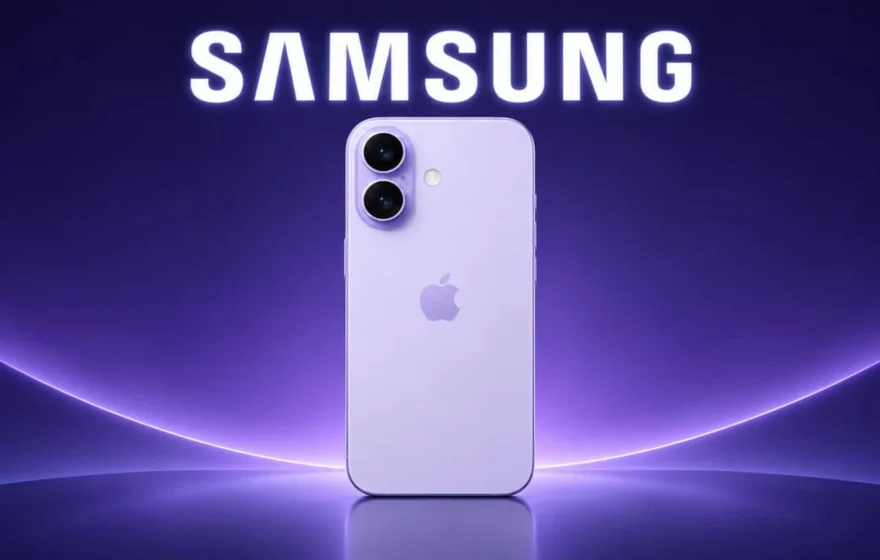
Apple left the standard iPhone 18 out of its September launch, and for weeks the most common explanation was the rising cost of memory chips and the difficulty of keeping supplies steady. Now a new report points to a different piece of the puzzle. According to the Japanese semiconductor publication Semiconportal, Apple may be holding the phone back to give Samsung enough time to build up a supply of the camera sensors it will need. If that is right, the delay is about more than market shortages. It is also about the timing of a new supplier relationship Apple is still putting in place.
The split launch was one of the biggest surprises of Apple’s September event. The company showed off its premium models as usual, but the regular iPhone 18, the phone most buyers actually end up choosing, was nowhere to be seen. Reports at the time blamed memory prices, which have been climbing as demand from artificial intelligence data centres soaks up supply. That was never the whole story, though, and the Semiconportal report suggests the camera sensor is a second, quieter reason for the wait.
Samsung’s Camera Sensor Timeline
Samsung reportedly began prototyping high-performance image sensors for future iPhones in the spring of 2026 at its semiconductor facility in Austin, Texas. The schedule described in the report puts mass production in the autumn, which leaves little room for error if Apple wants millions of sensors ready for a launch. Waiting until early 2027 would give Samsung time to build up stock and meet Apple’s quality standards. Apple has confirmed neither a launch date nor a reason for the phone missing its usual September slot.
Analysts have been flagging this for more than a year. In September 2025, Ming-Chi Kuo wrote that Samsung’s shipment schedule for iPhone camera sensors was running late, with large volumes likely postponed until 2027, and that its ultra-wide sensor would reach mid-range models first. The Semiconportal report tells a similar story from the production side, and together they make the delay look like a timetable Apple has been managing for months, not a sudden decision.
For buyers, the practical effect is a longer wait for the most affordable new iPhone. The Pro models are already on sale, so anyone who wants a new iPhone this year has to pay the premium price or settle for last year’s model. That is an awkward position for a company that sells tens of millions of standard iPhones every year.
Why Apple Is Adding a Second Supplier
Sony has supplied most of Apple’s iPhone image sensors for about a decade, and for most of that time the arrangement suited both companies. That is now changing. Semiconportal expects Samsung to join the supply chain as a second source, with Sony remaining a supplier as well. How Apple will split its orders between the two companies is still unclear.
The logic of a second supplier is straightforward. With two companies making the same part, Apple is less exposed if one factory runs into trouble, and it has more room to negotiate on price. That matters more than ever, because the cost of memory and chip production is climbing. Gizmochina noted that with those costs rising, a lower retail price for the iPhone 18 looks unlikely.
There is also a political dimension to the move. Apple confirmed in August 2025 that it was working with Samsung on chip manufacturing at the Austin plant under its American Manufacturing Program, announced alongside an additional 100 billion dollar commitment to investment in the United States. The announcement covered chips for Apple products, including iPhones, but it did not name the standard iPhone 18 as a recipient. Making camera sensors in Texas fits neatly into that programme. Sony, for its part, confirmed during its latest earnings briefing on 5 November that it will no longer be the exclusive supplier of image sensors for Apple, ending a monopoly that had lasted about a decade.
Apple Still Set a September Revenue Record
Whatever the problems behind the scenes, they have not yet shown up in Apple’s accounts. The company reported record September-quarter revenue of 114.5 billion dollars, up 12 percent from a year earlier, and iPhone revenue also set a record for the September quarter. That is a remarkable result for a quarter in which the most popular new iPhone was not even on sale, and it suggests buyers were happy to spend more on the Pro models or on the previous generation instead.
The strong quarter gives Apple some cover for the delay. A company reporting record sales can afford to be patient with a supplier, and to wait for Samsung’s production to mature rather than rushing a phone to market with a sensor it is not happy with. The risk is that patience wears thin. By the time the standard iPhone 18 arrives in the spring of 2027, it will be competing with phones that launched months earlier, and some buyers may have already spent their money elsewhere. Whether buyers forgive the wait will depend on what the phone offers when it finally appears, and on whether the Samsung sensor inside it is worth the extra months.
