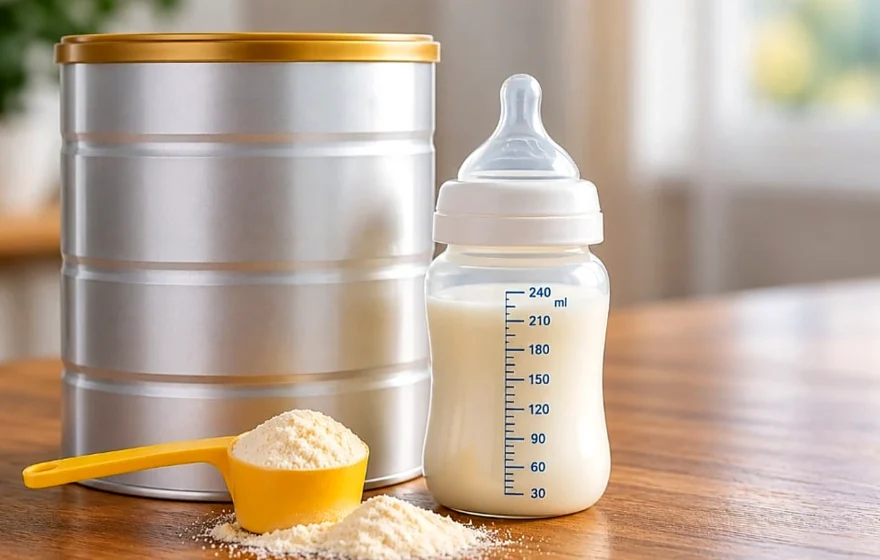
Federal Health Minister Mustafa Kamal has directed the Drug Regulatory Authority of Pakistan, known as DRAP, to collect samples of infant formula and other breast milk substitutes and test their ingredients and safety for consumption. The directive follows growing concern among lawmakers about how formula milk is advertised and whether existing laws protecting breastfeeding are being properly enforced.
The minister issued the instruction during a meeting of the Senate Standing Committee on National Health Services, Regulations and Coordination, where senators raised questions about formula milk advertising and the enforcement of the Breastfeeding and Child Nutrition Act 2002. That law restricts the promotion and advertising of breast milk substitutes, and it exists to ensure that mothers receive accurate information and are not encouraged to abandon breastfeeding through commercial pressure.
Senators Anusha Rahman and Shahzaib Durrani called for stricter enforcement of the law. They argued that companies should not be allowed to market infant formula as if it were ordinary milk, a practice they said blurred an important distinction and risked misleading parents. For newborns and young infants, the difference between breast milk and formula is not a matter of branding. Health experts regard breastfeeding as the healthiest start in life for most babies, and laws restricting formula promotion are designed to protect that choice from commercial influence.
DRAP chief executive Dr Obaidullah told the committee that the authority regulates infant formula under its rules covering alternative medicines and food products. That regulatory position is significant, because it determines how products are assessed, what standards they must meet and what action can be taken when they fall short. The testing now ordered by the minister will put that framework to work, examining whether products on the market contain what their labels claim and whether they are safe for the infants who consume them.
Committee chairman Senator Amir Waliuddin Chishti told the meeting that a disclaimer stating “Mother’s Milk is the Best for a Child” had appeared in advertisements on 29 television channels. That message, simple and direct, is intended to ensure that even when formula is advertised, parents are reminded of the benefits of breastfeeding. However, the chairman also revealed a complication: a company had obtained a stay order from the Islamabad High Court against the relevant notice, temporarily blocking its application. Legal challenges of this kind can slow down enforcement and create uncertainty about what advertisers are required to do.
Pakistan Electronic Media Regulatory Authority chairperson Amberin Jan confirmed the legal challenge and said the authority had contacted the Pakistan Broadcasters Association to ensure the disclaimer appeared on other channels. The involvement of the broadcast regulator underlines that this is not only a health issue but also a media and advertising one. Television remains a powerful influence on household decisions in Pakistan, and what appears in commercial breaks can shape how parents feed their children.
The minister also acknowledged the challenges faced by mothers who cannot breastfeed. That recognition matters, because the debate about formula marketing is sometimes misunderstood as a criticism of mothers who use formula. In reality, many women face medical, practical or personal reasons that make breastfeeding difficult or impossible, and for them safe, properly regulated formula is essential. The government’s position, as expressed by the minister, is not to deny those mothers a safe product but to ensure that the product is safe and that its marketing does not undermine breastfeeding for those who can and wish to do so.
To that end, the minister said the government was preparing an advertisement to promote breastfeeding, a public awareness effort intended to complement the regulatory action. Public campaigns of this kind can play an important role in reinforcing health messages, particularly when they reach families through television and other widely used media. Combined with the testing directive and the push for stronger enforcement, the campaign forms part of a broader effort to put infant nutrition on a firmer footing.
For parents, the practical implications of the minister’s directive are reassuring. Testing of formula products should provide greater confidence that what is sold in shops meets safety standards and contains the nutrients infants need. For manufacturers, it is a reminder that compliance is not optional and that regulators are prepared to examine their products closely.
The coming weeks will show how far the directive goes. If samples are collected promptly, results are published transparently and enforcement follows where problems are found, the Senate’s concerns will have produced real change. If, on the other hand, the process stalls in legal disputes or bureaucratic delay, parents will be left with the same questions that brought the issue to the committee in the first place. For now, the minister’s order represents a clear statement of intent: infant formula sold in Pakistan must be safe, its advertising must be honest, and the law designed to protect breastfeeding must be enforced rather than merely admired.
