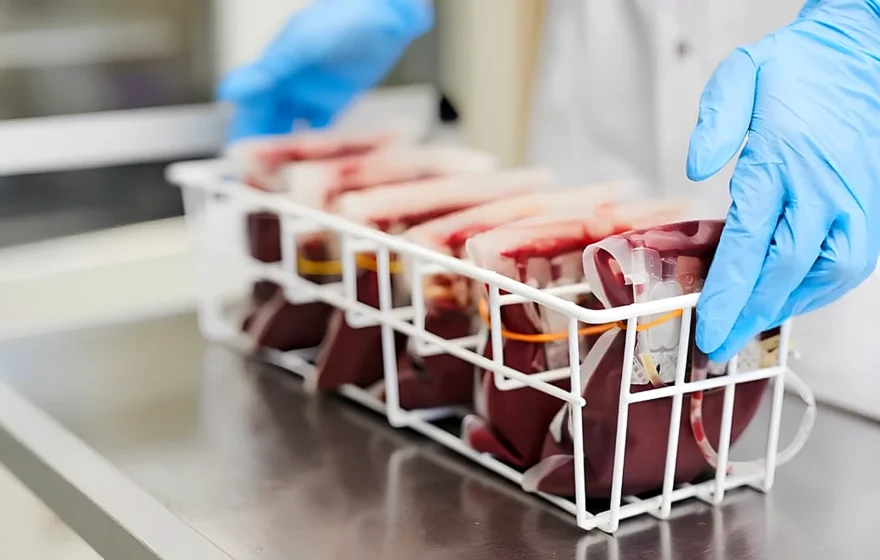
Hackers have reportedly targeted refrigeration systems used by France’s national blood service, altering temperature settings from around minus 30 degrees Celsius to 110 degrees Celsius and potentially putting blood samples and plasma intended for medical transfusions at risk. The attack, which took place overnight between November 1 and 2, 2026, has raised serious questions about the security of healthcare infrastructure in an age when even life-saving equipment is connected to digital networks.
According to French media reports, the systems belonged to the French Blood Establishment, known as EFS, the public body responsible for collecting, testing and distributing blood and plasma across France. The attack reportedly involved Coolworld, a company that supplies and maintains refrigeration equipment at healthcare facilities. Facilities in the Bourgogne-Franche-Comté region were among those affected, although the full extent of the intrusion remains unclear.
France’s Health Ministry confirmed that an on-call technician noticed the unusual temperature changes during the night, allowing staff to act immediately and prevent operational disruption. That swift human response appears to have been decisive. Had the altered settings gone unnoticed for longer, the consequences for stored blood products could have been far more serious, and the incident stands as a reminder that automated monitoring still depends on people paying attention.
Initial reports suggested that the affected refrigeration units contained donor samples used for blood safety monitoring. EFS later confirmed, however, that frozen blood plasma intended for transfusions was also stored in the affected equipment. That clarification raised the stakes considerably, since plasma is a vital medical resource used in treating patients with serious bleeding, burns, immune disorders and other life-threatening conditions. Any threat to its safety is a threat to the patients who depend on it.
Reassuringly, authorities have reported no loss of plasma, no disruption to transfusion services and no harm to patients. That outcome is welcome, but it should not obscure the seriousness of what happened. The attackers succeeded in reaching systems that control the storage conditions of medical products, and the fact that no harm resulted owes much to chance and to the technician who spotted the anomaly in time.
An important detail helps explain why disaster was avoided. The reported figure of 110 degrees refers to the temperature setting entered into the refrigeration control system, rather than the actual temperature reached inside the freezers. In other words, the hackers changed the instructions given to the equipment, but the freezers themselves did not necessarily heat up to that level before staff intervened. The distinction matters, because it explains how plasma could emerge unscathed despite such an extreme setting being entered.
Even so, the potential danger was real. Fresh frozen plasma must be stored at minus 25 degrees Celsius or below, and prolonged exposure to higher temperatures could render it unsuitable for transfusion. Blood products are among the most temperature-sensitive materials in medicine, and the cold chain that preserves them from donation to transfusion is carefully controlled for precisely that reason. A breach of that chain, even a brief one, can force the destruction of valuable stock and create shortages for patients in urgent need.
The incident also exposes a wider vulnerability. Hospitals, blood banks and laboratories increasingly rely on connected systems to monitor and control their equipment. That connectivity brings efficiency and convenience, allowing staff to check conditions remotely and receive automatic alerts. But it also creates new routes of attack for criminals and hostile actors who understand that disrupting healthcare systems can cause panic and attract attention. Refrigeration units, once purely mechanical devices, are now part of a digital network, and they must be defended as such.
Many questions remain unanswered. The identity of the hackers is unknown, as is the method they used to gain access to the refrigeration systems. Authorities have not disclosed how many units were affected, nor how long the altered settings remained in place before they were detected. Those gaps are understandable while an investigation is under way, but they also mean the public cannot yet judge whether this was an isolated intrusion or part of a broader campaign against French healthcare infrastructure.
For France, the immediate priority will be to establish exactly what happened, secure the affected systems and reassure the public that blood supplies remain safe. Donor confidence is essential to any blood service, and any suggestion that stored plasma might have been compromised could discourage donations at a time when supplies are always needed. Clear, honest communication from EFS and the Health Ministry will therefore be as important as the technical response.
For patients and the wider public, the episode is a sobering reminder of how much modern medicine depends on invisible digital systems working correctly. A bag of plasma that saves a life in an emergency has travelled a long chain of collection, testing, freezing, storage and transport, and every link in that chain now depends to some degree on technology. Protecting that chain is no longer just a matter of refrigeration engineering. It is a matter of cybersecurity, and the French blood bank attack shows why that protection cannot be taken for granted.
