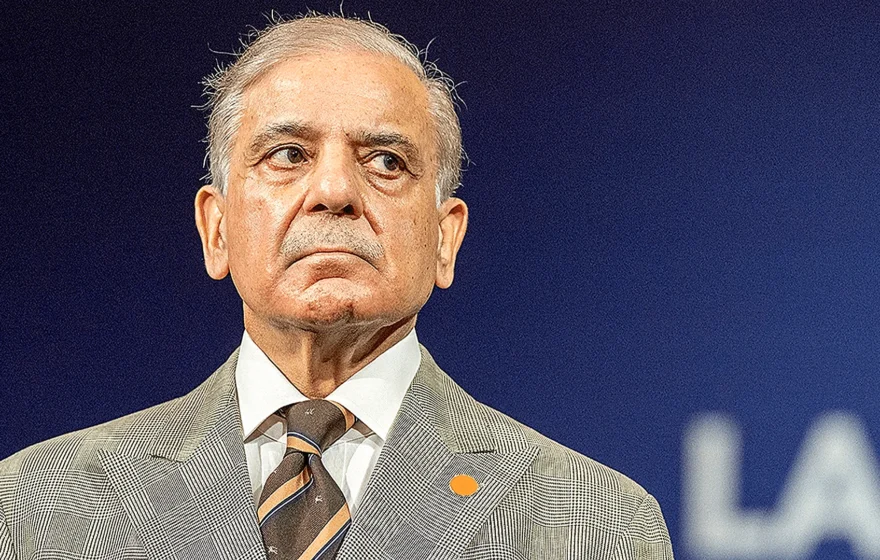
Prime Minister Shehbaz Sharif has ordered the petroleum minister to take action against petrol pumps that fail to pass on relief to consumers, warning that outlets found withholding the benefit will face strict action. The prime minister issued the direction while addressing a meeting of the federal cabinet, where he said authorities had received complaints that some petrol stations were not giving the public the relief they were entitled to. His message was blunt: those outlets should be taught a lesson, and the government would not allow a benefit meant for ordinary households to be absorbed somewhere along the supply chain.
The intervention matters because fuel prices touch almost every part of daily life in Pakistan. When petrol and diesel become more expensive, transport fares rise, food prices follow, and the cost of running a small business climbs. When prices are meant to fall, or a rise is avoided, the relief is only real if it reaches the pump. A driver who fills a tank, a transporter who moves goods between cities, and a family budgeting for the month all depend on the price displayed at the station matching the price the government has announced. That is why complaints about stations withholding relief carry weight far beyond a single transaction. They go to whether public policy, once decided in Islamabad, actually changes life at street level.
Shehbaz told the cabinet that petrol prices would have risen by fifteen rupees on Friday, but the government’s timely decision prevented the increase. The remark places the latest direction in a sequence: the government first acted to hold prices down, and it is now moving to make sure that decision is honoured in practice. The distinction is important. Announcing a price is one task; enforcing it across thousands of retail outlets, many of them in small towns and along highways where oversight is thinner, is another. The prime minister’s order to the petroleum minister signals that enforcement, rather than announcement, is now the priority, and that the ministry will be judged on what consumers actually pay.
The prime minister also turned to liquefied petroleum gas, declaring that what he called the LPG mafia’s era had ended. He said the government would import liquefied petroleum gas to provide relief to consumers. LPG is the cooking fuel for a large number of households, particularly where piped natural gas does not reach, and its price has long been a source of complaint. By linking the petrol pump crackdown with a pledge on LPG imports, Shehbaz framed the issue as a broader one: energy relief should not be captured by intermediaries, whether they sell petrol at a forecourt or gas cylinders to a household. Importing LPG directly is presented as a way of increasing supply and easing pressure on prices, although the test, as with petrol, will be whether the benefit shows up in what families pay.
Security also featured prominently in the prime minister’s remarks. He stressed that security remained the first, second and third priority in Khyber Pakhtunkhwa, a formulation that leaves little doubt about where the government’s attention lies in the province. The statement reflects the continuing challenge of militancy and law and order in the region, and it connects the economic discussion to a wider concern: relief for consumers and stability on the ground are not separate subjects. A province facing security pressures also faces disrupted trade, higher costs and hardship for its people, and the government has sought to address both sides of that problem together.
In that context, Shehbaz added that the government had finalised a one hundred and sixty billion rupee package for Khyber Pakhtunkhwa a day earlier. The package, announced alongside the security emphasis, suggests an attempt to pair enforcement and development: tighter action against those who deny the public its due, and substantial public spending in a province where the need is acute. The size of the figure underlines the scale of the commitment, and it will inevitably invite questions about how the money is spent, how quickly it reaches its intended beneficiaries, and what difference it makes to services and livelihoods on the ground.
For consumers, the most immediate question is simpler: will the next visit to a petrol pump feel different? The prime minister’s direction gives the petroleum ministry a clear mandate, but its effect will be measured in inspections, penalties and, above all, prices at the pump. If stations that withheld relief are identified and dealt with, and if LPG supply improves as promised, the government’s claim of relief will carry credibility. If complaints continue and prices at the forecourt stay out of step with announced rates, the cabinet discussion will look like another round of words. The order has been given; the proof will be at the pump, in the kitchen, and in the monthly budgets of the people it is meant to help.
