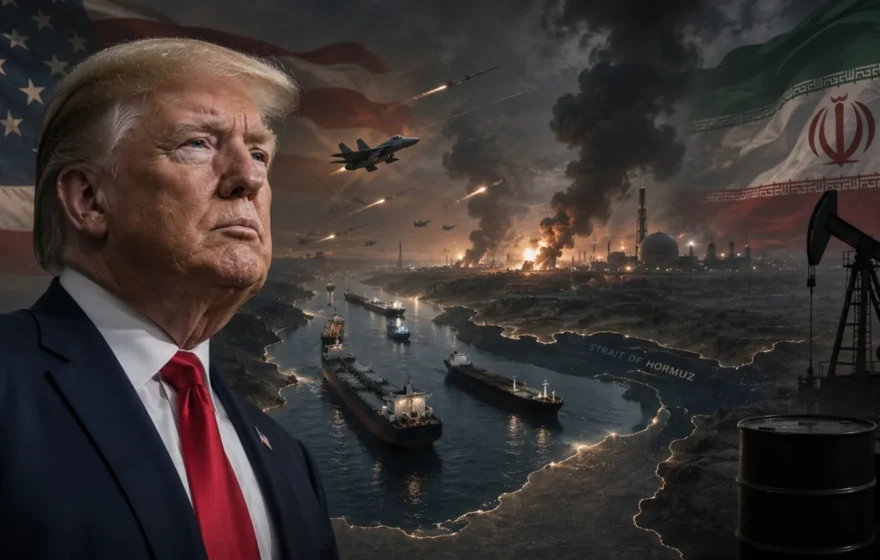
The war the United States is fighting against Iran has now cost Washington more than $47 billion, according to the latest Pentagon estimate reported by Reuters. The figure shows how quickly the financial weight of the conflict has grown in only a few months, and it arrives at a moment when the fighting itself has paused but the bills for it have not. For a campaign that began with an expectation of a short, decisive operation, the rising total is becoming a story in its own right, shaping both military planning and the political argument back home.
The scale of the increase is striking. In July, Defence Secretary Pete Hegseth put the cost at $37.5 billion. The latest figure is more than a quarter higher, an increase of roughly $10 billion in a short period. That kind of jump happens when the weapons, equipment and operations consumed by a campaign are counted honestly, and when the cost of restoring forces to a condition to fight again is added to the cost of the fighting itself.
Most of the money is not going to new capabilities or an expanded war effort. More than $29 billion is expected to be needed simply to replace the ammunition and missiles already used. A further sum of more than $6 billion would be required to replace military equipment and platforms damaged or lost, including aircraft and drones. Together, those two categories account for the overwhelming share of the total, describing a force that must now rebuild much of the stockpile and hardware it has spent.
The estimate also covers day-to-day operational expenses, including flight operations and cyber support. Yet there is an important gap: it does not clearly account for the substantial cost of repairing American military bases damaged by Iranian missile and drone attacks. That omission means the $47 billion figure may not be the full price, and if base repairs are added in full, the final bill could be higher still.
The timing of the new estimate adds a political dimension that cannot be separated from the military one. The rising cost comes as Republicans face growing pressure ahead of elections on November 3 that will decide control of Congress for the next two years. Higher global energy prices linked to the war have weighed on support for Republican candidates and have contributed to a decline in approval ratings for President Donald Trump, who launched the campaign jointly with Israel in February. Republicans currently hold narrow majorities in both chambers of Congress, so even a small shift in public mood can matter a great deal. A war presented as brief and contained is now, in financial terms, large and open-ended, and voters will judge it at a moment when household energy costs are part of everyday life.
That political pressure sits alongside a military picture that has also changed since the opening weeks. The early American strategy relied on expensive precision missiles to destroy Iranian defences, before shifting to less costly weapons, including Joint Direct Attack Munition gravity bombs. The change reflected a practical lesson: a campaign cannot be fought indefinitely with its most expensive munitions, and commanders must balance effectiveness against the rate at which stockpiles are consumed. The April ceasefire then gave Iran time to recover underground weapons storage facilities, allowing some of its defences, missiles and drones to return to operation. The pause in fighting did not freeze the military balance. It allowed one side to repair and regroup, which is one reason American planners now speak of a possible return to heavy fighting rather than a settled outcome.
Since that ceasefire, President Trump has imposed a naval blockade on Iran intended to restrict its oil export revenue, and he has raised the possibility of resuming military operations after the midterm elections. American officials, speaking on condition of anonymity, have said the Pentagon has been preparing for a return to heavy fighting if ordered to do so. That preparation is itself expensive, because it means keeping forces ready and ensuring munitions are available, even while no final decision has been taken. It also means the cost figures released now are not a closing account. They are a snapshot taken in the middle of a campaign whose next chapter has not yet been written, and whose price will depend on decisions still to come.
Looked at as a whole, the estimate reveals three linked pressures: the material cost of restoring weapons and platforms, the strategic effect of a ceasefire that allowed Iran to rebuild part of its capability, and the political cost of a rising bill ahead of an election shaped by energy prices. If operations resume after the elections, the bill will rise again. If the blockade and diplomacy produce a different path, the United States will still face the cost of replacing what was spent and repairing what was damaged. Either way, the period in which the war could be described as short and inexpensive appears to be over, and the full cost, including repairs not yet fully counted, remains unclear.
