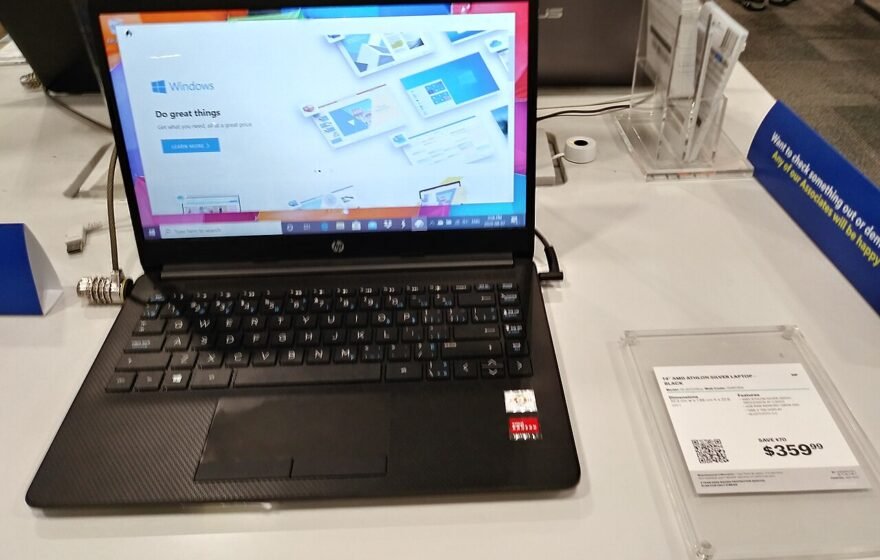
Worldwide shipments of personal computers fell sharply in the third quarter of 2026, dropping by twenty-one percent compared with the same period a year earlier to fifty-seven million units, according to new figures from Counterpoint Research. The downturn hit every major manufacturer, as rising component costs pushed laptop prices higher and persuaded many consumers to put off buying a new machine.
Counterpoint points to the rising price of memory as the main culprit, with both DRAM and NAND becoming more expensive and feeding directly into manufacturing costs. When those costs reach the shop shelf, buyers feel them immediately, and the result has been longer waits between upgrades, with households and individuals deciding that their current computer will have to last a little longer. That hesitation is now visible across the whole market rather than in any single brand.
Photo: Wikimedia Commons
Lenovo held on to its position as the world’s largest PC maker, shipping around fifteen million units between July and September for a market share of twenty-six point three percent. HP came second with ten point three million shipments and an eighteen point one percent share, while Dell took third place with seven point six million units and thirteen point three percent. Apple, despite steady interest in its MacBook Neo, saw shipments fall eleven percent year on year to about five point six million units, although its share still edged up to nine point eight percent. Asus also grew its share to nine point two percent, shipping roughly five point two million machines, a rise of nineteen point four percent on the previous quarter.
The outlook offered by Counterpoint gives manufacturers little comfort in the short term. The research firm expects shipments to fall further in the final quarter of 2026, forecasting a twenty-seven percent year-on-year decline, and it sees the market staying broadly flat through 2027, stabilising without any strong recovery. Higher component prices, longer replacement cycles and weaker consumer demand are expected to keep weighing on sales, and while business purchases and upgrades to newer Windows systems are providing some support, they have not been enough to offset the wider slowdown. The challenge for manufacturers now is a difficult balancing act, absorbing rising production costs without pricing so many buyers out of the market altogether.
