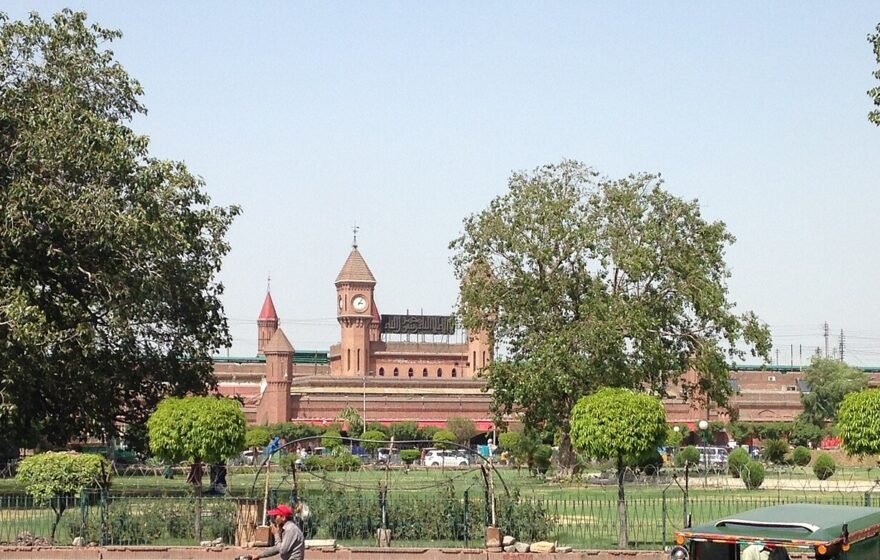
Lahore Cantt Railway Station has taken a major step into the modern era with the installation of a computer-based interlocking signalling system, replacing a manual point system that had served the station for decades. The city’s main Lahore Railway Station is set to follow within the next couple of months, as Pakistan Railways continues a wider programme to bring its signalling infrastructure up to date.
The change was confirmed by Railways Lahore Divisional Superintendent Inamullah Khan, who told Dawn that the work in the Lahore division began at Shahdara Station before moving on to other stations including Raiwind and Okara Cantt. He explained that teams were still working through the remaining stations, and that the installation at Cantt Station had been given priority because of the complexity of its yard. After installation, testing and commissioning, the new system was opened for trial operations at Cantt Station on October 21, with various trains passing safely through it.
Photo: Wikimedia Commons
The new system replaces conventional mechanical and relay-based signalling with computer-controlled technology that manages signals, track points and train routes from a single interface. Under it, operators control signals and points through a computer screen, and the system itself checks that the chosen route is clear, that the points are in the right position and that no conflicting train movement is possible before a train is allowed to proceed. Its fail-safe design is a key part of the safety case, since a fault automatically puts signals into a restrictive state rather than leaving a route open. As the Divisional Superintendent put it, the system is fully automated, setting the route, ensuring safe train operations and recording all activity linked to interlocking and to the operators themselves.
According to an official working on the project, the system has now been installed at every station from Shahdara to Lahore with the exception of the main Lahore station and Khanewal Railway Station. That leaves the final stretch of the programme close to completion, and once those last two stations are converted, the whole corridor will be running on the same modern standard. For passengers, the change will mostly be invisible, but it is the kind of quiet infrastructure upgrade on which safer and more reliable train operations depend, replacing a hand-operated system known locally as the kanta with technology that checks its own work before a single train moves.
