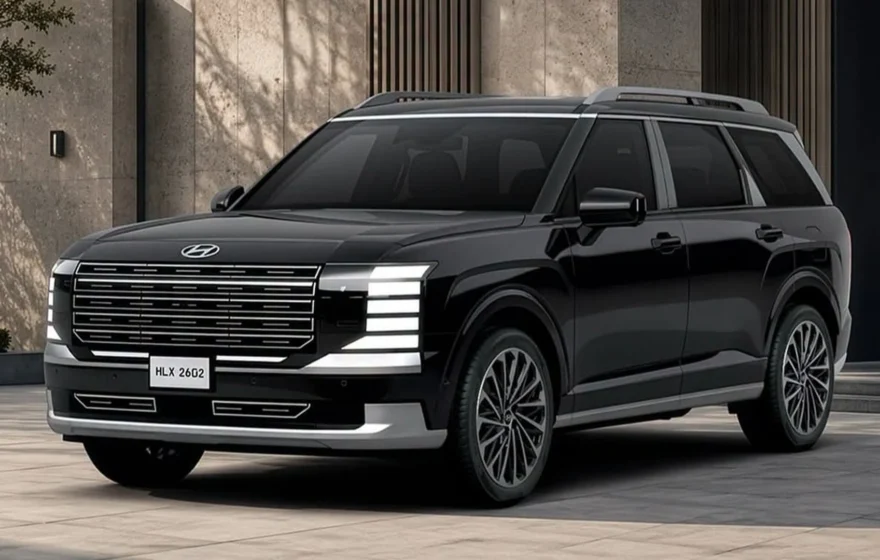
Hyundai Nishat Motor has told customers that the prices of its vehicles in Pakistan remain unchanged, despite growing talk that cars are about to get cheaper. In an official clarification shared on Instagram, the company said it wanted to address speculation about possible price cuts and set out its current pricing position.
The statement, posted as a graphic headed “Official Price Clarification”, said the proposed auto policy was still under consideration and no related pricing measures had taken effect. Hyundai added that any official updates about its vehicle prices would come exclusively through its own official channels and authorised dealerships, a warning to buyers not to rely on rumours or unofficial price lists circulating online.
The clarification lands as many car buyers have been holding off purchases in the hope prices will fall. The federal government recently unveiled a new auto policy built around six aims: cheaper vehicles, especially for the middle and lower-middle classes, encouraging exports, greater localisation, vehicle safety, the promotion of electric vehicles, and transparency. Announcing the policy, the prime minister’s adviser on industries and production, Haroon Akhtar Khan, said cabinet approval had begun and that car prices would come down, except for luxury vehicles. Duties on fully built imported cars, assembly plants and components are to fall gradually each year, reaching competitive tariffs after five years, while a levy on petrol and diesel vehicles above 1,000cc will help pay for electric vehicle incentives.
The draft policy, known as the Auto Policy 2026-31, has raised expectations further. Industry estimates based on the draft suggest petrol cars could become around 8 to 10 per cent cheaper, hybrids about 9 per cent cheaper, and plug-in hybrids more than 20 per cent cheaper. Smaller electric cars could become cheaper by roughly a fifth. But none of those changes has yet become law, and that gap between announcement and implementation is exactly what Hyundai is pointing to. Until the cabinet approves the policy and the tax changes are formally notified, showroom prices stay where they are.
Hyundai’s own customers have good reason to be confused, because the company’s prices have swung sharply this year. In August, Hyundai raised the prices of its locally assembled hybrids after the sales tax on them jumped to 25 per cent when a concession expired with the new budget. The Elantra Hybrid rose from about Rs 9.9 million to Rs 11.4 million, and the Santa Fe Hybrid Signature, the most expensive of the range, went up by more than Rs 2.1 million. The company softened the blow with a promotional offer for the rest of the month, absorbing part of the increase itself. Then in September, after the government cut the sales tax on locally assembled hybrids with engines up to 2,000cc back to 18 per cent, Hyundai passed the saving on, cutting prices by up to Rs 1.4 million. The Elantra Hybrid settled at Rs 10.761 million, the Tucson Hybrid at Rs 12.202 million, and the Santa Fe Hybrid at Rs 13.258 million. Those prices have not moved since.
That recent history explains why Hyundai felt the need to speak out now. Buyers who watched prices fall by more than a million rupees in September could be forgiven for expecting another round of cuts once the new auto policy was announced. Dealers, too, will have faced customers asking them to hold bookings until the policy takes effect. By stating publicly that nothing has changed, the company is trying to stop that waiting game, which hurts sales, and to protect buyers from acting on speculation that may prove wrong.
For anyone planning to buy a Hyundai, the message is simple. The price on the company’s official channels and at its authorised dealerships is the price that applies today, and no discount linked to the new auto policy exists yet. That could change once the policy is approved and its tax measures take force, but the timing is in the government’s hands, not the company’s. Buyers who can wait may benefit from lower duties in the coming years if the policy is implemented as drafted, yet there is no guarantee how much of the saving will reach the showroom, or how quickly.
The episode also says something wider about the car market. The government has promised cheaper cars, an export target of 6 billion dollars over five years, mandatory localisation, and curbs on the extra charges buyers pay at booking, including a cap of 20 per cent on advance payments. Those are ambitious aims, and the industry has welcomed parts of the plan while warning that other parts could hurt local manufacturing. But for the ordinary buyer, the announcement of a policy and the arrival of cheaper cars are two different things. Until the cabinet signs off and the notifications are issued, the price of a car is the price on the dealer’s board. Hyundai’s clarification is a reminder of that gap, and a sign that carmakers would rather address the speculation now than watch customers drift away while waiting for a cheaper tomorrow that has not yet arrived.
