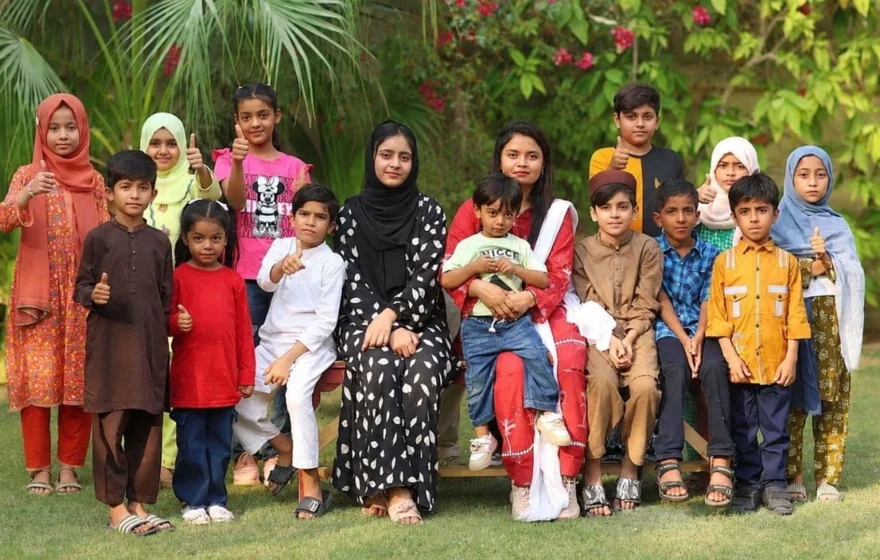
inDrive has launched a free education programme that will teach more than 750 children of its drivers in Pakistan the skills of coding, digital citizenship and generative artificial intelligence. The global mobility and urban services platform has partnered with the CIRCLE Women Association and Tech Valley to run the programme, which began in September 2026 and is aimed at the families of drivers who keep the platform moving every day.
The initiative arrives against a difficult backdrop. Pakistan has roughly 25 million children between the ages of 5 and 16 who are not in school, the second largest out-of-school population in the world. For families in that position, access to good learning is often out of reach, and digital skills in particular tend to belong to children whose parents can already afford them. The new programme is designed to close that gap for one community at a time, starting with the children of the drivers themselves.
The training is an exclusive benefit for drivers enrolled in inDrive’s Platinum and Legend loyalty tiers, the two highest levels of the platform’s driver rewards. It is delivered through two specialised pillars. One is run in person by the CIRCLE Women Association, a non-profit organisation focused on women’s economic empowerment. The other is run online by Tech Valley, an official Google for Education partner, which delivers digital literacy and artificial intelligence training through Google Classrooms.
Awais Saeed, the Country Manager for inDrive Pakistan, said the drivers were the true backbone of the platform, working tirelessly every day to keep communities connected. He described the initiative as a direct investment in the children’s future, and said the company was proud to work with trusted partners such as CIRCLE Women and Tech Valley to give the next generation the technology and artificial intelligence skills they will need to succeed in the economy of tomorrow.
Sadaffe Abid, the Founder and Chief Executive Officer of CIRCLE Women, said a child who can build an app sees the world differently from a child who can only use one. She said that, with inDrive, her organisation was giving the children of drivers hands-on digital and artificial intelligence skills. In an economy shaped by artificial intelligence, she said, these skills were not optional but the entry ticket, and the earlier a child learned to build with technology instead of simply consuming it, the more of the world that child would be able to shape.
Umar Farooq, the Founder and Chief Executive Officer of Tech Valley, said every child deserved to grow up digitally literate, safe and ready for artificial intelligence, not only those with access to the best schools. He said the partnership delivered real skills, real reach and real accountability by bringing structured digital learning directly to the families of inDrive drivers.
The in-person component is being delivered by CIRCLE Women, which is engaging between 300 and 320 children aged 8 to 18 through dedicated training centres in Karachi, Lahore and Islamabad. Over a three-month period, participants receive fully equipped laptops and hands-on guidance across three age-specific tracks, including Scratch Game Studio, AI Web Prototyping and App Engineering, enabling students to build functional digital portfolios of their own work.
Complementing the physical workshops, Tech Valley is delivering online digital literacy and artificial intelligence training via Google Classrooms for 400 to 450 students in grades 6 to 10. The curriculum features Google’s Be Internet Awesome digital citizenship module and the Gemini Academy for ethical generative artificial intelligence prompt engineering, supported by live weekly sessions and expert facilitation.
The programme also says something about how ride-hailing platforms are changing. For years, the relationship between a platform and its drivers has been defined by fares, ratings and incentives. Benefits that reach the driver’s family, and that invest in a child’s education rather than a driver’s earnings, mark a different kind of commitment. Whether other platforms follow will depend on whether they see the same value in it, but for the families involved the benefit is immediate and concrete: a laptop, a trained teacher and a skill that did not exist in the household before.
By combining community-focused support with modern technical education, inDrive continues to invest directly in the long-term future of its driver community, empowering families and building sustainable pathways for the young people of Pakistan. The test of the programme will come in what its first graduates do next, whether they keep building, whether they teach others, and whether the skills they have gained open doors that would otherwise have stayed closed. For now, the first cohort is under way in three cities and online, and its organisers will be watching closely to see how far these young learners can go.
