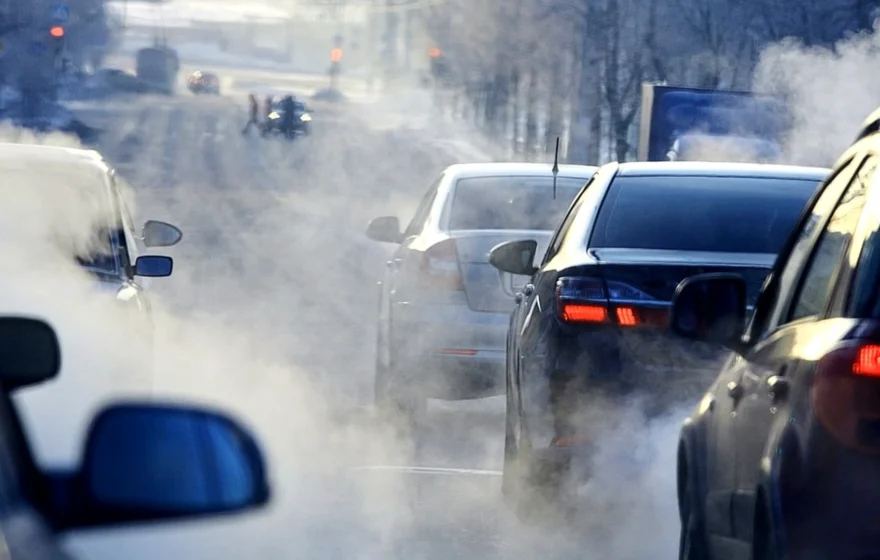
Lahore’s authorities fined 1,763 smoke-emitting vehicles a combined Rs5.5 million during the current month, as the city’s annual fight against choking winter air moves into its most difficult phase. The action, disclosed at a review meeting chaired by Lahore Division Commissioner Nauman Yousuf, is part of a wider enforcement drive that is now touching almost every source of pollution in the division, from battered trucks on the roads to factories, restaurants and burning fields.
Alongside the fines, officials impounded 739 vehicles and removed excess loads from overloaded transport, a step aimed both at road safety and at cutting the thick black exhaust that old and poorly maintained vehicles pour into the city’s air.
The drive has gone well beyond the roads. Teams inspected 2,018 industrial units across Lahore Division and sealed 41 factories and 146 restaurants for their role in causing pollution.
Action was also taken at 49 locations against the burning of crop residues, one of the most politically sensitive sources of seasonal pollution. Eight first information reports were registered, and fines totalling Rs240,000 were imposed on those found burning crop remains. The timing matters. The rice harvest is under way, and the commissioner has ordered additional anti-smog squads to be deployed immediately, with strict enforcement of environmental rules during the harvest season and zero tolerance for activities that add to the haze.
At the review meeting, the commissioner directed that anti-smog squads remain active along motorway areas in Nankana Sahib and Sheikhupura, and that transport vehicles and sand-carrying trolleys entering Lahore at night face strict monitoring. The Parks and Horticulture Authority, Suthra Punjab and Environment Department teams were told to intensify their enforcement operations.
The urgency is easy to understand. On October 29, Lahore was ranked the world’s most polluted major city, with an Air Quality Index reading of 419 between 10am and 11am according to IQAir’s live global ranking, ahead of Cairo at 274 and Delhi at 220. The reading later eased during the day, but the episode was a reminder of how quickly the city’s air can turn hazardous as winter approaches and cooler air traps pollution close to the ground. Residents can report offending vehicles and burning by calling the police emergency number 15.
The vehicle crackdown is only one part of a much larger provincial effort. The Environment Protection Agency’s pre-smog campaign, which ran from September 28 to October 27, demolished 197 non-compliant brick kilns, sealed 163 units and registered 162 first information reports. Its teams carried out 11,580 kiln inspections and imposed fines totalling Rs40.7 million, inspected 6,650 industrial sites, and took action against plastic burning through 6,064 inspections that led to the sealing of 152 premises.
Lahore’s traffic police have been running a parallel night operation, setting up late-night checkpoints for smoke-emitting vehicles, uncovered sand and soil carriers, dumpers and unfit vehicles. According to Chief Traffic Officer Syed Abdul Rahim Sherazi, his force has issued challans to 9,998 smoke-emitting vehicles and acted against 22,241 vehicles running without fitness certificates or in poor mechanical condition, alongside action against 6,745 uncovered sand and soil carriers. Drivers of smoke-emitting vehicles face suspension of their licences, and commercial vehicles involved in violations risk losing their route permits as well.
There is a reason vehicles sit at the centre of the campaign. A recent Pakistan Air Quality Initiative inventory puts transport at about 35 per cent of Lahore’s primary PM2.5 emissions, the largest single share, ahead of industry at 28 per cent and brick kilns at 17 per cent. Every major inventory agrees on the same point: what comes out of exhaust pipes is not a side issue in Lahore’s smog, it is one of its main drivers.
The health stakes behind the enforcement figures are stark. The same recent inventory estimates that air pollution contributes to around 128,000 premature deaths in Pakistan every year, with an economic burden equal to about 6.5 per cent of the country’s gross domestic product. Lahore’s annual average concentration of fine particulate matter, known as PM2.5, is put at more than 110 micrograms per cubic metre, over 22 times the World Health Organisation’s recommended annual guideline of five, and sustained exposure at that level could cut life expectancy in Lahore by as much as seven years. These tiny particles travel deep into the lungs and can reach the bloodstream, worsening asthma and heart disease.
Whether this month’s crackdown changes that picture will depend on what happens next. Fines and impoundments can take the worst offenders off the road, and the deployment of extra squads during the harvest season shows the administration is treating the coming weeks as the critical window. But the deeper test is whether enforcement holds once the harvest ends, and whether fitness checks and covered-load rules become routine rather than seasonal. For now, Lahore’s message to smoke-belching vehicles is unmistakable: the smog season has arrived, and the cost of polluting is going up.
