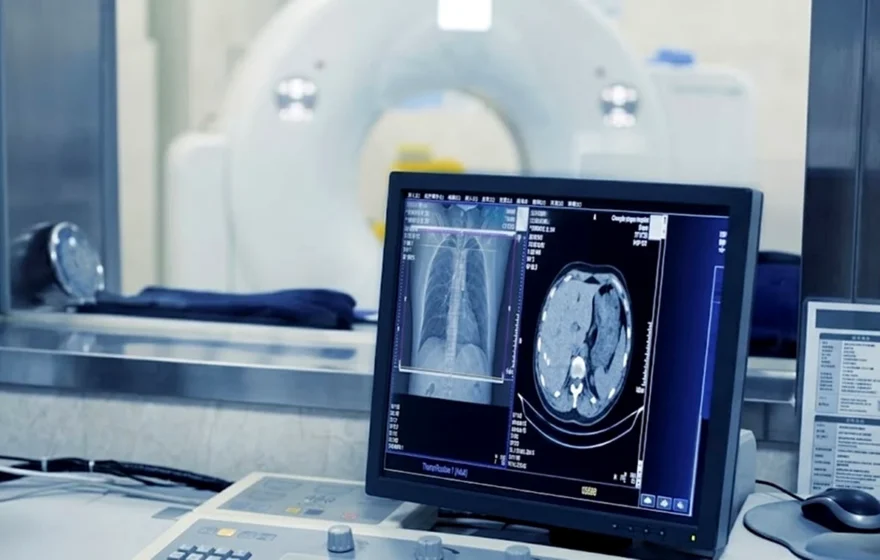
The Punjab government has approved Rs1.10 billion to buy advanced CT scanners for three large public hospitals, in a move aimed at easing one of the most persistent bottlenecks in state-run healthcare: getting a reliable scan quickly. The funding, announced by the provincial Health Department on Friday, will cover a specialist cardiac scanner in Lahore and two high-capacity general scanners, one each in Lahore and Rawalpindi.
Of the total amount, Rs500 million has been set aside for the Punjab Institute of Cardiology in Lahore, where the money will buy a whole-body, multi-ultra-fast CT scanner designed for cardiac scans. The remaining Rs600 million is split evenly between two other hospitals. Lahore General Hospital will receive Rs300 million to replace the ageing scanner in its emergency department with a new 128-slice machine, while Benazir Bhutto Hospital in Rawalpindi will also receive Rs300 million for a 128-slice scanner of its own. Punjab Health Secretary Azmat Mahmood has given administrative approval for all three purchases.
The choice of hospitals is telling. All three are among the busiest public hospitals in the province, and all three serve patients who often cannot afford private diagnostic centres. In a public hospital, a CT scanner is rarely just a piece of equipment sitting in a room. It is the point at which a doctor’s suspicion becomes a diagnosis, whether that means confirming a head injury, locating internal bleeding, identifying a stroke, or checking heart arteries before treatment. When that machine is old, slow, or out of order, patients wait, treatment is delayed, and families who can scrape the money together are sent outside the hospital to pay privately.
The largest single share of the money goes to the Punjab Institute of Cardiology, and that reflects the particular demands of heart care. The institute, on Jail Road in Lahore, is a specialist cardiac hospital and the first government-sector hospital to earn ISO certification. CT scanning was introduced there in 2010 and upgraded to a 640-slice machine in 2019. A whole-body, multi-ultra-fast scanner built for cardiac work matters because the heart never stops moving, so capturing a clear image of its arteries requires speed as much as detail. A faster machine can scan in a shorter breath-hold, produce sharper images of small vessels, and help doctors decide sooner on treatment.
At Lahore General Hospital, the case for replacement is more straightforward, and in some ways more urgent. The new machine is destined for the emergency department, where the existing scanner is described as outdated. Emergency medicine runs on minutes. A patient brought in after a crash, a fall, or a sudden collapse may need a scan before any firm decision can be made, and an emergency department that cannot scan promptly cannot triage properly. A 128-slice machine takes many more image slices in a single rotation than older scanners, building a detailed three-dimensional picture far more quickly. In practice, that means shorter scan times and clearer images for doctors working under pressure.
The third scanner, for Benazir Bhutto Hospital in Rawalpindi, carries a different kind of significance. Strengthening diagnostics in Rawalpindi reduces the need for patients to travel to Lahore for a scan their local hospital should provide. A 128-slice machine at Benazir Bhutto Hospital gives doctors there the same fast, detailed imaging the Lahore hospitals are receiving, and spreads the benefit beyond the provincial capital. For patients in Rawalpindi and surrounding areas, that could mean a diagnosis made days earlier, treatment started sooner, and one less journey to another city when a family is already under strain.
The Health Department has presented the approvals as part of a wider programme. Health Secretary Azmat Mahmood said the projects were in line with the vision of Chief Minister Maryam Nawaz Sharif, under which the provincial government is undertaking healthcare initiatives worth billions of rupees for public welfare, and reaffirmed its commitment to high-quality facilities and modern diagnostic services. That places these scanners inside a larger argument: public hospitals should offer diagnostic standards close to those available privately.
Whether that argument holds up will depend on what happens next, and that is where such announcements are usually tested. Approving funds and granting administrative approval are necessary steps, but they are not the same as a machine being installed, calibrated, staffed, and kept running. CT scanners need trained staff, a steady supply of consumables, and maintenance contracts that respond quickly when a machine breaks down. The real measure of this Rs1.10 billion will not be the announcement itself but the reality in the three hospitals months from now: shorter waits, fewer patients sent outside for scans, and emergency and cardiac teams able to act on images they trust.
Three of Punjab’s busiest public hospitals are set to receive modern scanning equipment, with the largest investment going to the province’s flagship heart hospital and the rest strengthening emergency care in Lahore and general diagnostics in Rawalpindi. If procurement is carried through with the same urgency as the approval, patients who would otherwise have waited, travelled, or paid privately may instead get their answers inside the hospital where they are already being treated, and that is precisely what public healthcare is supposed to deliver.
