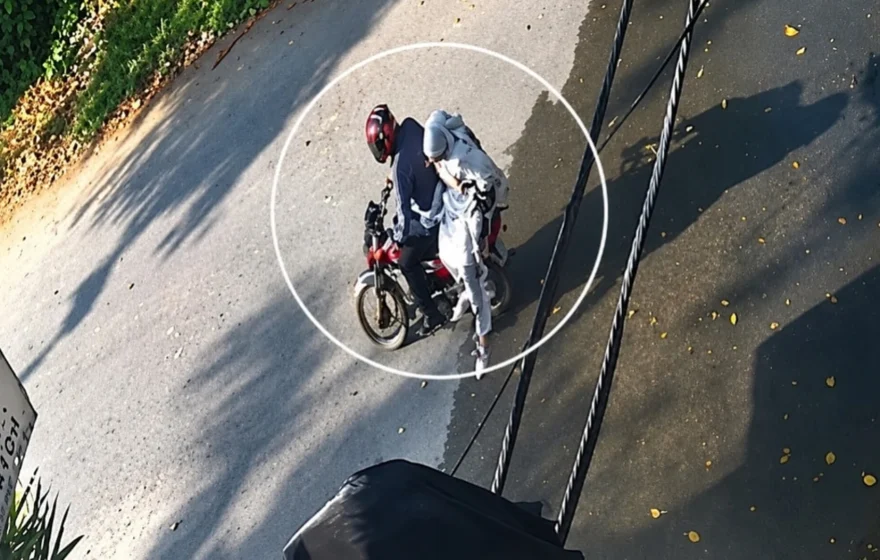
Police in Lahore have arrested an online motorcycle rider accused of harassing a woman passenger during a ride in Johar Town, an incident that ended with the woman jumping from the moving motorcycle and suffering serious injuries. Officers said the suspect, identified only as Naeem, was traced through his motorcycle’s registration number and taken into custody after closed-circuit television footage of the incident spread on social media. The arrest is a first visible police response to a case that has stirred anger among women who rely on app-based bike rides for daily travel, and it starts the formal legal process that will now test the evidence against him.
The ride began in the F-2 area of Johar Town, where the woman booked a motorcycle through an online service a few days before the arrest was reported. According to police, the rider allegedly harassed her as the motorcycle moved through the area, and continued despite her repeated requests that he stop. Faced with a frightening situation, the woman jumped from the moving motorcycle to get away from him. She landed on the road and was hurt in the fall, with injuries reported to her face, arms and other parts of her body, while the rider left the scene instead of staying to help her.
Footage of the fall, captured by a nearby camera, spread widely on social media on Monday night and changed the course of the case. Until then the incident had been known mainly to those directly involved and to the local police station, but the video made it a matter of public discussion within hours. People who watched it reacted with shock at the sight of a passenger choosing to leap from a moving vehicle, and with questions about how such a situation could develop during a ride booked through a platform that records the driver, the vehicle and the route.
A formal complaint was lodged at Nawab Town police station by the woman’s brother, and officers registered a first information report against the suspect on the basis of that complaint. The report records the allegation that the rider harassed the passenger throughout the journey and ignored her repeated pleas to stop, and it forms the foundation of the investigation that followed. In Pakistan’s criminal process, such a report is a starting point rather than a verdict: police must gather evidence, record statements and prepare a case file, known as a challan, for the courts, which will decide whether the charges are proved.
Senior police officers in Lahore took notice after the footage circulated, and the Investigation Wing formed a special team to trace the rider. Police said the team used the motorcycle’s registration details, along with CCTV material and other investigative work, to identify Naeem and arrest him. The deputy inspector general for investigations has said that people involved in harassing or assaulting women will be brought to justice, and that investigators will prepare a strong challan so the suspect faces the legal consequences that follow from the evidence. He also announced commendation certificates for the police team involved.
The case raises a wider question beyond one rider and one ride: what protection does a passenger actually have once a trip has begun. App-based motorcycle services have grown rapidly in Pakistani cities because they are cheap, quick through traffic and easy to book from a phone, and they are now part of daily life for students, office workers and shoppers. That convenience depends on trust, because a passenger hands a degree of control to a stranger, often on a vehicle with no barrier, no fellow passenger and no easy way to leave safely while it is moving. When that trust is broken, the consequences can be immediate, as this case shows.
In recent years, ride-hailing companies in Pakistan have pointed to safety tools in their applications, including trip sharing with trusted contacts, GPS tracking, in-app support during a ride and emergency buttons that can alert help. Some services have worked with the Punjab Safe Cities Authority, whose system can pass a caller’s live location and vehicle details to an emergency response centre, and which offers access to a virtual women police station for female passengers. Punjab has separately introduced a QR-code panic button for public transport, letting passengers verify vehicle and driver details and share them with family before travelling.
For the woman at the centre of this case, the immediate concern remains her recovery. For the police, the next steps are to complete the investigation, finalise the challan and present the case in court, where the evidence will be tested. For the wider city, the case is a reminder that safety on app-based transport cannot rest on a single arrest, however welcome it may be. It depends on quicker responses when a passenger reports danger, on platforms that act decisively on complaints, and on a legal process that follows through after the headlines fade. The arrest in Johar Town is a start, but the measure of this case will be what happens next.
