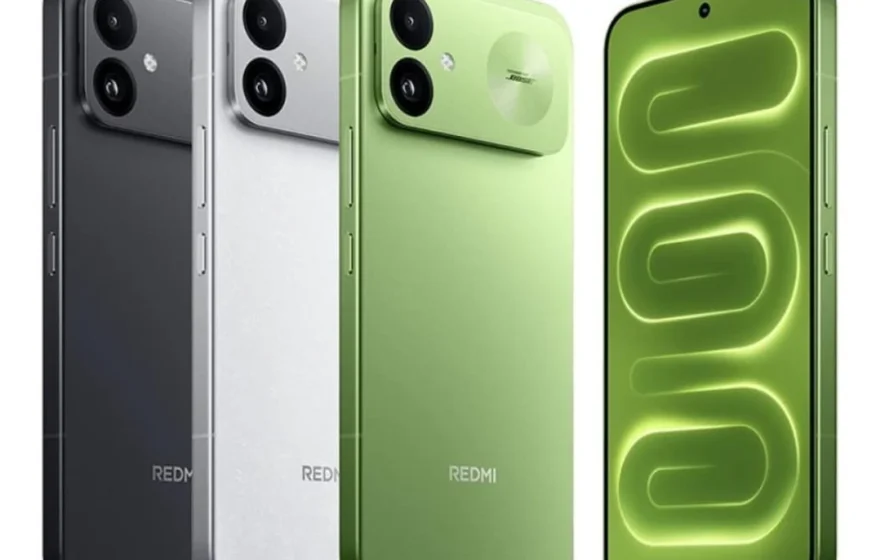
Xiaomi has launched a phone that makes its priorities obvious from the first number on the specification sheet. The new Redmi K100, unveiled in China, carries a 10,000mAh battery, a figure that would once have belonged to a tablet rather than a mainstream smartphone. Around that battery, Xiaomi has built a device with a flagship-class processor, a fast and bright display, and a starting price of about 525 dollars, in a way that quietly embarrasses its own more expensive siblings.
The headline is the battery, and it is worth pausing on what 10,000mAh means in practice. Most well-known flagship phones still ship with cells of roughly 5,000mAh, so the K100 carries about twice as much stored energy as the handsets many buyers consider the best in the business. That does not automatically mean twice the usage, because a larger screen and a faster processor also draw power, but it changes the daily calculation for the owner. This is a phone for people who travel, game, shoot video, or simply do not want to think about a charger until the day is well advanced.
Xiaomi is not presenting the battery as a curiosity. The phone supports 100W wired charging, which takes the sting out of refilling such a large cell, and it also offers 27W wired reverse charging, so the K100 can pass power on to earbuds or a second phone. Large capacity plus fast charging is the whole point of the device: endurance without the long wait that used to come with it.
The rest of the phone is designed to keep pace with that battery. At its heart is Qualcomm’s Snapdragon 8 Elite, a processor that sat at the top of the Android range last year and still handles demanding games and heavy multitasking with ease. Xiaomi pairs it with up to 16GB of memory and up to 512GB of storage, plus its own D2 display chip, intended to keep frame rates steady during gaming. This is not a phone that trades performance for battery life.
That theme continues on the front of the device. The K100 has a 6.83-inch OLED display with a resolution of 2772 by 1280 pixels and a refresh rate of 165Hz, so scrolling and animation look noticeably smoother than on a standard screen. The panel supports Dolby Vision and reaches a peak brightness of 3,200 nits, so it should stay readable in harsh sunlight, and an ultrasonic fingerprint sensor sits beneath the glass. The phone is also rated IP69K for resistance to dust and water, and it comes in black, Snow Rock White, and Firefly Green.
Photography is where Xiaomi has made a clear compromise. The rear carries two cameras rather than three: a 50-megapixel main sensor, the Light Fusion 800, with optical image stabilisation to cut down on blur, and an 8-megapixel ultrawide lens for wider scenes. There is no dedicated telephoto camera for zoomed shots, so buyers who care most about distant subjects will need to look elsewhere. A 20-megapixel camera on the front handles selfies and video calls. The software is HyperOS 4, based on Android 17, with Xiaomi’s Super Xiao AI 2.0 assistant, and connectivity covers Wi-Fi 7, NFC and dual 5G.
Pricing is where the launch becomes interesting, and slightly awkward for Xiaomi itself. The base model, with 12GB of memory and 256GB of storage, costs about 525 dollars in China, while the 12GB and 512GB version is around 615 dollars and the top model, with 16GB and 512GB, is about 675 dollars. Pre-orders are open, with sales due to begin on October 31. Launch coverage notes that the K100 Pro has an 8,580mAh battery and the K100 Pro Max a 9,070mAh cell, so the standard K100 outlasts both Pro siblings while costing less. The trade-off is the processor, since the Pro models use a newer chip, but for buyers who value battery life above the latest silicon, the cheaper phone is more appealing.
That ordering makes sense only in the wider story of phone batteries. Chinese brands have pushed silicon-carbon battery technology hard over the past two years, because it packs more energy into the same space than older lithium-ion cells. The previous generation shows the pace of change: the Redmi K80, launched in late 2024, carried a 6,550mAh battery, itself a large jump from the 5,000mAh cell in the K70 before it. In less than two years, the mainstream Redmi line has gone from 5,000mAh to 10,000mAh. By contrast, Samsung and Google have largely stayed near 5,000mAh in their flagships, betting instead on efficiency, software and cameras.
For now, the K100 is a China-only launch, and Xiaomi has not announced dates or prices for other markets. Unconfirmed reports suggest it could eventually appear outside China under the POCO brand, as earlier K-series phones have done, but that remains speculation until Xiaomi confirms it. Until then, the phone stands as a statement about where the market is heading: bigger batteries, faster charging, and flagship performance at prices that undercut traditional flagships. If this formula finds an audience, rivals may find that 5,000mAh no longer looks like enough.
