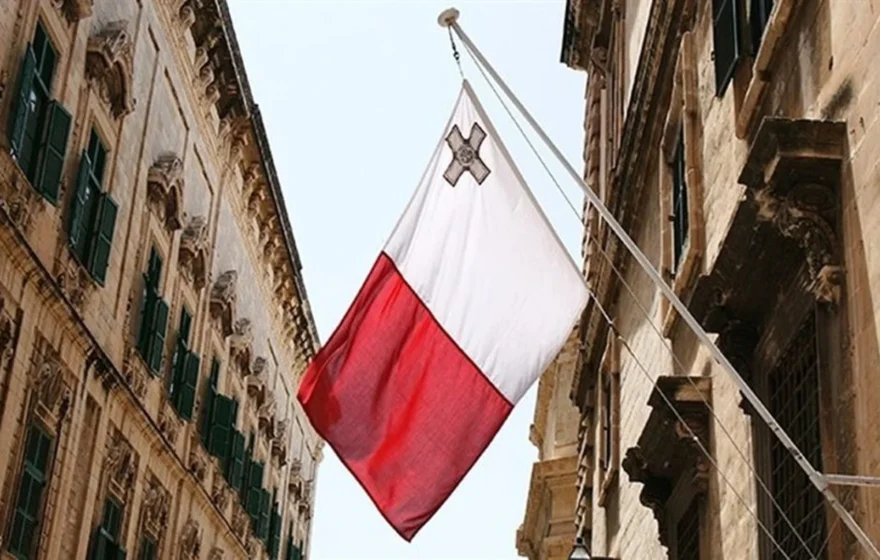
Malta is about to become a considerably more expensive place to retire to. From January 1, 2027, foreign pensioners who want to settle on the Mediterranean island under its retirement scheme will pay twice as much tax as they do today, buy or rent a far more expensive home, and pay a much larger fee just to apply.
Under the new rules, the minimum annual tax for a retired pensioner will rise from 7,500 euros to 15,000 euros. The minimum price of a property that a retiree must buy will jump from 275,000 euros to 700,000 euros, while those who choose to rent will have to spend at least 14,000 euros a year, up from 9,600 euros today. The application fee will also more than triple, from 2,500 euros to 8,500 euros.
The changes were introduced through Legal Notice 195 of 2026, published on July 14, 2026. They replace the existing Malta Retirement Programme with a new Retired Pensioner status, granted for five years at a time and renewable for a further five years. The new status sits inside a wider overhaul that brings four separate residence schemes under a single law, the Individual Tax Programme.
Until now, Malta has run four different programmes for people seeking special tax status: the Global Residence Programme, The Residence Programme, the Malta Retirement Programme and the United Nations Pension Programme, each with its own rules and thresholds. From the start of 2027, all four will be replaced by one framework with four categories of status: Global Resident, EU, EEA or Swiss Resident, Retired Pensioner, and UN Pensioner.
The new framework does not only affect retirees. People applying under the Global Resident or EU, EEA or Swiss Resident routes will face a minimum annual tax of 35,000 euros, while UN pensioners will pay a minimum of 20,000 euros. The increases are part of a deliberate decision by the Maltese government to raise the price of entry across all of its residence schemes.
One thing, however, has not changed. The 15 percent tax rate on qualifying foreign income brought into Malta will stay exactly as it is. That rate has always been the heart of Malta’s appeal to retirees, because it applies to pension income and other foreign earnings remitted to the island, while income not covered by the scheme can be taxed at the standard rate of 35 percent. For many pensioners, the flat 15 percent rate is still generous by European standards, even if the cost of qualifying for it has now gone up sharply.
There is also a window for people who are already planning a move. Anyone who submits an application by December 31, 2026, will remain under the existing, cheaper rules until the end of 2031. That gives prospective retirees less than two months to get their paperwork in order if they want to lock in the lower tax bill and the lower property threshold, and advisers in Malta have been warning clients that the difference between applying in December and applying in January is now worth tens of thousands of euros.
The property rules deserve a closer look, because they have always been one of the strictest parts of the scheme. At present, a retiree must buy a property worth at least 275,000 euros, or 220,000 euros in the south of Malta or on the neighbouring island of Gozo. Those who rent must pay at least 9,600 euros a year, or 8,750 euros in the designated areas. From 2027, the minimum purchase price will be 700,000 euros wherever the property is located, and the minimum annual rent will be 14,000 euros across the whole of Malta.
Who Can Apply?
The retirement route is open to pensioners from both European Union and non-EU countries, including Switzerland and the European Economic Area. To qualify, an applicant must receive a pension that accounts for at least 75 percent of their taxable income, and the whole of that pension must be received in Malta. Applicants must also spend an average of at least 90 days a year in Malta over a five-year period, and must not spend more than 183 days in any single other country in a year. They are required to hold private health insurance, and they cannot take up regular employment in Malta, although certain non-executive roles and charitable work are permitted. Applications have to be made through an authorised representative, with proof of pension income, health insurance, a police clearance certificate and property documents. The process generally takes between two and four months.
Whether the higher price will put people off remains to be seen. If applications fall sharply after January, the government may face questions about whether it has priced its retirement scheme too high. If they hold steady, it will be able to say that demand for a Maltese retirement was strong enough to bear the increase. For now, the message to anyone dreaming of a retirement by the Mediterranean is simple. The door is still open, but from January it will cost a great deal more to walk through it, and the cheapest way in is to apply before the year runs out.
