Scientists in Switzerland have developed an experimental implant that uses electricity to lower blood sugar, offering a possible new way to treat diabetes and obesity without drugs. The device, which sits under the skin and is powered wirelessly, has been tested in diabetic mice, where it brought raised blood sugar back to normal within about an hour and kept it under control for six weeks.
The implant was developed by researchers at ETH Zurich, a public university in Switzerland, working with colleagues at the University of Lyon in France. The team was led by Martin Fussenegger, professor of biotechnology and bioengineering in ETH Zurich’s Department of Biosystems Science and Engineering in Basel. The findings were published in the scientific journal Science on October 22, 2026.
The researchers have named the device ECHO, short for electrocatalytic closed-loop health optimisation. It works in a very different way from the treatments that people with diabetes use today. Most current treatments help the body absorb glucose or control how it processes sugar. ECHO takes another route altogether. It removes excess glucose from the body by converting it into a different substance, gluconate, which the kidneys can then flush out in urine.
The implant itself is about the size of a USB stick. It contains tiny particles of gold decorated with platinum, embedded in graphite felt, which act as a catalyst. When the device is switched on, the catalyst triggers an electrochemical reaction that turns glucose into gluconate, a harmless substance that the body can process and eliminate. The rate at which glucose is converted can be adjusted by changing the electrical input.
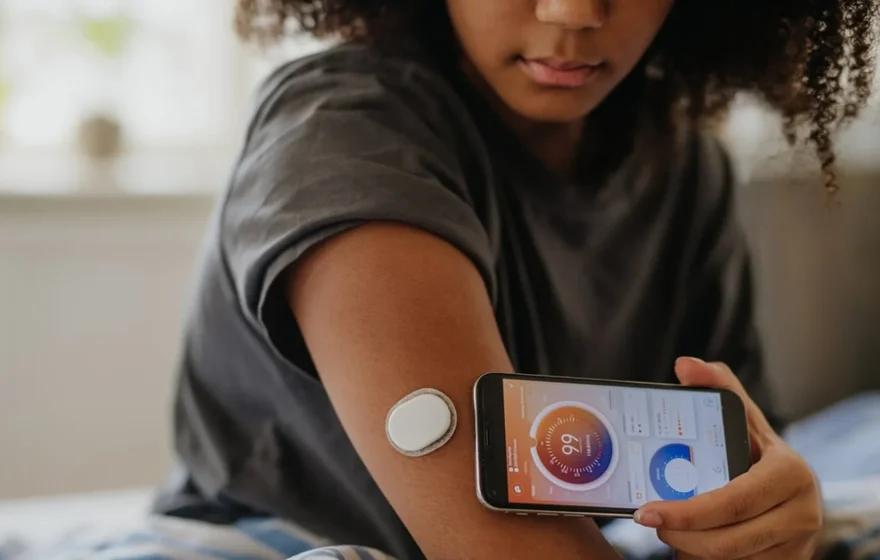
What makes the system a closed loop is the way it is controlled. The implant is linked to a continuous glucose monitoring system, the kind of sensor that many people with diabetes already wear to track their blood sugar through the day. When the sensor detects that blood sugar has risen above a preset level, it switches the implant on. When glucose returns to the target range, it switches the implant off again. The device is battery-free and receives its power wirelessly, through radiofrequency signals sent from a smartphone.
In the experiments reported in Science, the researchers implanted the device in mice with type 2 diabetes and obesity. When the implant was activated, at 0.75 volts and 10 milliamperes, it restored elevated blood glucose to the normal range within about an hour. With repeated use, it kept blood sugar under control for the full six weeks of the study. The researchers also found that the treatment increased the animals’ use of stored fat for energy, which led to weight loss of up to 10 percent of body weight, along with lower levels of triglycerides, a type of fat in the blood.
Just as importantly, the researchers reported no significant adverse effects during the experiments. There were no signs of harmful physiological, inflammatory or behavioural changes in the treated animals, and no episodes of low blood sugar, or hypoglycaemia, were detected at any point in the study. That matters, because low blood sugar is one of the most dangerous side effects of some existing diabetes treatments, and a device that avoids it would be a meaningful advance.
The findings have attracted attention because diabetes is one of the most common long-term health conditions in the world, affecting hundreds of millions of people. Many of them rely on daily injections of insulin or on tablets taken every day for the rest of their lives, and even with careful management, keeping blood sugar within a healthy range is a constant struggle. A device that could manage blood sugar automatically, without drugs, would change the daily reality of living with the condition.
Obesity makes the picture more complicated still. The two conditions often occur together, and doctors sometimes use the combined term diabesity to describe them. Excess weight makes the body less responsive to insulin, which in turn makes blood sugar harder to control, and the cycle feeds on itself. A treatment that addresses both problems at once, by removing glucose and encouraging the body to burn stored fat, is therefore an attractive idea.
But the researchers themselves are careful to stress how early this work is. The device has only been tested in mice, and mice are not people. The implant will need to be made considerably smaller before it could be used in humans, and years of further research and clinical trials will be needed to establish whether it is safe and effective in the human body. Long-term safety, the durability of the implant, and its effect on the kidneys are all questions that remain unanswered.
For now, ECHO remains a laboratory device, and anyone living with diabetes should not expect to see it in a clinic any time soon. The road from a successful mouse experiment to an approved treatment is long, and many promising ideas do not survive it. But the study published in Science gives researchers a new path to follow, and it gives patients a reason to hope that one day, managing diabetes might involve a small device working quietly under the skin rather than a lifetime of injections and tablets.
