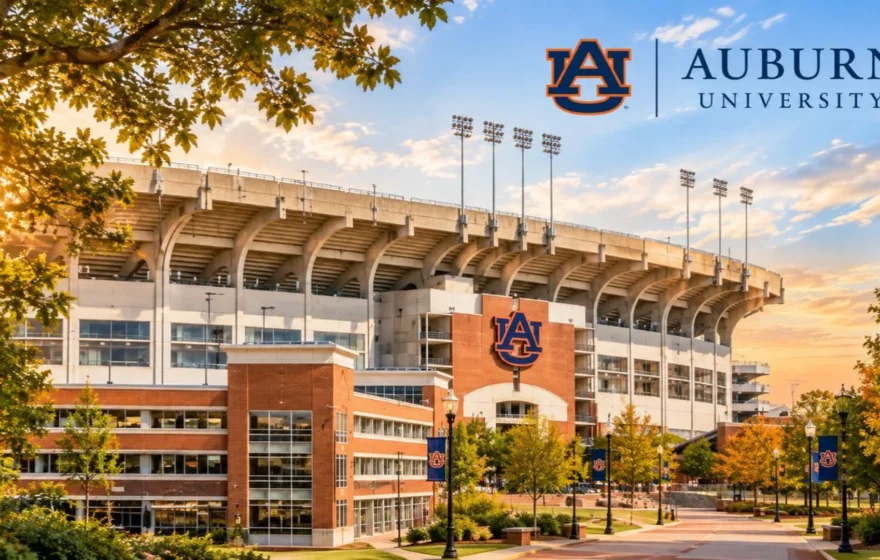
Auburn University in Alabama has opened three fully funded graduate research places for students who want to study freshwater ecology in the United States, an opportunity that will interest Pakistani graduates looking for a funded route into a master’s or a doctoral degree abroad. The places are based in the research group led by Alan Wilson and focus on aquatic ecology and harmful algal blooms, a field that sits at the meeting point of environmental science, water safety and food production. Applications close on 14 July 2027, and successful candidates will be able to discuss their preferred starting date with the laboratory.
Scholarship Benefits
Doctoral students chosen for the assistantships will receive a yearly stipend of 35,000 dollars, while master’s students will receive 30,000 dollars a year. In both cases the stipend runs for twelve months of the year and comes with a full waiver of tuition fees, so students will not have to pay tuition while they pursue their research. That combination is what makes the places genuinely fully funded, and it allows students to concentrate on their work instead of searching for part-time income to cover university charges.
There is also a further possibility for the strongest doctoral applicants. Auburn University may put highly qualified PhD candidates forward for a Presidential Graduate Research Fellowship or a Presidential Graduate Opportunity Fellowship, which can pay at least 50,000 dollars a year for up to three years. These fellowships are awarded through a separate and competitive process, so they are not guaranteed, and candidates should treat the standard assistantship figures as the funding they can rely on.
Research Areas and Program Details
The research centres on freshwater ecosystems, plankton communities and harmful algal blooms, and it is carried out in Alan Wilson’s laboratory at Auburn’s School of Fisheries, Aquaculture, and Aquatic Sciences. The group studies the processes that shape life in lakes, ponds and reservoirs, asking why some waters stay healthy while others develop dense blooms of algae that can harm fish, spoil drinking water and damage local livelihoods.
The projects already running in the laboratory are supported by several American government agencies, including the Agricultural Research Service and the National Institute of Food and Agriculture within the United States Department of Agriculture, as well as the Environmental Protection Agency. That backing reflects how widely harmful algal blooms are now recognised as a problem: the blooms can release toxins, strip oxygen from the water and spoil drinking water supplies, while in fish farming they can cause heavy losses. Students may take part in field experiments, monitoring, laboratory analysis and ecosystem modelling.
Who Can Apply for the Scholarship
The laboratory welcomes applications from students who want to pursue a master’s or a PhD in aquatic ecology and related fields, giving preference to doctoral applicants while still considering strong master’s candidates. The ideal applicant is motivated, honest and able to work as part of a team, with a genuine interest in freshwater ecosystems. Previous coursework in ecology, limnology and statistics may strengthen an application, but none of those extras is compulsory.
Academic and English-Language Requirements
One point in the announcement needs careful reading. A summary of the scholarship circulating alongside the advertisement mentions a minimum grade point average of 3.0 and English-language scores of 6.5 in IELTS, 79 in TOEFL iBT or 115 in the Duolingo English Test. The original research assistantship advertisement itself, however, does not set out those minimum scores. Applicants should therefore check Auburn University’s own graduate admission requirements before they apply, rather than assuming that the figures in the summary are the university’s formal thresholds.
Required Documents
Candidates are asked to prepare a curriculum vitae, copies of their academic transcripts and the contact details of three referees who can speak about their academic ability and character. Applicants who have Graduate Record Examination scores may include them as well, although the laboratory has not made those scores compulsory. It is worth taking care here, because these documents are the panel’s first view of a candidate, and a clear CV setting out results, research experience and fieldwork will say more than general claims about enthusiasm.
How to Apply for the Auburn University Scholarship
Interested students can submit their materials through the online form linked in the research assistantship advertisement, and they should have their CV, transcripts and referees’ details ready before they begin. The laboratory encourages applicants to show, in their own words, why freshwater ecosystems and harmful algal blooms interest them. Full details and application instructions are available through the official advertisement, and further information about the laboratory can be found on the Wilson Lab website.
For Pakistani students weighing the decision, the long deadline is an advantage that should not be wasted. The closing date of 14 July 2027 leaves time to prepare a strong application, to sit an English-language test if needed, and to arrange references from lecturers who know a candidate’s work well. Funded places are competitive, and the strongest applications will connect the applicant’s own interests to the laboratory’s work on freshwater health.
