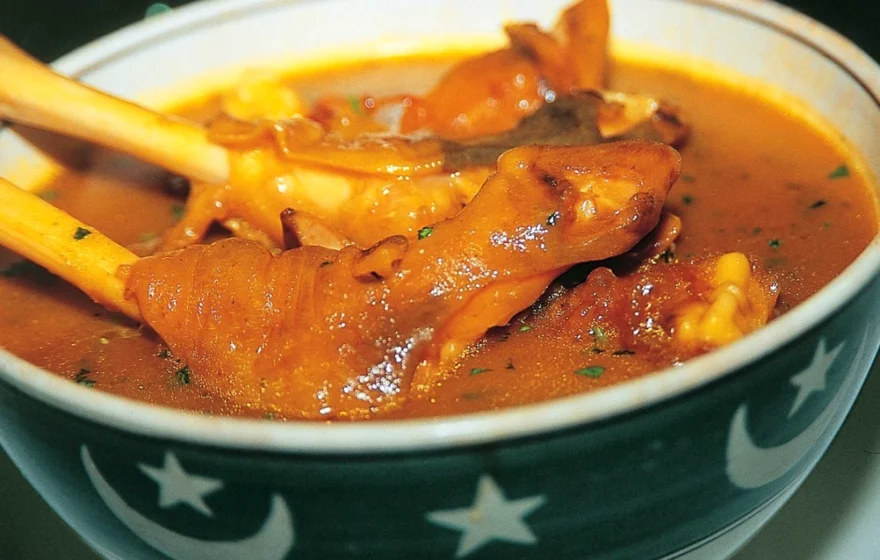
Canadian border officers have seized more than sixteen kilograms of undeclared food and animal products, including the traditional dish siri paye, from Pakistani passengers arriving at Toronto Pearson International Airport. The seizure is a reminder that even familiar food carried from home can fall foul of strict border rules, and that failing to declare it can be an expensive mistake.
The Canada Border Services Agency said the passengers had not declared the items when they arrived. Officers imposed a fine of 1,350 Canadian dollars for the breach. Alongside the siri paye, a slow-cooked dish made from goat trotters that is a staple of family meals and celebrations in Pakistan, the seized goods included chicken meat, ghee and milk powder. All of the items were taken by the authorities and will not be returned.
The reason for the strict approach is biosecurity. Food, plants and animal products can carry pests and diseases that threaten farms, livestock and natural ecosystems, even when the items look fresh, well cooked or carefully packed. A disease carried in meat or dairy, or a pest hidden in fruit, vegetables or plant material, can spread quickly once it reaches a new environment. Canada, with its large agricultural sector, guards that risk closely, and its border controls are designed to stop potential threats before they ever reach a farm or a food chain.
That is why the list of restricted items is so broad. According to the border agency, travellers may not bring raw or cooked meat, fruits, vegetables and milk into Canada from abroad without meeting the required conditions. The restrictions also cover certain homemade products, plant-based and wood-based items, household plants, live animals including pets, and bait used for fishing. Other items on the restricted list include firewood, plant cuttings, seeds and dirty hiking footwear, all of which can carry soil, pests or plant diseases across borders.
It is important to understand that the rules do not amount to a blanket ban on everything. Some products can enter Canada if travellers provide specific documents or complete the required registration procedures first. The safest course is therefore to check in advance and to declare honestly whatever is being carried. Declaring an item does not automatically mean it will be confiscated. In many cases, officers will inspect it and decide whether it meets the conditions for entry. Failing to declare it, on the other hand, almost guarantees trouble, because the offence is the failure to tell the truth at the border, not simply the possession of the food.
For that reason, the border agency advises travellers carrying food, plant or animal products to consult the Canadian Food Inspection Agency’s Automated Import Reference System, known as AIRS, before they travel. The system lets a traveller check whether a particular product is allowed, restricted or prohibited, and what documents or conditions may apply. Checking before packing takes only a few minutes, and it can save a traveller from losing treasured food, facing a fine, or having an otherwise smooth arrival turn into a lengthy inspection.
The episode will resonate with many Pakistani families, for whom food is one of the most personal parts of a journey home. Passengers travelling between Pakistan and Canada, two countries linked by a large diaspora and by frequent family visits in both directions, often carry homemade dishes, sweets, spices and dairy products as gifts or as a taste of home. Siri paye, in particular, is a dish associated with family gatherings, winter mornings and celebrations, and it is understandable that a traveller would want to share it with relatives abroad. The seizure shows, however, that sentiment carries no exemption at the border, and that traditional or homemade food is treated exactly like any other animal product.
There is also a practical lesson in the size of the fine. At 1,350 Canadian dollars, the penalty is far greater than the value of the food itself, and it comes on top of the loss of the items. A few minutes spent checking the rules, or simply declaring the items and letting officers decide, would have avoided both the fine and the seizure, even if some of the food had still been taken.
For anyone planning a trip from Pakistan to Canada, the advice that follows from this incident is straightforward. Before packing, check the AIRS system or the border agency’s guidance for each food, plant or animal product in the luggage. Declare everything, even when it seems harmless, and be ready to answer questions about it at the airport. Homemade products without clear labelling are harder for officers to assess, which makes an honest declaration even more important.
In the end, the seizure of a few kilograms of siri paye, chicken, ghee and milk powder is a small incident with a larger message. Border rules exist to protect agriculture, public health and the environment, and they are enforced against ordinary travellers as well as commercial importers. A little preparation before departure, and honesty on arrival, is all it takes to make sure a taste of home reaches its destination rather than ending up confiscated.
