Oil prices fell on Friday after missiles fired by Yemen’s Houthi rebels struck the heart of Saudi Arabia’s financial district, damaging the Riyadh headquarters of the kingdom’s sovereign wealth fund and raising fresh questions about Gulf energy supplies. The drop came even as traders weighed a very different force pulling prices the other way, a growing global glut that has pushed crude lower for three weeks in a row.
United States benchmark West Texas Intermediate crude slipped below 81 dollars a barrel, trading at 80 dollars and 97 cents at the time of press, down 1 dollar and 47 cents, or 1.78 percent. Brent crude, the international benchmark, stood at 90 dollars and 26 cents, down 1 dollar and 72 cents, or 1.87 percent.
The attack unfolded on Thursday, when a missile struck the Public Investment Fund Tower in the King Abdullah Financial District. The tower, 80 storeys high and 385 metres tall, is the tallest building in Riyadh and houses the headquarters of the Public Investment Fund, the sovereign wealth fund behind Saudi Arabia’s economic diversification plans. Windows were blown out across seven to eight floors and sections of the metal facade were bent out of shape. Nearby buildings were also damaged, entrances to the district were closed, and people were evacuated as emergency crews gathered at the site. Saudi authorities said there were no injuries.
Saudi Arabia’s civil defence agency confirmed that a tower in the capital’s financial district had been attacked and suffered material damage. A photograph published by the official Saudi Press Agency left little doubt, showing the unmistakable profile of the PIF Tower. The Saudi-led coalition said it had dealt with a missile threat launched towards Riyadh. Its spokesman, Major General Turki al-Maliki, said air defences had intercepted four ballistic missiles fired towards the southern region bordering Yemen and destroyed a launchpad used in the attacks.
The Houthis, the Iran-aligned group also known as Ansar Allah, claimed the attack hours later, saying they had targeted the capital’s financial district twice on Thursday and had also aimed cruise missiles at Riyadh’s international airport. It was the second time in less than two weeks that a Houthi strike had damaged a landmark in the financial district. On November 8, an attack hit a building belonging to Saudi Aramco, the state oil company, in the same quarter. The Houthis have stepped up their campaign in recent weeks, striking airports, energy infrastructure and military sites, while Saudi Arabia has been battling a surge in attacks since fighting reignited over the summer in neighbouring Yemen’s civil war.
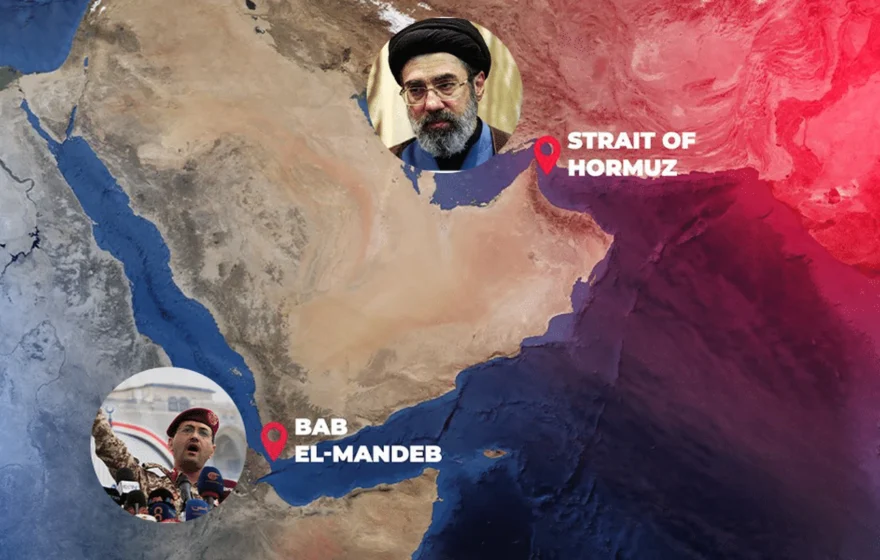
The strike on Riyadh was not the only incident rattling energy markets on Thursday. Iran’s Revolutionary Guards Navy reported that two oil tankers had struck naval mines in the Strait of Hormuz and caught fire. The strait, through which a large share of the world’s seaborne oil passes, has become a focal point of the wider conflict, with attacks on tankers running at roughly one incident a day in November, according to Reuters.
Oil Heads for Third Weekly Decline
Despite the rising tensions, both oil benchmarks remained on course for a third consecutive weekly decline. Brent was heading for a weekly fall of around 3.5 percent, while the December WTI contract was set for a drop of almost 6 percent, according to Reuters. Analysts say supply has finally caught up with demand and now looks set to exceed it.
The International Energy Agency said in its November report that the world oil market would return to a surplus in the final quarter of this year, as exports from the Gulf recover faster than global demand. Global supply is expected to average about 105 million barrels a day in the fourth quarter, roughly 1.7 million barrels a day above forecast demand, and observed oil stocks rose by 52 million barrels during October. North Sea Dated crude, the benchmark for Brent, has fallen by more than 30 percent from its high of 136 dollars a barrel on October 8 to around 93 dollars.
For now, traders are caught between two opposing forces. On one side, the attacks on Riyadh and the tanker incidents in the Strait of Hormuz keep alive the risk of a sudden supply shock, and hopes that OPEC+ will keep output cuts in place when it meets on November 29 are supporting prices. On the other side, the steady recovery of Middle Eastern exports has strengthened expectations of a surplus, and that has been enough to drag both benchmarks lower week after week.
For countries that import most of their oil, including Pakistan, a sustained fall in crude prices could ease pressure on fuel costs and inflation, although that relief would only last if the decline holds. Much now depends on whether the Houthi campaign escalates further, whether tanker traffic through the Strait of Hormuz stays open, and what OPEC+ decides at the end of the month. Until then, oil markets are likely to keep swinging between fear of disruption and the reality of a market with more oil than it needs.
