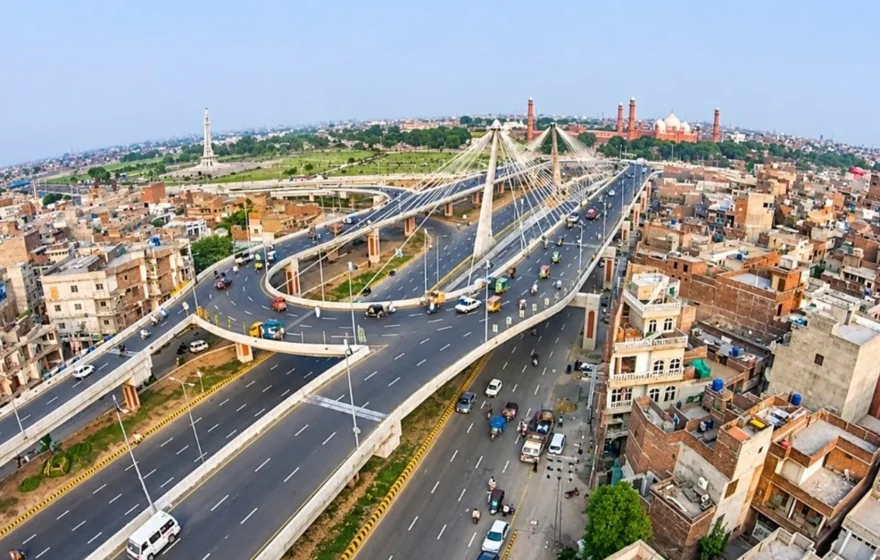
Lahore traffic police have banned loader and heavy commercial vehicles from using flyovers across the city, after three motorcyclists were killed in accidents involving loader vehicles struggling to climb the raised roads. The restriction applies to every flyover in Lahore, and police say it is intended both to prevent further deaths and to cut the smoke and smog that heavy vehicles produce when their engines labour on an incline.
The decision was taken on the instructions of Chief Traffic Officer Lahore Syed Abdul Rahim Sherazi. It covers trucks, dumpers and other heavy vehicles, as well as trailers carrying sand, gravel, cement, soil and bricks, all of which will now have to use ground-level routes instead of the flyovers. Additional traffic personnel have been deployed at flyovers around the city, and circle officers have been given strict instructions to make sure the ban is enforced.
The ban follows three fatal accidents in which loader vehicles were climbing flyovers when motorcyclists lost their lives. According to the chief traffic officer, technical faults played a part in those crashes, including pressure leaks and broken clutch plates, the kind of failures that become dangerous when a heavily loaded vehicle is crawling uphill with traffic close behind it. A loader that stalls or rolls back on a flyover leaves the motorcyclists riding alongside it with almost nowhere to go, and three families in Lahore have now paid the price for that risk.
Air pollution was the other reason given for the decision. Heavy vehicles produce more smoke while climbing flyovers because their engines are put under greater pressure, and that extra exhaust adds to the smog that already hangs over Lahore in the winter months. The city has been fighting smog for years, and the traffic police have made smoke-emitting vehicles a central target of that fight. In October, the force stepped up its anti-smog enforcement, taking action against more than 9,000 vehicles contributing to smog, over 6,000 vehicles carrying sand and soil without tarpaulin covers, and more than 21,000 vehicles operating without valid fitness certificates, while issuing heavy fines to over 225,000 vehicles for overloading and over-dimension violations.
The restriction covers all of the city’s flyovers, including those at Shahdara, Azadi Chowk, Data Ganj Bakhsh, Muslim Town, Kalma Chowk and Mughalpura, some of the busiest crossings in Lahore. Keeping heavy loaders off them will push that traffic onto ground-level routes, a trade-off the police appear willing to make, on the grounds that a slower journey for a truck is better than another fatal accident on a raised road.
The flyover ban sits within a much wider crackdown on heavy and commercial vehicles that the Lahore traffic police have been running through the autumn. In October, the chief traffic officer ordered special checking of public service vehicles, commercial transport and heavy traffic entering the city, and placed a complete ban on the entry and movement of heavy traffic within city limits during daytime hours, from seven in the morning until eleven at night. Heavy vehicles caught breaking those time restrictions face impounding, fines and formal legal cases, while at night they are allowed in only in phased, controlled convoys, and oil tankers are restricted to specified hours.
The figures behind that crackdown explain why the police are acting so forcefully. Commercial vehicles account for only around four to four and a half per cent of the city’s total traffic, yet they are involved in about 44 per cent of its traffic accidents, according to figures cited by the chief traffic officer. The size, weight and braking distances of trucks and trailers make them far more dangerous in a collision than a car or a motorcycle, and unsafe loading, excessive dimensions, poor maintenance and driver negligence add to the risk. This year the traffic police have suspended the driving licences of 117 drivers involved in accidents, and have written to the authorities seeking the suspension of route permits for 97 public service vehicles, while licences and route permits are also being suspended for operators of smoke-emitting vehicles.
The dangers were underlined again earlier this month, when a motorcyclist died near the Data Darbar Flyover on November 4 after a Parks and Horticulture Authority water bowser reversed without its hazard lights on while water spilled onto the road. The chief traffic officer wrote to the authority demanding proper operating procedures and a full record of its drivers. With the sugarcane-crushing season now under way, around 10,000 tractor-trolleys and trucks are carrying sugarcane to mills across Punjab every day, adding more heavy, overloaded vehicles to the roads at a time when smog and fog already cut visibility.
Chief Traffic Officer Sherazi said the police would take legal action against violators, and that protecting citizens’ lives remained the top priority. The ban is a simple measure, and its success will be easy to judge. If heavy loaders stay off the flyovers and the fatal accidents stop, it will have done its job. If enforcement fades after the first few weeks, the same risks will return to the same raised roads.
