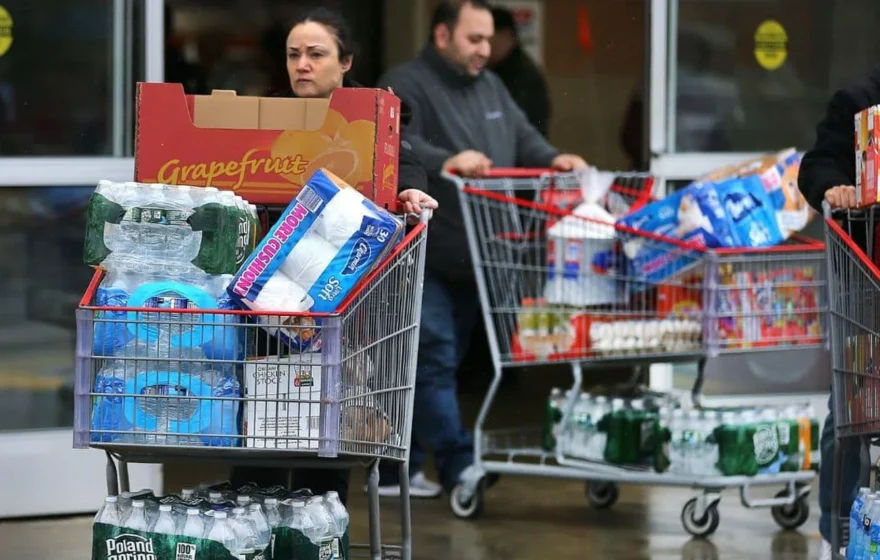
Canada is holding firm to advice it has given households for years: be ready to look after yourselves for at least three days if disaster strikes and help cannot reach you straight away. The message, repeated by Public Safety Canada, is that every home should be able to cope without electricity or running water for a minimum of 72 hours. It sounds simple, yet it has taken on fresh urgency as governments around the world, from London to Tokyo, deliver much the same warning in their own words.
A spokesperson for Public Safety Canada, Zarah Malik, said Canadians have heard this guidance for a long time. The idea is not that three days will always be enough. Officials are clear that it is only a starting point. In some places, especially remote communities, emergency crews may take longer to arrive, and restoring power, water and other essential services can take additional time once damage has been done. The three-day figure is therefore best understood as a floor, not a ceiling: the least a household should be prepared for, rather than a promise that life will return to normal on the fourth day.
The renewed attention on household readiness is not confined to Canada. Britain launched its Be Ready campaign on October 22, urging families to keep three days of bottled water and non-perishable food at home in case severe weather or cyberattacks interrupt essential services. Shops in Britain later reported stronger sales of basic supplies, a sign that many people took the message seriously. British Prime Minister Andy Burnham added his own encouragement, telling residents to keep essentials at home and noting that unexpected disruptions seemed to be happening more often than they once did.
Across the Channel, authorities in Normandy in France used a social media post on October 27 to press residents to pack an emergency bag holding enough essentials for 72 hours. Their advice carried the same core point: prepare before a crisis develops, not during it, when shops may be closed, roads may be blocked and information may be patchy. Japan, meanwhile, launched a national disaster management agency on Monday, with a programme built largely around earthquake readiness. As part of that effort, officials asked residents to review their evacuation plans and to store at least three days of water and portable toilet supplies, a practical reminder that readiness is about sanitation and dignity as well as food and drink.
Against that international backdrop, one Canadian voice has gone further than the official line. Bernier has urged Canadians to prepare for at least a week rather than stopping at three days, arguing that families should reckon with the possibility that responders may not reach them during the first seven days. She also recommended keeping a go-bag ready so that a household can leave quickly if authorities order an evacuation. The advice highlights a tension at the heart of all such campaigns: a short, memorable target like 72 hours is easy to communicate, but real emergencies do not respect round numbers, and the households most at risk are often those farthest from help.
The case for taking the warning seriously was underlined by a recent cyberattack on European supermarkets, which disrupted refrigerators and freezers from Sweden to Belgium and forced stores to throw food away. The incident followed a similar attack in France the previous month. Neither episode involved a storm or an earthquake, yet both left ordinary shoppers facing empty shelves and spoiled stock. They serve as a reminder that modern supply chains, for all their efficiency, can be interrupted in ways that have nothing to do with the weather, and that a cupboard with a few days of supplies is a buffer against shocks of many kinds.
What does sensible preparation look like in practice? The guidance centres on meeting a household’s own needs for the first days of an emergency: drinking water, food that needs no refrigeration or elaborate cooking, essential medicines, a way of receiving information if phones and power fail, and the supplies needed to leave home at short notice. The precise contents will differ from one family to another, and planning around children, elderly relatives or medical needs is far easier on a calm day than in a crisis.
There is a wider lesson in so many countries moving at once. Governments have traditionally focused on large-scale response, but the new emphasis on household readiness reflects a recognition that the state cannot be everywhere in the first hours of a widespread emergency. Citizens are being asked to become the first line of their own response.
For Canada, the message is both familiar and newly relevant. The country has advised 72-hour readiness for years; what has changed is the context of weather extremes, cyber incidents and parallel campaigns abroad, which have made the old guidance feel like practical common sense. Whether households aim for three days or, as Bernier suggests, a full week, preparation bought in advance is far more useful than preparation attempted after the lights have gone out.
