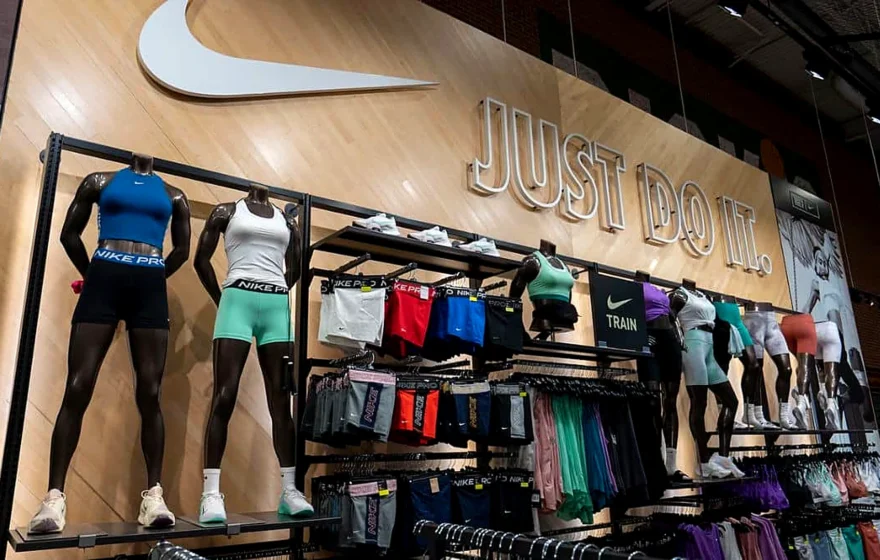
Muslim scholars in Libya have issued a religious ruling against Nike, telling Muslims not to buy, sell or wear clothing carrying the American sportswear company’s branding. The fatwa, issued by Libya’s Dar al-Ifta, rests on two arguments: that the brand promotes symbols associated with polytheism, and that the company supports Israel. The ruling has drawn attention well beyond Libya, because it touches on questions of faith, branding, consumer choice and political boycotts.
At the centre of the first argument is the origin of the Nike name. According to the Dar al-Ifta’s religious committee, the name comes from the ancient Greek goddess of victory, and the company’s familiar tick-shaped logo is said to draw inspiration from the goddess’s wings. On that reasoning, the committee argued that wearing the logo amounts to honouring more than one god, which is incompatible with the Islamic belief in the oneness of God. The company itself traces its origins to 1964 and uses the goddess’s name, a history that is widely known in the world of branding.
The fatwa was approved by Grand Mufti Sadiq al-Gharyani, and the Dar al-Ifta carries considerable religious influence in Libya. That influence, however, does not give its rulings legal force. A fatwa is a religious opinion, not a law, and its practical effect depends on whether individuals, retailers and communities choose to follow it. That distinction is important for understanding what the ruling can and cannot do: it can guide conscience and shape public debate, but it does not by itself ban a product or punish those who continue to use it.
The ruling also has a local resonance that goes beyond the name itself. Archaeological remains in Cyrene, an ancient Greek city in northeastern Libya, prominently feature images of the goddess, and Cyrene holds World Heritage status. For Libyan readers, therefore, the figure at the heart of the debate is not only a distant mythological reference. She is part of the country’s own archaeological landscape, which may help explain why the branding question has been taken up with particular seriousness there.
In practical terms, Nike does not operate its own stores in Libya. Branded products nevertheless reach Libyan consumers through sportswear retailers, and the brand is popular across North Africa, where traders frequently sell counterfeit sportswear in local markets. That reality complicates any boycott or prohibition, because the goods in question are not always sold through official channels, and many consumers may not know whether a particular item is genuine or a copy. A ruling aimed at a global brand therefore lands in a market where the supply chain is informal and difficult to control.
Alongside its objections to the branding, the Dar al-Ifta accused the company of supporting Israel and urged Muslims to boycott countries that support Israel. The ruling referred to a 2023 statement by the Council for Research and Sharia Studies, which called on Muslims to avoid Western companies that the council considered supportive of Israel in connection with the war in Gaza. That second strand links the Nike ruling to a wider pattern of boycott campaigns that have gained prominence in many Muslim-majority countries, where consumer choices are increasingly seen as a form of political expression.
Those campaigns raise difficult questions for ordinary shoppers. A brand can become a symbol for a range of grievances, some religious, some political, and some commercial, and a single purchase can be interpreted in very different ways by different people. For some, avoiding a brand is a matter of religious duty or solidarity. For others, a pair of trainers is simply a practical purchase, chosen for price, comfort or availability. A fatwa does not resolve that tension, but it does make it explicit, by asking believers to think about what a logo means and what buying it might imply.
For Nike, the ruling is unlikely to have a direct commercial impact in Libya, given that the company does not operate stores there. Its wider significance lies in the conversation it creates about the power of brands. A logo is designed to be instantly recognisable, and that recognition carries cultural associations that can change over time. What began as a reference to classical mythology has become, for most consumers, simply a mark of sportswear. The fatwa invites a different reading, in which the historical origin of the name is treated as still relevant to how the product should be viewed today.
Whether that invitation is accepted will depend on individuals, families, retailers and religious communities, and on how they weigh faith, politics and everyday practicality. The Dar al-Ifta has stated its position clearly. What happens next, in shops, markets and homes across North Africa and beyond, will be decided not by a single ruling, but by the many small choices that follow from it.
