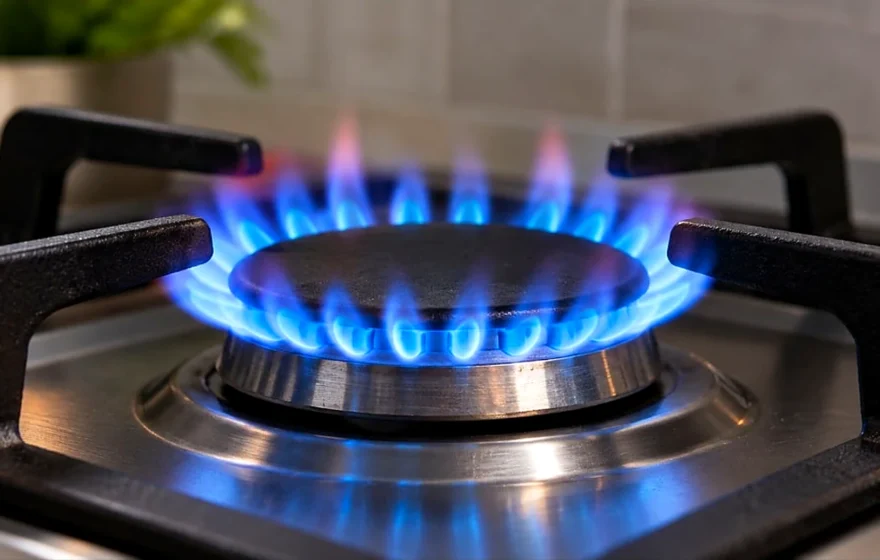
Sui Southern Gas Company has announced a new winter gas supply schedule for domestic consumers in Sindh and Balochistan, introducing three daily supply windows under federal government directives. An SSGC spokesperson said on Wednesday that the schedule takes effect immediately and prioritises household gas consumption during meal times, a decision that will shape daily routines for millions of homes as the colder months set in. The company has also shared the schedule on its website and social media platforms, saying it is prioritising domestic consumers by ensuring gas availability when families most need it to cook.
Under the revised schedule, consumers will receive gas in the morning from half past six until nine o’clock for breakfast, again from noon until half past two in the afternoon for lunch, and finally from six o’clock until nine o’clock in the evening for dinner. Outside those windows, households should not expect supply, which means cooking, heating water and other gas-dependent tasks will need to be planned around the three periods. For families accustomed to arranging their day around meal times, the windows are at least predictable, but they also leave long gaps during the rest of the day and night when gas will not be available.
SSGC consumers have faced limited gas availability for several years, with households unable to rely on round-the-clock supplies, and the new schedule formalises a reality that many families already live with. Winter makes the problem sharper, because demand for heating and hot water rises just as system pressures increase, and the gap between what households want and what the network can deliver becomes harder to ignore. By fixing supply to meal times, the company is effectively choosing to protect the most essential daily use of gas, cooking, while accepting that other uses will have to wait or be found elsewhere.
The announcement follows a severe gas shortage in Karachi on Tuesday, and it comes after a confusing few days in which several contradictory supply schedules attributed to SSGC circulated on social media from Monday. Confusion over the situation grew as households tried to work out which version, if any, was genuine, and the utility did not issue a clear, consolidated statement until late on Tuesday evening. That delay matters, because in a shortage people make real decisions based on what they read: whether to buy alternative fuel, whether to cook earlier, whether to wait for supply that may never arrive. Clear and timely communication is therefore not a courtesy but a practical necessity.
The episode also illustrates a wider challenge facing Pakistan’s gas sector. Domestic gas production has struggled to keep pace with demand for years, while the network of household consumers has continued to grow, and the result is a system that must ration a scarce resource among competing needs. Imported liquefied natural gas can supplement domestic supply, but it is expensive and subject to global prices and shipping constraints, so it cannot simply fill every gap. Utilities and the government must therefore balance household needs, industrial demand, power generation and affordability, and no allocation will satisfy everyone at once.
For households in Sindh and Balochistan, the practical question is how to adapt. Families will need to plan cooking around the three windows, and those with members who work shifts, study late or care for young children may find the fixed hours inconvenient. Some households may turn to liquefied petroleum gas cylinders, electric appliances or other alternatives, but those options carry their own costs and, in the case of cylinders, safety considerations that require care. Schools, small eateries and home-based businesses that depend on gas will also need to adjust their schedules, and the effects will ripple beyond the kitchen.
There is also a question of trust. When unofficial schedules circulate on social media and the official response arrives late, households are left to guess, and rumour fills the gap left by silence. Utilities can reduce that risk by publishing a single authoritative schedule, updating it promptly when conditions change, and using the channels people actually check, including social media, to correct misinformation quickly. SSGC’s decision to publish the schedule on its website and social media is a step in that direction, but the test will be whether updates during the winter are equally prompt and equally clear.
What happens next will depend on how the winter unfolds and whether supply holds up through the coldest weeks. If the three windows are delivered reliably, households can plan with confidence, even if the arrangement is restrictive. If supply falters within those windows, frustration will grow quickly, because the schedule itself creates an expectation. The government and SSGC will also face questions about longer-term solutions, from expanding supply and reducing losses in the network to helping households shift to more efficient appliances. For now, though, the immediate message for consumers in Sindh and Balochistan is simple: gas will come three times a day, at breakfast, lunch and dinner, and the household day will need to be organised around those hours.
