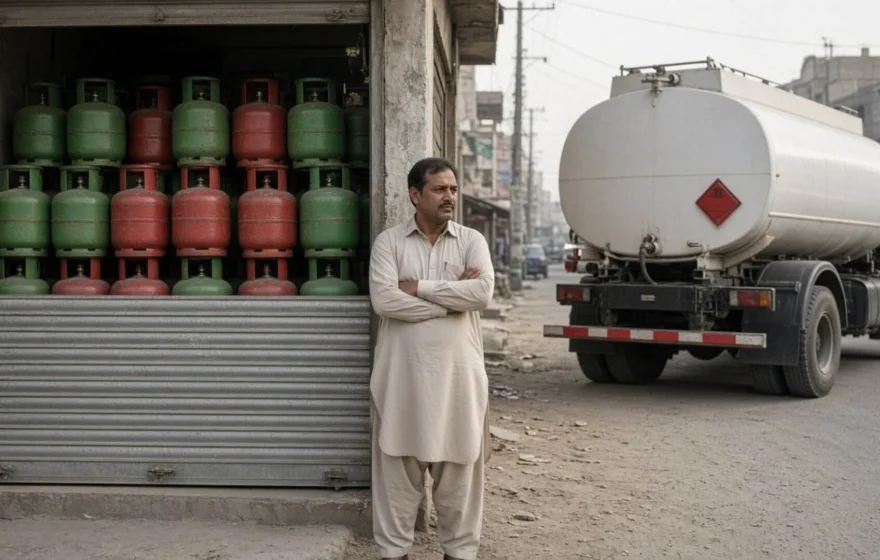
LPG associations across Pakistan have announced that they will stop selling liquefied petroleum gas from 16 November, in protest against a new pricing formula put forward by the government. Ali Haider, the Senior Vice Chairman of the LPG Marketers Association, said all associations had rejected the formula at an emergency meeting, and that sales across the country would stop from that date if the authorities did not accept the industry’s demands within 15 days.
The warning matters because LPG is not a side fuel for many Pakistani families. It is the fuel they cook with and, as the weather turns colder, the fuel they increasingly rely on to heat their homes. A nationwide halt in sales, even for a short period, would therefore touch kitchens, small restaurants, workshops and transport at the worst possible time of year, when demand is already rising.
Why the Industry is Opposing the Formula
At the heart of the dispute is a change in the benchmark used to set the price of locally produced LPG. At present, the ceiling for domestic producers is linked to the Saudi Aramco Contract Price, the monthly international benchmark for propane and butane, the two gases that make up LPG. The Petroleum Division has proposed replacing that cap with a benchmark linked to the landed cost of LPG imported by Pakistan State Oil, the state-owned oil marketing company.
The associations argue that this change would push prices higher. Haider said the new mechanism could raise LPG prices by 25 to 30 percent, and he pointed out that around 90 percent of the LPG used in Pakistan moves by road in tankers, so transport costs are already a major part of the price paid by consumers. Other industry estimates reported earlier in the week put the possible rise in retail prices at 20 to 25 percent, with producer prices potentially rising by as much as 40 percent, which shows that the industry is not speaking with one number, but is united in expecting a substantial increase.
The proposal sits within a wider set of reforms that would allow state-owned companies to import LPG and set prices instead of the Oil and Gas Regulatory Authority, known as OGRA. Prime Minister Shehbaz Sharif has already formed a ministerial committee to review the proposed changes after the industry protested, and that committee has been given a month to examine the reforms, cylinder standards and the local LPG model. The timing is awkward, because the strike deadline of 16 November falls well inside that review period. Industry representatives have also questioned whether it is fair to tie the price ceiling for every domestic producer to the import costs of a single state-owned buyer, arguing that a high premium paid in a tight month would become the legal ceiling for the whole market, even for private importers who might have bought more cheaply, and some have called for complete deregulation of LPG pricing instead.
What This Means for Consumers
For households, the dispute is already unfolding against a difficult background. OGRA has notified the official consumer price of an 11.8 kilogram cylinder at Rs. 3,470.09 for November, up by Rs. 173.86 from October, after a 6.47 percent rise in the Saudi Aramco Contract Price, partly offset by a small fall in the average dollar exchange rate, raised the consumer price by Rs. 14.73 per kilogram to Rs. 294.07. A 25 to 30 percent increase on the November cylinder price would add roughly Rs. 870 to Rs. 1,040, taking it to about Rs. 4,340 to Rs. 4,510, and that is before any gap between the official rate and the price actually charged in the market.
That gap is already wide. Reports this weekend put open-market LPG at up to Rs. 630 per kilogram in some areas, while company-operated franchises were charging as much as Rs. 400 per kilogram, and the source article noted that LPG was selling above Rs. 500 per kilogram in Lahore last week. In remote and northern areas, a legislator told the National Assembly this week that LPG was selling for Rs. 700 to Rs. 800 per kilogram, more than double the notified rate, which explains why many families feel the official notification bears little relation to what they actually pay.
Supply is part of the problem as well as price. Pakistan produces only around a quarter to a third of the LPG it needs, with the rest imported, and a large share has traditionally come overland from Iran. The closure of border crossings with Iran, and the suspension of supplies from Qatar, have disrupted those flows, and the partial reopening of the border has not fully eased the shortage. Winter makes the position harder still, because daily demand is estimated to rise from around 4,000 to 4,500 tonnes to between 6,000 and 7,000 tonnes as colder weather increases cooking and heating needs. Families without piped natural gas will feel this hardest. The next 15 days will therefore decide whether this becomes a short, sharp protest or a longer standoff. Talks may yet call the strike off before it begins. If they do not, households heading into winter face both higher prices and thinner supply.
