Pakistanis who fall victim to an online scam, a hacked account or a fraudulent message can now report it from their phones. The National Cyber Crime Investigation Agency, known as the NCCIA, has launched a new mobile application called the Cyber Info App, giving citizens a direct line to the country’s cybercrime investigators.
Through the app, users can submit complaints about online scams, financial fraud, hacking and other cybercrime, and attach the digital evidence that supports them, including photographs, videos, voice recordings and documents. It also offers a dedicated emergency reporting button, location sharing and direct communication with NCCIA officials, so a person facing an urgent threat is not left waiting for an email reply.
The launch comes from an agency that is itself still young. The NCCIA was formed on 3 May 2024 under Section 51 of the Prevention of Electronic Crimes Act 2016, replacing the Cyber Crime Wing of the Federal Investigation Agency. Its personnel, cases and responsibilities moved to the new body, which now holds exclusive authority to investigate cybercrime across Pakistan. Official data obtained through a right to information request and reported by Dawn showed the agency received 94,552 complaints nationwide in the nine months from April to December 2025. A reporting app could bring many more cases into that system, including from people who never knew where to complain before.
How the Cyber Info App Works
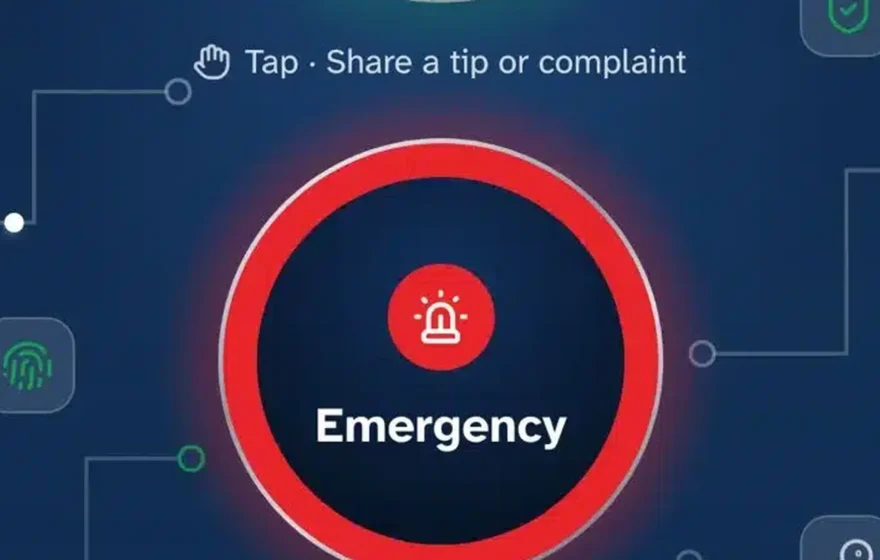
The app opens on a home screen that offers two choices, Information and Emergency, each shown as a large coloured button. The Information option is for sharing details about suspected cybercrime or submitting a complaint. A user taps it, describes what happened and attaches whatever evidence they have.
The Emergency option is for situations that cannot wait. Screenshots show a user activates it by pressing and holding the emergency button for one second. The app then opens a reporting screen where the user can provide information and supporting evidence before submitting an urgent report. The screen also shows the user’s location coordinates, with a refresh option.
Submit Photos, Videos and Documents
Evidence is at the heart of the app. Users can take photographs directly through the Cyber Info App or select existing images from their phones. The reporting screen also allows voice recordings, written statements and PDF documents to be attached, so a bank statement or a threatening voice note can travel with the complaint itself.
According to the screenshots, users can add up to ten attachments to a report, with a limit of ten megabytes per file. The app states that submitted reports are accessible only to the person who filed them and to authorised NCCIA personnel, a privacy promise that matters for victims of harassment and blackmail.
Emergency Helpline and Direct Assistance
Alongside the reporting tools, the app gives users access to the NCCIA’s cybercrime helpline, 1799. Anyone facing an urgent cyber-related threat can contact the agency through the app or call the number directly.
The agency has also drawn a clear line about what the app is not for. For immediate physical danger, its official guidance advises citizens to contact Police 15 rather than rely solely on an online report. An app can summon an investigator, but it cannot send a patrol car, and a person in physical danger needs the police first.
NCCIA Aims to Improve Cybercrime Reporting
NCCIA Director General Syed Ali Nasir Rizvi said the agency is introducing modern digital services to improve communication with citizens. He said timely reporting and the submission of relevant information could help authorities identify cyber threats and strengthen efforts to prevent cybercrime.
His point goes to the heart of how cybercrime is fought. Most online fraud is not solved by a single investigation. It is solved by patterns: the same fake number, the same bank account, the same phishing page reported by dozens of victims. Each report adds a data point, and enough data points reveal a network.
There is, however, one gap in the launch. The Cyber Info App is now available, but the NCCIA’s announcement does not provide a verified direct download link or confirm whether the app is available across all mobile platforms. Citizens should be careful to download it only from an official source, such as the agency’s own website or a verified store listing, rather than from a link shared on social media or in a message. Until the agency publishes a clear download link, citizens can keep submitting complaints through the NCCIA’s official online portal or by calling 1799.
Whether the app succeeds will be judged not by downloads but by outcomes. The test is whether a victim who reports a scam through the app hears back, and whether the evidence they attach is actually used. If the Cyber Info App shortens the distance between a victim and an investigator, it could become one of the most useful public services the NCCIA has built. The next step belongs to the agency: publish a verified download link, make the app easy to find, and show the public that a report made through it leads somewhere.
