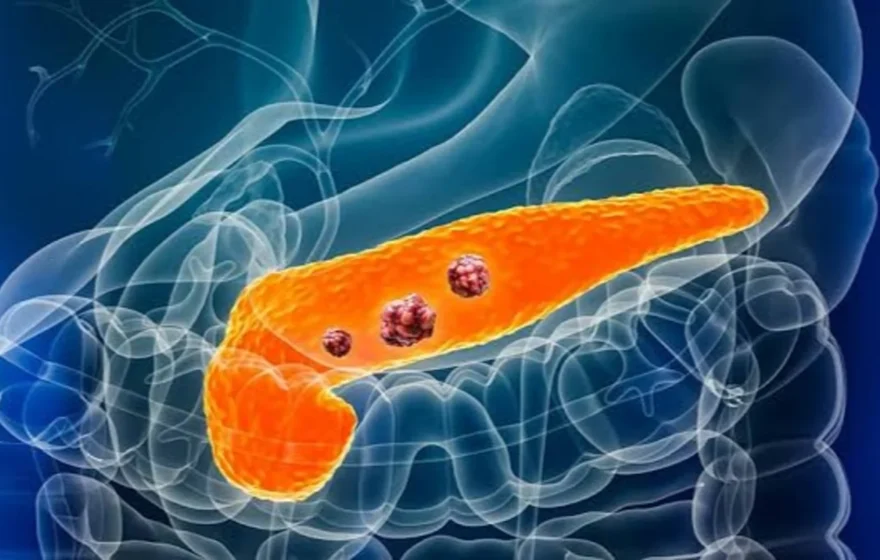
A new daily pill has shown promising results in early clinical trials for pancreatic cancer, with some patients seeing their tumours shrink significantly and others showing no detectable sign of the disease on scans. The drug, daraxonrasib, was tested alongside chemotherapy in 61 patients with recently diagnosed advanced pancreatic cancer that had spread to other parts of the body, and the early findings have been described by Cancer Research UK as the biggest advance in pancreatic cancer treatment in decades.
Results from the Phase I/II trial showed that tumours stopped growing in 90 percent of participants, while more than 60 percent experienced tumour shrinkage or disappearance. In around 8 percent of patients, roughly one in 12, the cancer became undetectable on CT scans. Researchers followed participants for an average of 18 months, and some patients saw no return of their cancer during that period, although doctors say longer studies are needed to determine how long the treatment can keep the disease under control.
The trial, known as RMC-GI-102, was presented at the 38th EORTC-NCI-AACR Symposium on Molecular Targets and Cancer Therapeutics in Barcelona. Patients received 200 milligrams of daraxonrasib as a daily oral tablet together with two standard chemotherapy drugs, gemcitabine and nab-paclitaxel. By the data cutoff of 28 September 2026, the objective response rate stood at 60.7 percent, with a confirmed complete response in 8.2 percent of patients and disease control in 90.2 percent. Those figures substantially exceed what standard chemotherapy alone has historically achieved in this disease.
The science behind the drug is what makes the result notable. Daraxonrasib works by targeting RAS mutations, the genetic faults that drive tumour growth and are found in most pancreatic cancers. RAS has long been considered one of the hardest targets in cancer medicine, a protein that scientists knew was driving the disease but could not find a way to block. Daraxonrasib was designed to bind to the active form of the protein, known as RAS(ON), shutting down the signals that tell cancer cells to keep growing and dividing. Similar mutations also occur in other cancers, including lung and ovarian cancer, raising the possibility that the approach could eventually be tested more widely.
Dr Wungki Park of Memorial Sloan Kettering Cancer Center, who led the presentation of the trial, said the early findings showed higher tumour response rates, deeper responses and nearly twice the duration of disease control compared with what doctors would expect from chemotherapy alone, which could eventually lead to longer survival. Dr Sam Godfrey of Cancer Research UK said the results were encouraging, adding that the drug had found a way to target mutations previously considered difficult to treat.
The new findings build on earlier evidence published in the New England Journal of Medicine in May 2026, when researchers reported on daraxonrasib given on its own to 168 patients whose pancreatic cancer had already been treated. In that study, patients who received a 300-milligram daily dose showed a response rate of 35 percent among those with a particular group of RAS mutations, with a median overall survival of 13.1 months, a significant improvement over historical results for second-line chemotherapy. That earlier data prompted the United States Food and Drug Administration to grant the drug orphan drug status, and it has since also received breakthrough therapy designation for certain patients with KRAS mutations.
Doctors have been careful to temper the excitement. The results do not mean the drug is a cure. Cancer can return even when scans show no detectable disease, and further research is needed to establish whether the treatment can produce lasting remission and improve overall survival. The patients in the trial were followed for a median of 18.3 months, and the question of how durable the responses prove to be will only be answered by larger studies that run for longer. The drug is now being tested in global Phase 3 trials, including the RASolute studies, which compare it directly against standard chemotherapy and will provide the definitive evidence regulators need before it can be approved.
The caution is understandable given the disease involved. Pancreatic cancer remains one of the hardest cancers to treat. It accounts for around 3 percent of all cancer cases in the United States but causes approximately 8 percent of cancer deaths, killing about 53,000 people there every year. The cancer is often found late because it produces few early symptoms, and by the time it is diagnosed it has frequently spread beyond the pancreas. Survival rates have improved only slowly over decades, which is why any treatment that can shrink tumours in a majority of patients draws such attention.
For patients and families facing a diagnosis that has long carried a bleak outlook, the trial offers something that has been in short supply: a genuinely new approach that attacks the genetic engine of the disease rather than simply poisoning fast-growing cells. The coming Phase 3 results will show whether that promise holds. If they do, a cancer that has resisted almost every advance in modern medicine may finally have a treatment that changes its course.
