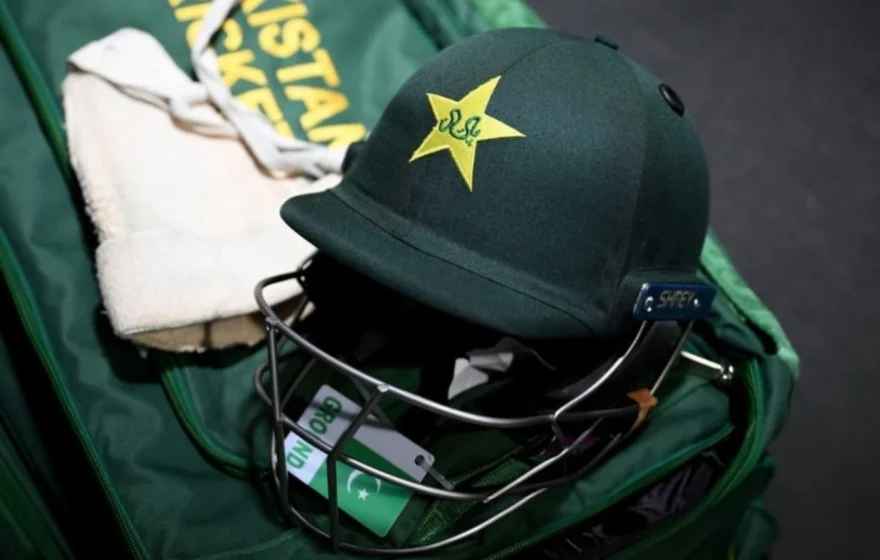
The Pakistan Cricket Board have announced central contracts for 38 men’s cricketers for the 2026-27 season, replacing the traditional category system with contracts based on playing formats and leaving several of the country’s biggest names without a deal. The contracts run until June 30, 2027, and 19 players are in a new development category, a clear sign the board is widening the pathway for young cricketers.
The most striking change is the structure itself. The old Categories A, B, C and D have been scrapped for five groups defined by playing format, and the contracted pool has grown from 30 to 38. The board says the new structure reflects each player’s performances, skills and suitability for different formats, while creating room for emerging talent to enter the national setup earlier.
At the top of the new list, Babar Azam and Salman Ali Agha have received contracts covering Test and one-day cricket, reflecting their standing as the two men now carrying the leadership in the longer formats. Babar has taken over as Test captain, while Agha has become one of the most reliable names on the team sheet. Behind them, the Test-only group is Azan Awais, Mohammad Abbas, Sajid Khan and Saud Shakeel. In the white-ball groups, Shaheen Shah Afridi, Haris Rauf, Fakhar Zaman, Faheem Ashraf, Abrar Ahmed and Arafat Minhas cover one-day and Twenty20 internationals, while Naseem Shah, Shadab Khan, Sahibzada Farhan, Hasan Nawaz, Maaz Sadaqat, Mohammad Salman Mirza and Usman Tariq hold Twenty20-only deals.
PCB Central Contracts 2026-27
The largest single group is the development category, with 19 players showing where the board sees the future of the team. Abdul Samad, Abdullah Fazal, Ahmed Daniyal, Ali Raza, Farhan Yousaf, Hunain Shah, Mohammad Taha, Mohammad Tayyab Arif, Muhammad Ghazi Ghori, Muhammad Imran Randhawa, Razaullah, Saad Baig, Saad Masood, Sameer Minhas, Saqib Khan, Shahzaib Khan, Shamyl Hussain, Sufyan Moqim and Ubaid Shah have all been given development deals. Several have already appeared in Pakistan squads or in domestic cricket.
It is the names missing from the list, however, that have drawn the most attention. Mohammad Rizwan, Saim Ayub, Imam-ul-Haq and Shan Masood have all been left out, and reporting around the announcement suggests 13 players from the previous list have been dropped altogether. For two former captains in particular, the omission marks a sharp fall, since Rizwan was until recently the one-day captain and Masood led the Test side.
The reasons for those omissions have been building for months. Rizwan was removed as one-day captain and replaced by Shaheen Shah Afridi during the home Test series against South Africa, and he was later dropped from the one-day side as well, with reports also linking him to an investigation by the National Cyber Crime Investigation Agency. Masood was replaced as Test captain by Babar Azam after the away series against Bangladesh, despite being Pakistan’s third-highest run-scorer in the current World Test Championship cycle with 546 runs. Saim Ayub was dropped after a pair at Edgbaston and withdrew from a tri-nation one-day series to work on his batting, having already lost much of the previous year to the ankle fracture he suffered in Cape Town. Imam-ul-Haq was sent home from England after the Lord’s Test.
The new list also has to be seen against what came before it. When the board announced its 2025-26 contracts in August last year, it handed deals to 30 players but left the top Category A empty for the first time, demoting Babar Azam and Rizwan from A to B and Masood from B to D. Those contracts expired on June 30 this year, so Saturday’s announcement ends a long delay.
Speaking at the announcement, the board’s Director of High Performance, Aqib Javed, reassured players that a contract in one format would not shut the door on the others. He said cricketers would still be eligible for selection in other formats if the team needed them. Head coach Mike Hesson added that players had been assigned to the formats that best matched their skills, and he pointed to the team’s strong recent Test performances.
That recent form gives the board something to build on. Pakistan have just beaten Sri Lanka to clinch a home Test series, and the red-ball side has looked more settled under its new leadership than during the difficult period in which the team were whitewashed in England. The challenge now is to carry that stability into the white-ball formats, where the one-day side under Afridi is being rebuilt with the 2027 World Cup in mind.
The contracts run only until the middle of next year, expiring before the World Cup in October and November, so the board will have another decision to make before the biggest tournament of the cycle. For the players left out, that may offer a route back, but only if their form and standing improve. For the 19 development players, the next seven months are a chance to prove they belong at a higher level. And for the board, the new system is a gamble that specialisation will produce better teams than the old hierarchy did.
