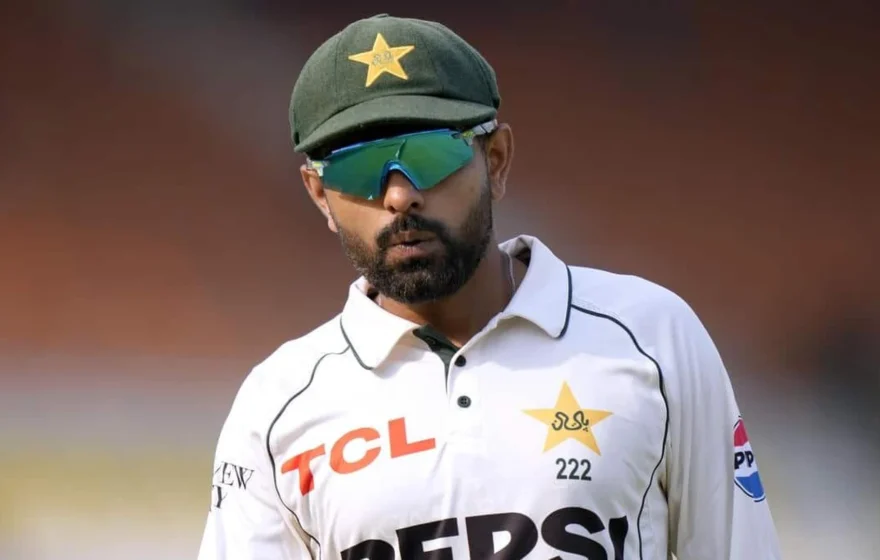
Former Pakistan cricketer Iqbal Qasim has blamed constant comparisons with Virat Kohli and unrealistic expectations for Babar Azam’s continued struggles with the bat. Speaking on Samaa TV’s Zor Ka Jor programme, Qasim said the pressure placed on Pakistan’s leading batter has grown so heavy that it is now affecting his performances.
Qasim’s complaint was aimed squarely at the way young players are talked about before they have fully developed. He said the media often places excessive pressure on emerging cricketers by comparing them with established international stars, and that Babar has carried that burden for years. The former left-arm spinner described Babar as a humble person who was not responsible for the attention and expectations surrounding him. Yet the way fans, the media and people around him have treated him like a world-class star from a young age has created unnecessary pressure, and Qasim believes that pressure is now showing in his batting.
He urged the media to stop comparing emerging Pakistani cricketers with international legends, warning that such comparisons can damage a young player’s game. A batter who is constantly told he should be scoring like Kohli starts playing to the comparison rather than to the situation in front of him.
Qasim also spoke about the technical problem that has followed Babar for months: his weakness against short-pitched bowling. He said opposition teams and their coaches study successful players closely to find areas they can exploit, and international sides have already identified Babar’s difficulty in handling short balls. He warned that bowlers would continue to target him with bouncers until he fixed the problem, because at the highest level a known weakness is attacked again and again.
The recent evidence supports that warning. Babar endured a difficult tour of England, where Pakistan were beaten 3-0 in the Test series and Jofra Archer and Josh Tongue exposed his trouble against the short ball. He made 8 and 6 at Lord’s, falling to Archer’s pace, and was then bowled for 7 at Edgbaston by Tongue. In the final Test he reached 76 on a flat pitch, with a big hundred in sight, only to fall to Tongue’s short ball once more. Former England captain Nasser Hussain noted on commentary that while Saud Shakeel ducked under the short ball without fuss, Babar did not seem to know whether to pull, hook or leave it.
The pattern has repeated in white-ball cricket. In the tri-series opener against Sri Lanka at Rawalpindi on October 18, Babar made 45 from 57 balls and was five runs short of a fifty when a short ball from Eshan Malinga ended his innings, caught by Pavan Rathnayake. Two days later he made 34 against England. Former Pakistan player Tanveer Ahmed has since argued that Babar is stuck in three areas at once: against spin, against deliveries that come into him from fast bowlers, and against bouncers. Babar’s return to domestic first-class cricket after seven years brought no relief either. Playing for OGDCL in the President’s Trophy at Abbottabad, he lasted only 20 balls before a short ball from Arshad Iqbal ended his stay, and he made 4 from 15 balls in his next innings.
Yet Qasim was careful to praise what Babar still offers the side. He credited Babar’s captaincy during Pakistan’s Test series victory over Sri Lanka, pointing to his tactics and field placements alongside strong bowling and batting performances from the team. And the numbers behind the career remain formidable. During that same tri-series match against Sri Lanka, Babar passed 16,000 international runs across formats, becoming only the fifth Pakistani batter to reach the mark. The 32-year-old’s record is not in doubt. The question is whether his current form will let him add to it at the rate Pakistan need.
That question matters because of what lies ahead. The 2027 World Cup will be played in South Africa, Zimbabwe and Namibia, where pitches tend to offer pace and bounce, and a batter who cannot handle the short ball will be tested in every match. Shoaib Akhtar has already suggested that Babar’s place in the one-day side could come under question if his form does not improve. Qasim himself advised Babar to focus on his batting, with tougher challenges expected against England, Australia, New Zealand and India.
Qasim’s wider message was aimed at the system around the players. He urged academy coaches to study young cricketers closely, identify their technical weaknesses early, and help them correct those flaws before opposition teams at international level begin exploiting them. It was, in the end, a plea for patience: let a talented batter develop at his own pace, stop holding him against a standard set by someone else, and give him the time and coaching to fix a weakness that every bowler in world cricket now knows about. Whether the media and the fans listen may decide how much of Babar Azam’s best cricket is still to come.
