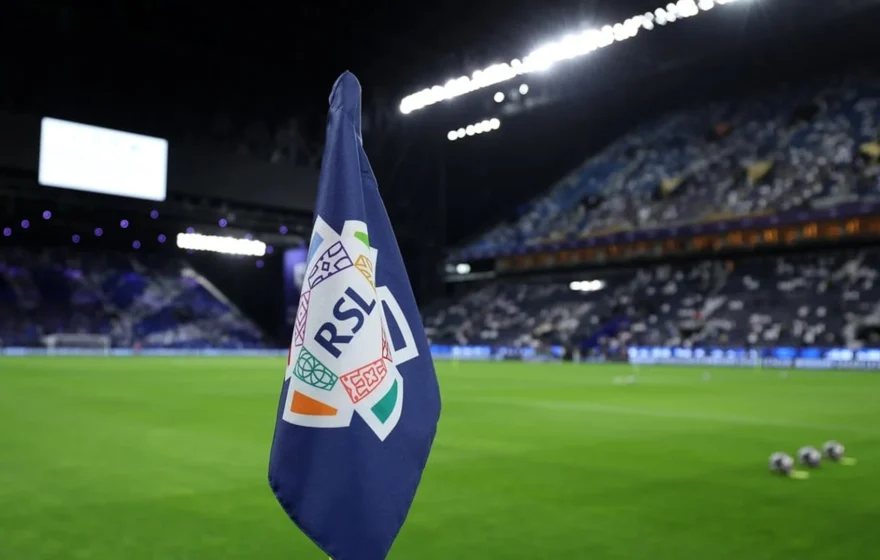
The Saudi Pro League has postponed every fixture scheduled for Matchday 13 this weekend, in the latest sign of how a major change to the international calendar is rippling through domestic football in Saudi Arabia. The league announced the decision on Tuesday afternoon, only hours after the Asian Football Confederation moved the 2027 AFC Asian Cup from January 2027 to December 2027. The league said the postponement formed part of a wider review of the 2026-27 Roshn Saudi League schedule, and that the revised dates for the continental tournament had created additional flexibility in the domestic calendar.
Several prominent fixtures are affected. Al-Qadsiah had been due to host Al-Fayha on Thursday, as the club continued its pursuit of a first league title. Al-Nassr were set to travel to Qassim to face Al-Hazem, while Al-Ittihad were scheduled to welcome NEOM on Friday. Saturday’s programme included Al-Hilal’s away match against Al-Ettifaq in Dammam and Al-Ahli’s home game against Al-Taawoun in Jeddah.
The reason for the disruption lies in a decision taken far beyond the league’s own offices. The Asian Cup, the continent’s leading national team tournament, had originally been scheduled to begin on 7 January 2027 in Saudi Arabia. The Asian Football Confederation has now moved it to 23 December 2027, with the tournament running until 21 January 2028. The confederation cited exceptional circumstances, saying the change was necessary in the interest of participating teams, officials, spectators and other stakeholders, and pointing to substantial logistical complexities and travel disruption. The new dates will be submitted to FIFA, football’s world governing body, for approval, which is needed in part to settle when clubs around the world must release players for national team duty.
That context is important, because the Asian Cup was not postponed in isolation. In recent weeks, Saudi Arabia has faced repeated attacks, including strikes on airports and other facilities, in an escalation linked to the conflict involving Yemen’s Houthi movement. A number of sporting events in the kingdom have already been cancelled or postponed, and the Saudi Pro League itself had rescheduled several matches during October after attacks targeted airports and other sites. Against that background, staging a 24-team tournament across eight venues in Riyadh, Jeddah and Al Khobar in January would have presented serious security and logistical challenges. Moving the tournament by almost a year gives organisers time, but it also creates a long period of uncertainty for teams, broadcasters, sponsors and fans.
For the domestic league, the postponement of Matchday 13 is both a problem and an opportunity. The immediate problem is the gap it leaves in the calendar and the question of when the postponed matches will be played. No new dates have yet been announced. With an international break scheduled immediately after the original fixtures, one possibility is that the matches could be staged once players return from national team duty, but that will depend on how the rest of the season is reshaped. The league has said it will hold a workshop with clubs to discuss proposed adjustments to the calendar, which suggests that further changes may follow, rather than a simple rearrangement of a single round.
The wider opportunity, as coaches have long argued, is relief from fixture congestion. The original Asian Cup schedule, combined with the World Cup and the Gulf Cup, was expected to put further pressure on a domestic calendar that was already crowded. Coaches have repeatedly raised concerns about player fatigue, with Al-Ittihad head coach Jens Wissing previously highlighting how hard it is to manage workloads when the same player is expected to play every three days, and Al-Nassr head coach Ange Postecoglou expressing similar concerns while explaining his use of squad rotation. A revised calendar that spreads matches more evenly could help protect players, improve the quality of matches and reduce injuries, even if it frustrates supporters in the short term.
There are, however, limits to what a reshuffle can achieve. The underlying security situation remains unresolved, and further postponements cannot be ruled out if conditions do not improve. For the title race itself, a break in play can change momentum in unpredictable ways, helping a struggling side regroup or interrupting a team in strong form. Al-Qadsiah’s chase for a first title, Al-Nassr’s travels and Al-Hilal’s trip to Dammam will all resume eventually, but the rhythm of the season will not be quite the same.
What happens next will therefore be watched closely, not only in Saudi Arabia but across Asian football. The workshop with clubs will be the first test of whether the league can produce a calendar that balances player welfare, commercial needs and the demands of international competition. The Asian Cup’s new dates, running from late December 2027 into January 2028, will also need FIFA’s approval and careful coordination with club competitions around the world. For now, supporters face a weekend without the matches they expected, and the league faces a familiar challenge in modern football: fitting an ever-expanding calendar into a season that has no room to spare.
